
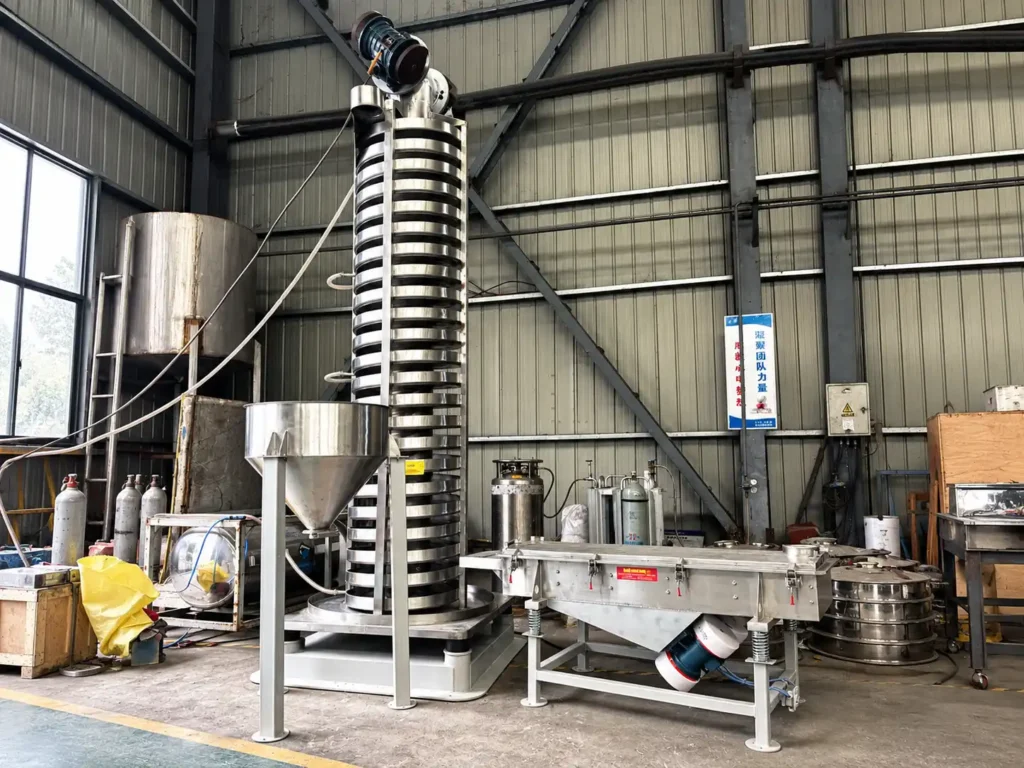
Vertical Conveying Equipment for Powder, Granules and Bulk Materials
Vertical conveying equipment moves material upward in a small footprint. Sanyuantang builds vibrating spiral elevators for powders and granules, air cooling spiral elevators for hot material, and bucket elevators for bulk lifting. Spiral models cover lifts up to 8 m and capacities of 100–2,000 kg/h, depending on the material and configuration.
Tell us your material, lift height and hourly capacity. Our engineers can compare the conveying method, contact materials and connections to your production line.
Vertical Conveyors and Elevators We Manufacture
Compare the conveying method first, then select the lift height, throughput and material-contact construction.
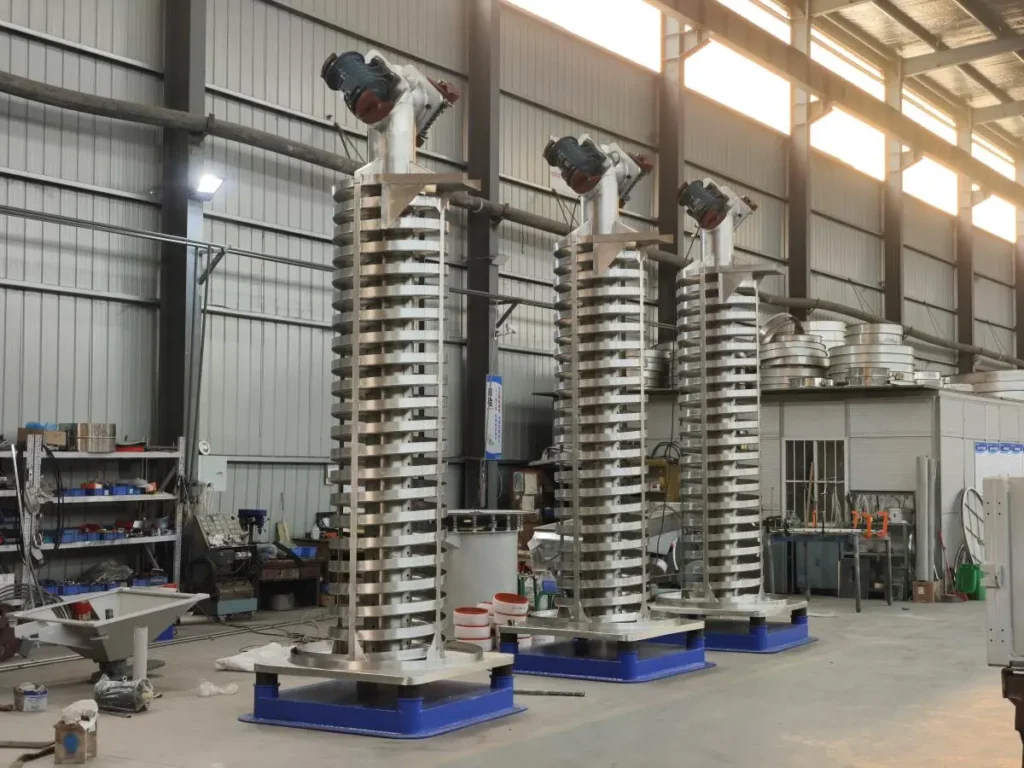
Vibrating Spiral Elevator
Reference lift: up to 8 m · 100–2,000 kg/h
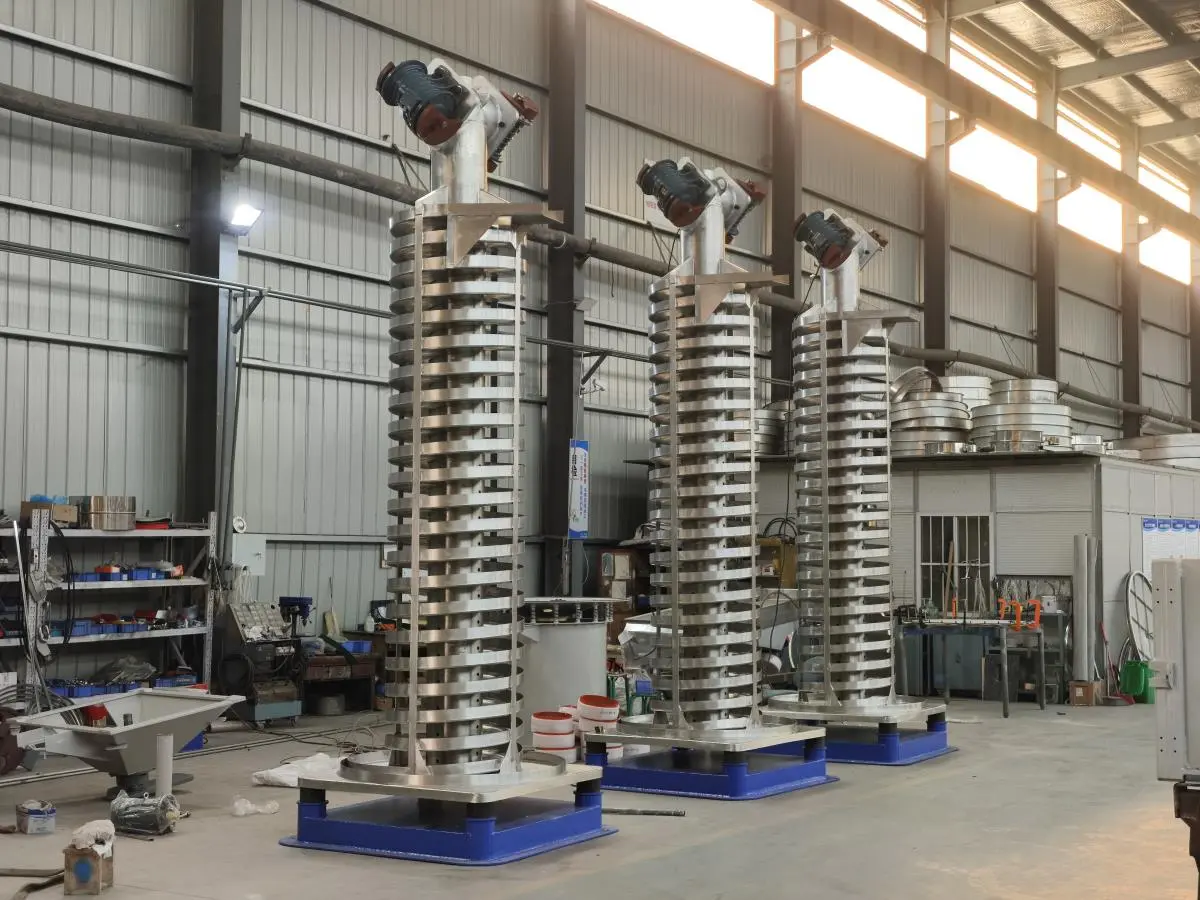
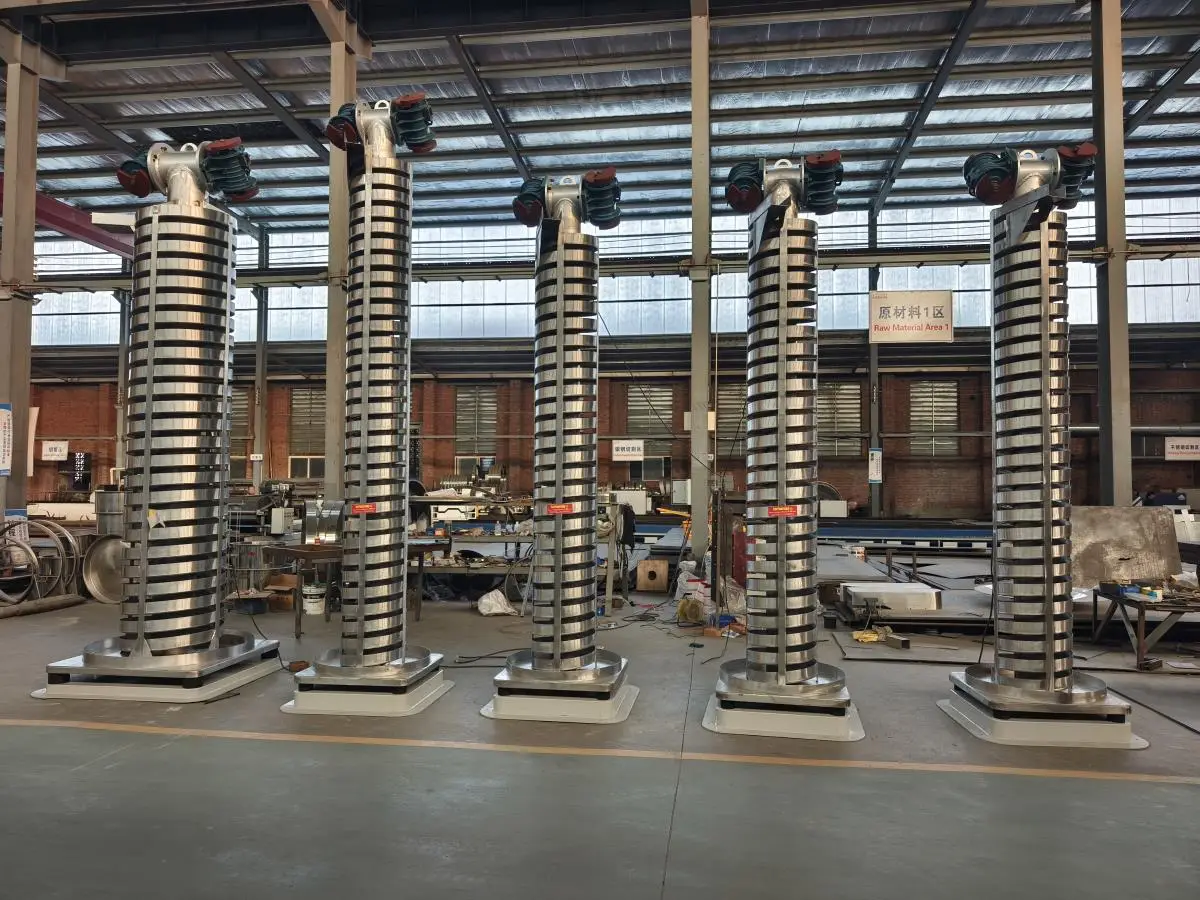
Vibration moves powder, granules and small pieces upward along a spiral chute. The conveying action can suit products where particle shape and controlled handling matter.
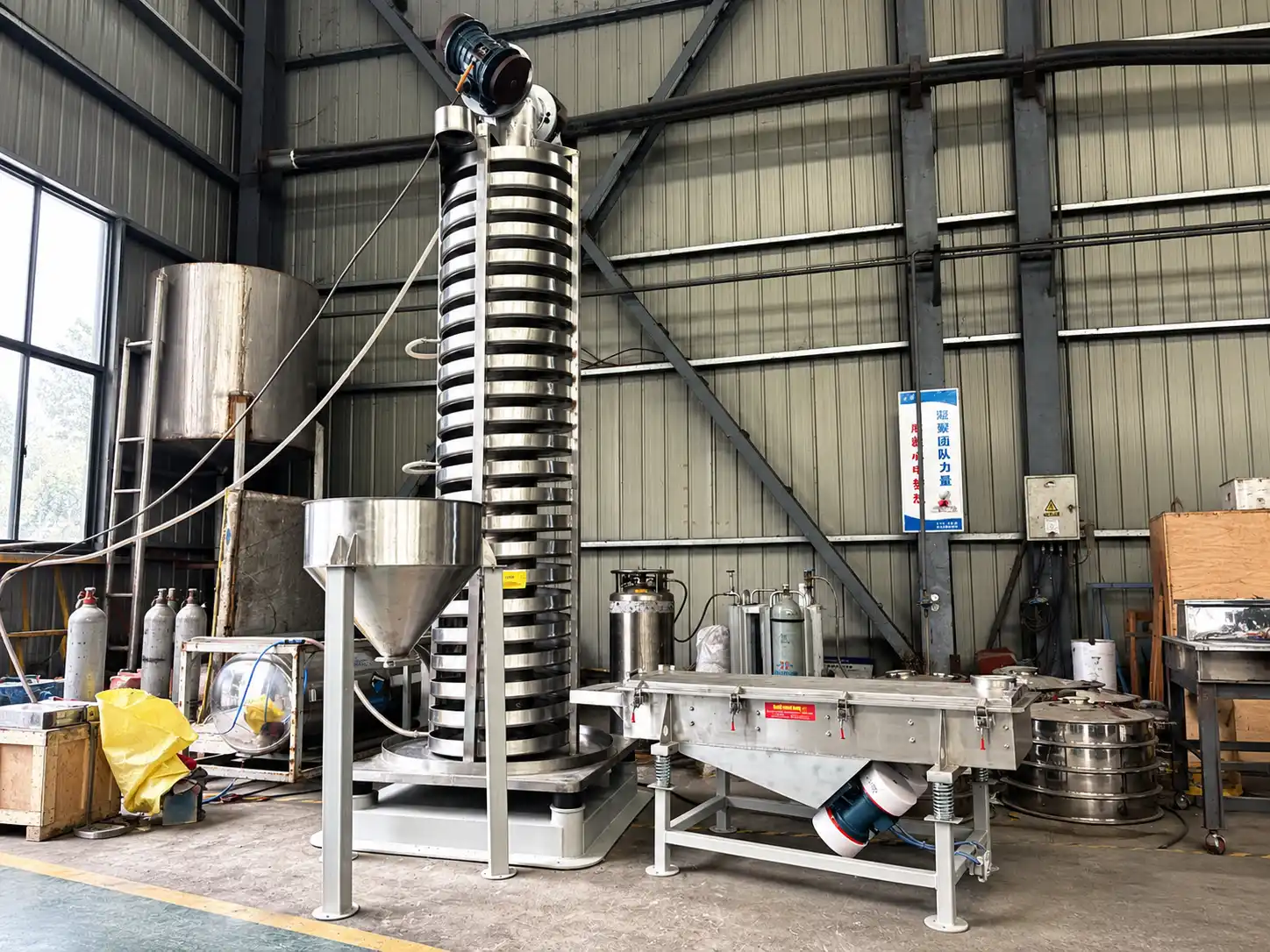
Air Cooling Vertical Spiral Elevator
Combined lifting and cooling
Raise hot granules while cooling them along the spiral path. Airflow, residence time and dimensions are selected around the inlet temperature, target outlet temperature and throughput.
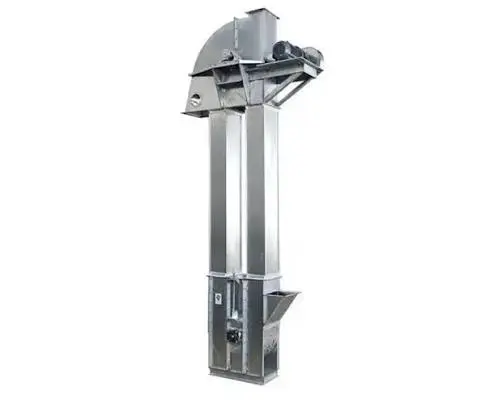
Stainless Steel Bucket Elevator
Enclosed casing · Stainless steel contact parts
For suitable food ingredients, chemical granules and other materials requiring controlled contact surfaces. Define cleaning access, seals and material grade for the application.
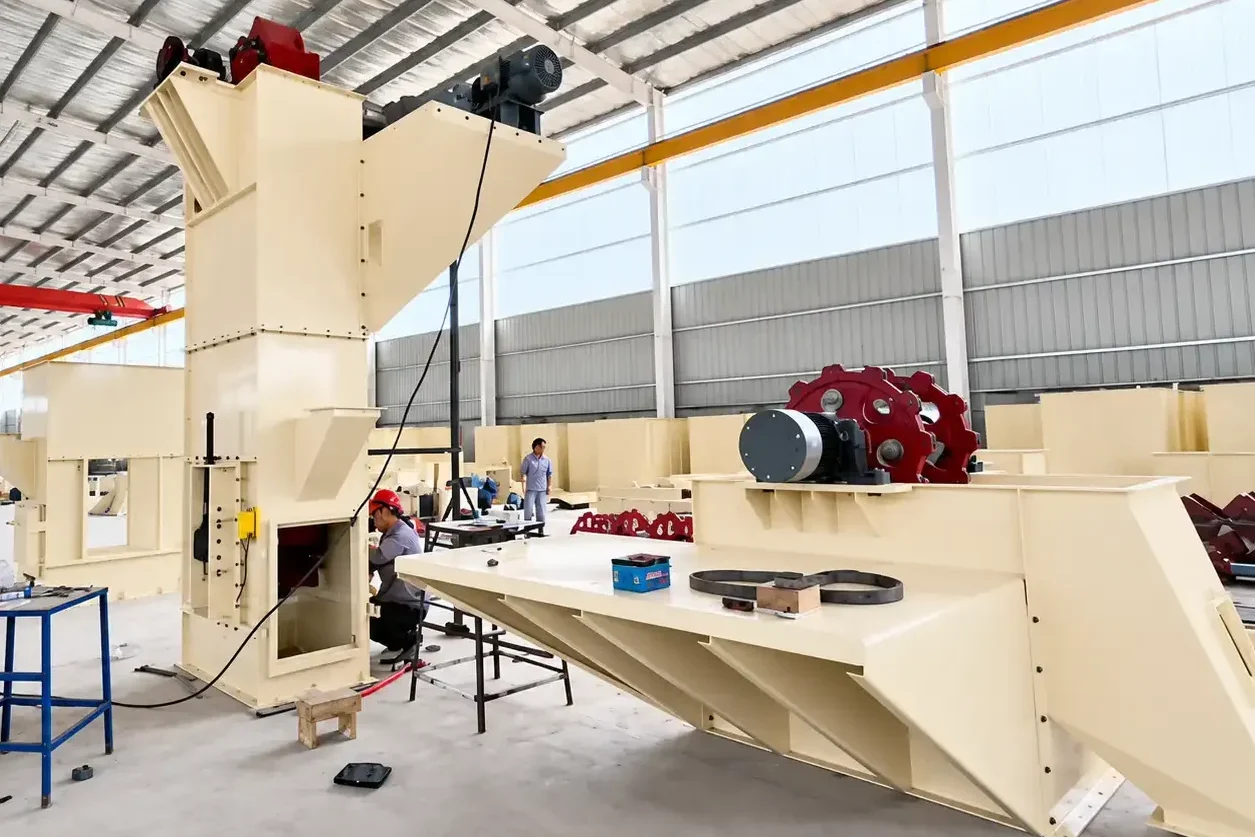
Bucket Elevator
Chain or belt drive · Bulk material lifting
Buckets carry material upward and discharge at the head of the elevator. Bucket size, speed, lift height and drive are selected for the material, flow rate and plant layout.
Vibrating Spiral Elevator or Bucket Elevator: Which Should You Choose?
Consider a vibrating spiral elevator for a lift within the reference 8 m range, especially for powders, granules or products that benefit from controlled handling. Consider a bucket elevator for a taller lift or larger bulk flow. Selection also depends on density, flowability, temperature and feeding conditions.
| Selection Factor | Vibrating Spiral Elevator | Bucket Elevator |
|---|---|---|
| How it lifts | Vibration moves material along a spiral chute around a central tower | Buckets on a chain or belt carry material upward and discharge at the top |
| Lift height | Reference models up to 8 m | Selected for the required lift and installation layout |
| Capacity | 100–2,000 kg/h reference range | Selected by bucket size, speed and material density |
| Typical materials | Powders, granules, small pieces and suitable fragile products | Grain, sugar, fertilizer, resin, mineral powder and other suitable bulk materials |
| Material handling | No rotating screw within the conveying bed | Handling depends on bucket design, speed and discharge method |
| Temperature control | Air cooling or water cooling configurations can be considered | Separate temperature-control requirements need project review |
| Drive | Two vibration motors on reference spiral models | Motor and gearbox, with chain or belt transmission |
Choose by Lift Height
Check the vertical distance between the inlet and outlet, overall headroom and support space. Within the reference spiral range, compare chute diameter and flow; for a taller route, review bucket elevator options.
Choose by Material
Provide particle size, bulk density, moisture, flowability and sensitivity to breakage. Hot material needs a temperature review. Food or pharmaceutical use needs defined contact materials and cleaning requirements.
Choose by Capacity
Spiral reference capacity is stated in kg/h. Bucket elevator capacity may be stated in m³/h. Convert volumetric flow using the actual bulk density before comparing the two.
Vibrating Spiral Elevator Models and Lifting Height
These reference spiral elevator models use different chute diameters and vibration motor sizes. Choose the model around the material, target flow and required inlet-to-outlet height.
| Model | Chute Diameter (mm) | Lifting Height (m) | Speed (r/min) | Double Amplitude (mm) | Power (kW) |
|---|---|---|---|---|---|
| SZC300 | 300 | ≤ 4.0 | 960 | 6–8 | 2 × 0.4 |
| SZC500 | 500 | ≤ 6.0 | 960 | 6–8 | 2 × 0.75 |
| SZC600 | 600 | ≤ 8.0 | 960 | 6–8 | 2 × 1.5 |
| SZC800 | 800 | ≤ 8.0 | 960 | 6–8 | 2 × 2.2 |
| SZC900 | 900 | ≤ 8.0 | 960 | 6–8 | 2 × 3.0 |
| SZC1200 | 1,200 | ≤ 8.0 | 960 | 6–8 | 2 × 4.5 |
| SZC1500 | 1,500 | ≤ 8.0 | 960 | 6–8 | 2 × 5.5 |
Figures are reference model data. Actual throughput and conveying performance depend on material properties, feeding and operating conditions. Other dimensions and inlet or outlet positions can be reviewed for the production layout.
Bucket Elevator Capacity and Lifting Height
Specify a bucket elevator by the required flow and inlet-to-outlet height. Bulk density connects the volumetric capacity in m³/h with the mass flow in t/h. Bucket filling, speed and discharge behavior also affect the operating capacity.
Bucket Elevator Selection
Information for a Bucket Elevator Configuration
Provide the material and layout data together so the drive, buckets and casing can be selected as a system.
| Selection Factor | Information Required | Design Consideration |
|---|---|---|
| Material | Name, particle size, bulk density and moisture | Flowability, abrasiveness and sticking risk |
| Capacity | Required t/h or m³/h | Include the bulk density and feeding rate |
| Lift and layout | Inlet and outlet elevations; available space | Allow for the head, boot and maintenance access |
| Contact construction | Carbon steel or required stainless steel grade | Define cleaning, seals and contamination-control needs |
Industries Using Our Vertical Conveyors
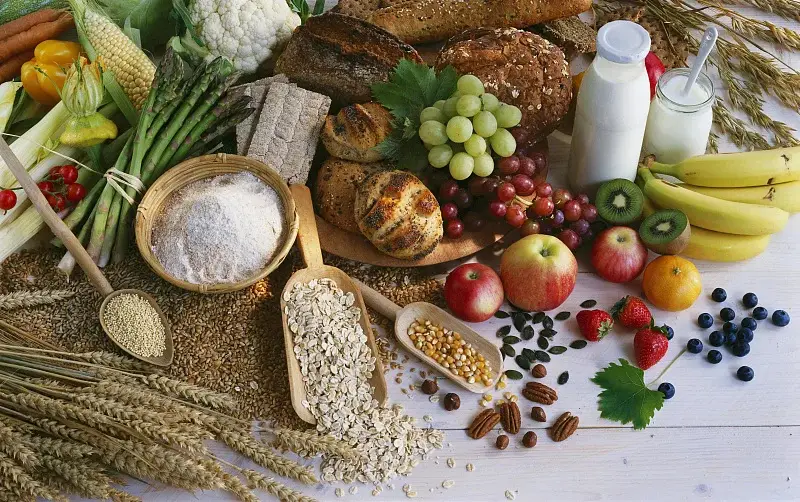
Food & Beverage
Grain, flour, sugar and suitable food ingredients. Define contact materials, cleaning access and the feeding arrangement for the process.

Chemicals
Fertilizer, resin and soda ash between process stages. Review dust, compatibility, temperature and containment requirements.

Pharmaceuticals
Powders and granules requiring defined contact surfaces and frequent cleaning. Specify the applicable cleaning and documentation requirements.
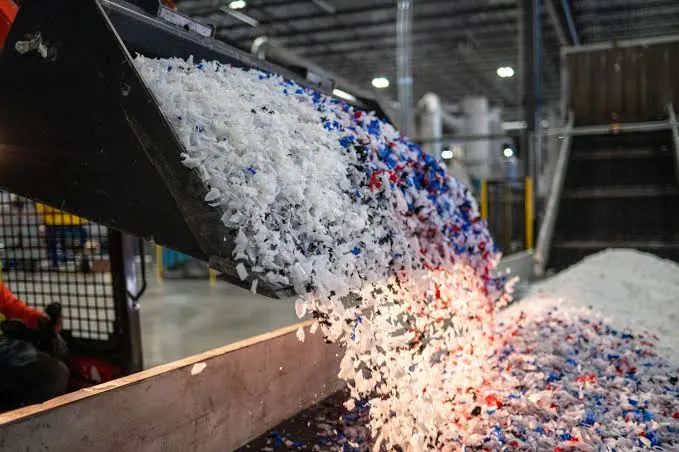
Plastics & Recycling
Pellets, masterbatch and suitable flakes. Spiral conveying can connect pelletizing, cooling, screening and downstream collection.
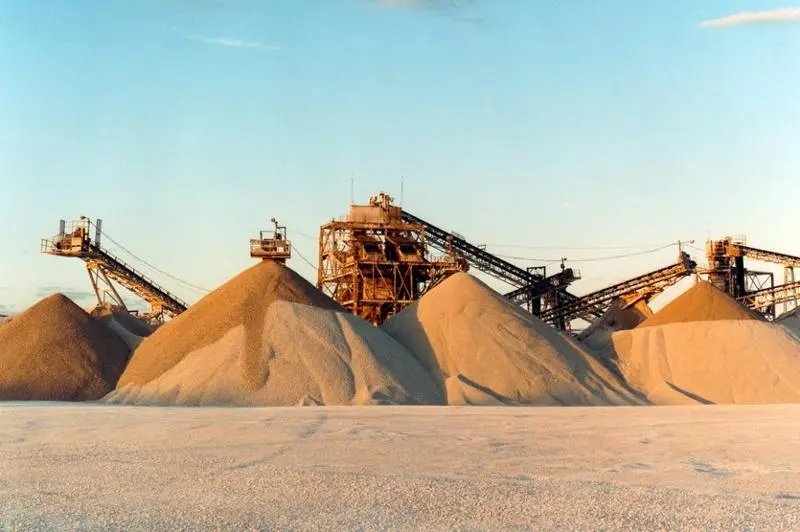
Sand, Gravel & Minerals
Mineral powder, cement, limestone and suitable screened materials lifted to silos, screens or the next process.
Agriculture & Biomass
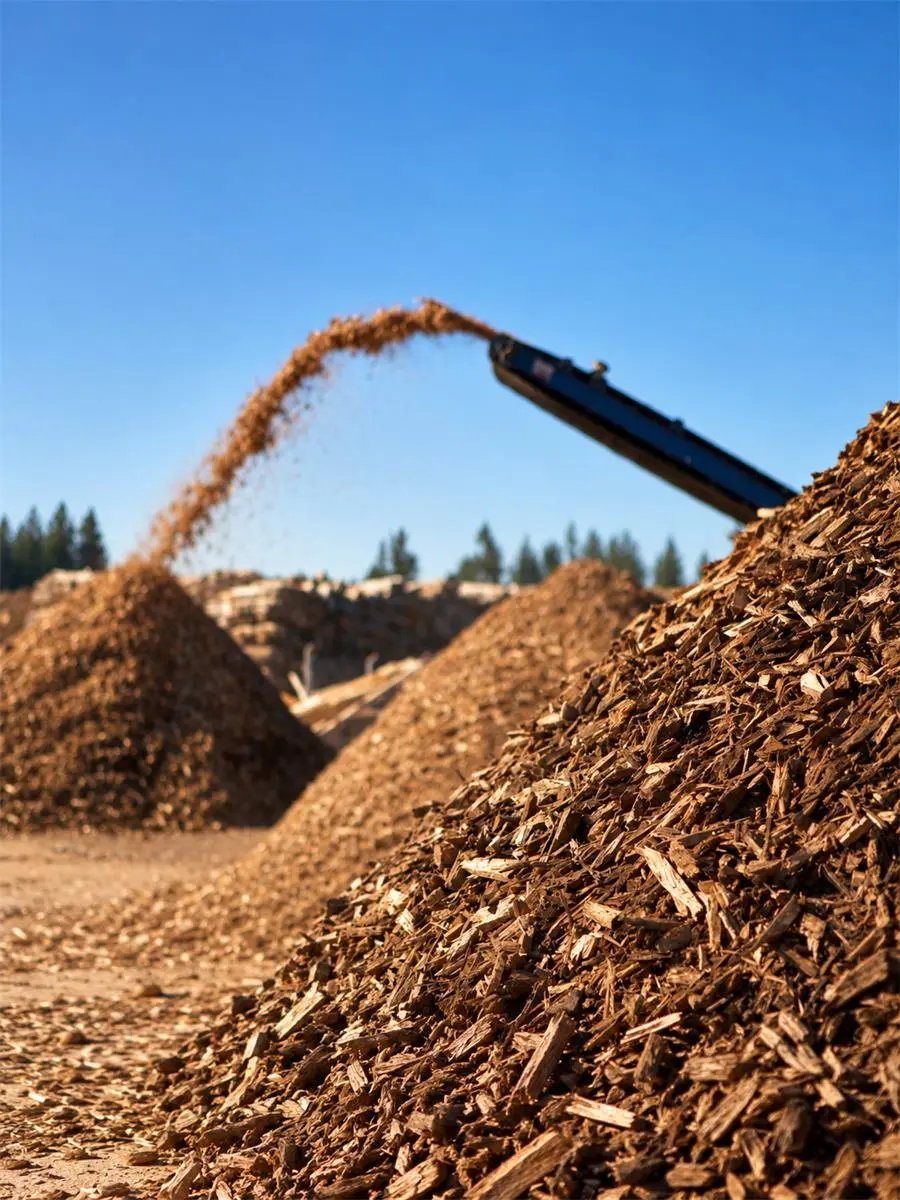
Grain, feed and biomass pellets moving to storage or processing equipment. Include moisture and product durability in the selection data.
Customization Options
Contact-Part Material
Select carbon steel or stainless steel around the product, environment and cleaning needs. Specify the required stainless steel grade and contact finish in the inquiry.
Cooling, Heating and Drying
Air cooling and water cooling spiral configurations can be reviewed for hot products. Heating or drying requirements need a separate review of temperature, residence time and the material.
Production-Line Layout
Review lifting height, inlet and outlet positions, feed controls and connections to screens, mixers, storage hoppers or packing equipment.
Special Material Duties
Identify combustible dust, flammable material, corrosion or other special conditions before equipment selection. Electrical, enclosure and protection requirements must be evaluated for the actual operating environment.
Spiral Chutes, Drive Systems and Equipment Checks
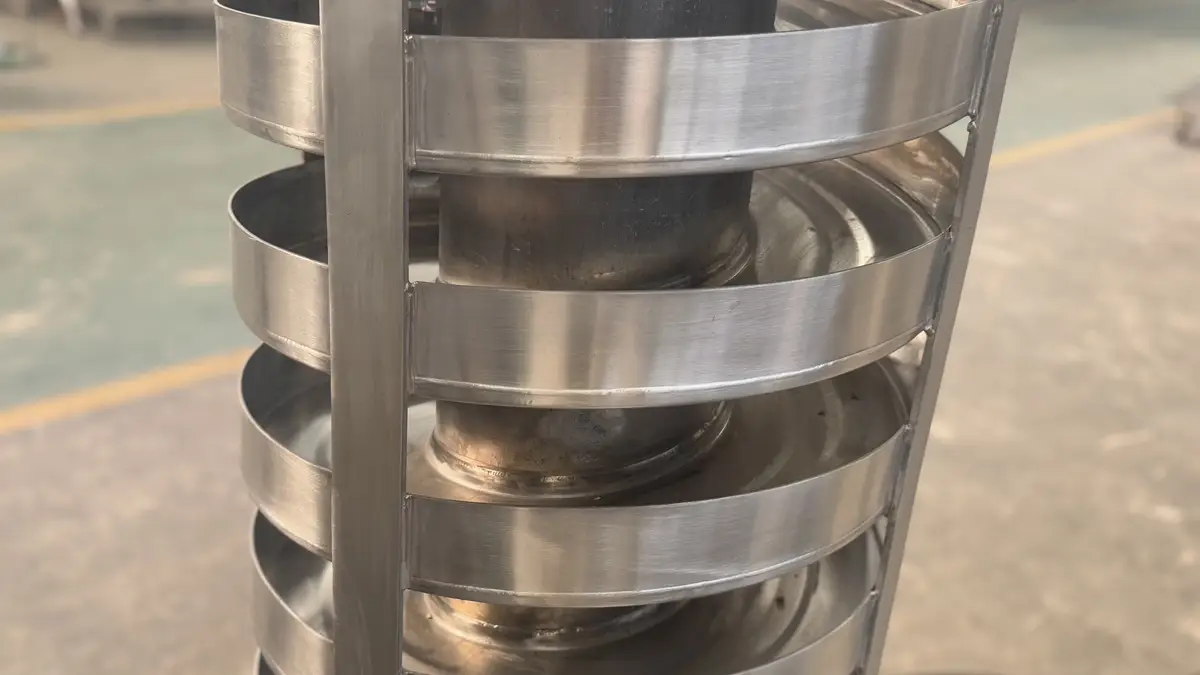
Spiral Chute and Material Path
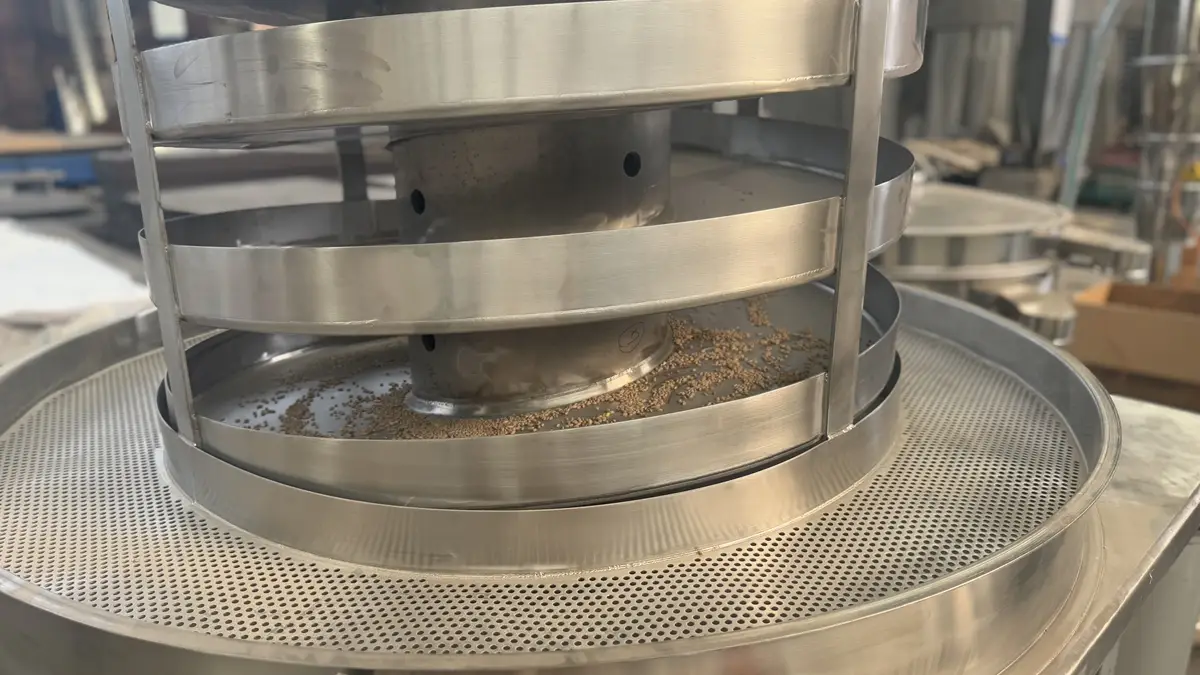
A spiral chute guides material around the central tower. Trough geometry, contact finish and access for cleaning should match the product. Areas where powder can collect need particular attention when defining the equipment construction.
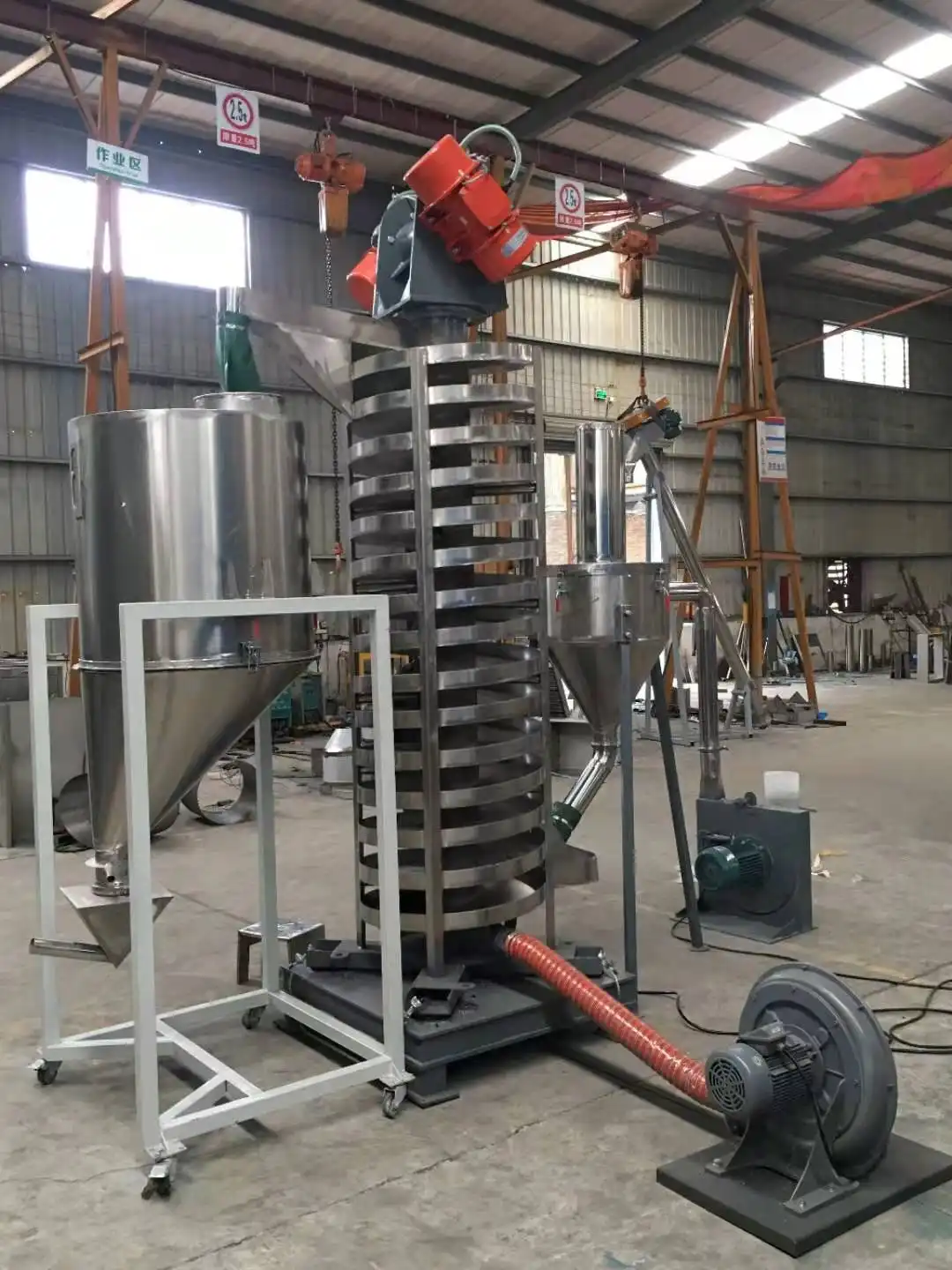
Vibration Drive and Support Arrangement
Spiral elevators use paired vibration motors and an isolation arrangement to produce the conveying motion. Motor position and structural details vary by model. Review the installation space, support loads and access for service as part of the layout.
For a bucket elevator, review bucket and casing clearances, belt or chain alignment, drive operation and inspection access. Agree on the required inspection records and any trial-operation video when defining the order scope.
Vertical Conveying Equipment FAQ
What is the difference between a vibrating spiral elevator and a bucket elevator?
A spiral elevator moves material up a vibrating spiral chute and suits powders, granules and suitable small pieces. A bucket elevator lifts material in buckets attached to a chain or belt. Compare them using the lift height, material properties and required flow.
How high can a vibrating spiral elevator lift material?
Reference models cover lifts up to 8 m. The SZC300 reference height is up to 4 m and the SZC500 up to 6 m. The listed SZC600–SZC1500 models cover reference heights up to 8 m. Final selection depends on the material and layout.
How high can a bucket elevator lift?
The required lift is checked against the material, capacity, bucket design and available installation space. Send the inlet and outlet elevations, overall headroom and a layout so the suitable casing and drive arrangement can be selected.
What capacity can I expect?
The reference spiral elevator range is 100–2,000 kg/h, depending on the material and model. Bucket elevator capacity is selected for a specific bulk density, bucket size and speed. Provide the required t/h or m³/h and the material density for comparison.
Can a vertical conveyor handle hot material?
An air cooling spiral elevator can combine lifting and cooling. Water cooling configurations can also be reviewed. Share the inlet temperature, target outlet temperature, throughput and ambient conditions so the cooling duty can be evaluated.
Can it lift flammable or explosive material?
Special material duties require a project-specific review. Provide the material safety data, dust characteristics and applicable site requirements. Suitability depends on the mechanical design, electrical equipment and required protective measures.
What do you need to recommend a model?
Material name, bulk density, particle size, moisture, lift height, hourly capacity and temperature. Also include available space, power supply, feeding method and a site drawing or photographs.
Can it connect to my screening or mixing line?
Yes. Inlet and outlet positions, lifting height and connecting dimensions can be selected to match the line. Include the upstream feeding equipment, downstream machine and their operating heights in the layout.
Equipment Selection
Tell Us Your Material and Lift Height
Send your material name, bulk density, particle size, lift height, capacity and temperature. Our team can review the conveying method and recommend a configuration for your line.
For cooling duties, include inlet and target outlet temperatures. A site layout helps define the feed and discharge connections.
Email your project requirements to sales@sanyuantang.com, or use the contact page to send your inquiry.