
Sanyuantang supplies screening, grading, cooling, and conveying equipment for plastic pellets, recycled flakes, resin powders, masterbatch, and crushed plastic materials. Our vibrating screens remove oversized particles, fines, and irregular material before packaging, extrusion, or further recycling.
We select screen openings, machine sizes, and feeding arrangements according to the material’s shape, particle size, and required capacity. From standalone plastic pellet screeners to integrated screening and cooling systems, we provide equipment configurations for different plastics processing lines.
Vibrating screens separate plastic materials by particle size and shape. Identifying or separating PET, PP, and PE by polymer composition requires other suitable sorting technologies.
Plastic Materials We Process
Plastic pellets, flakes, and powders behave differently during screening. Regular pellets are relatively easy to grade by size, while lightweight flakes may pass through the screen differently depending on their shape and orientation.
Sanyuantang supplies screening equipment for different plastic materials and processing stages.
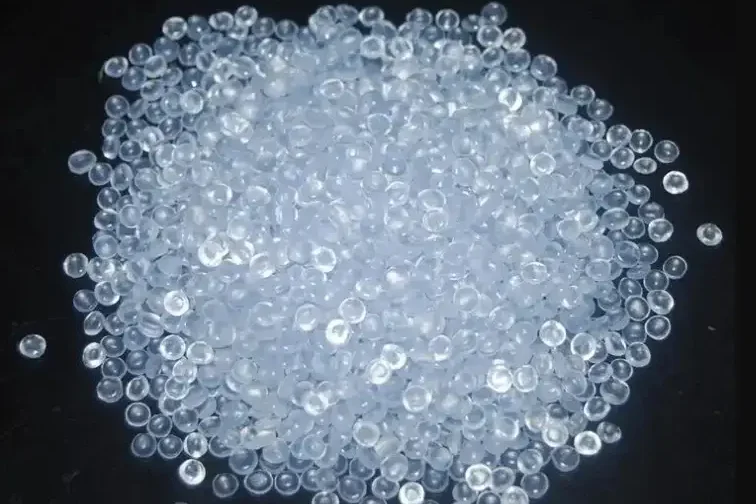
Plastic Pellets
PP, PE, PVC, and other plastic pellets may contain oversized pieces, joined pellets, and fines after pelletizing or handling.
Screening removes these unwanted fractions before packaging or downstream processing. We use rotary vibrating screens and linear vibrating screens according to the required capacity and number of particle size fractions.
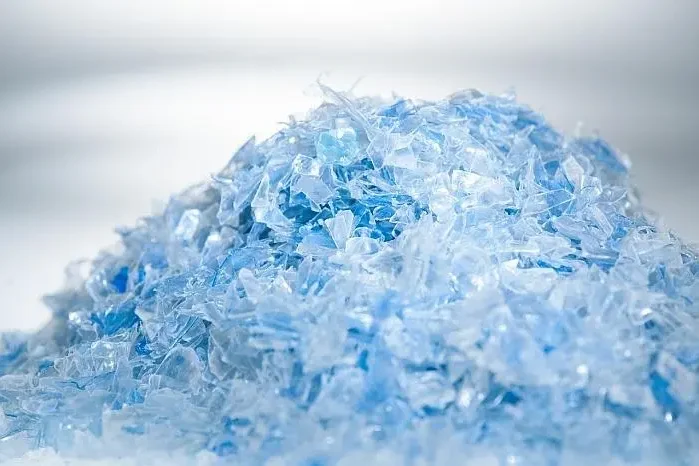
Recycled Plastic Flakes
PET bottle flakes, PP flakes, and shredded PE film often contain a mixture of large pieces, smaller fragments, and fines after crushing.
Vibrating screens separate these materials before further recycling operations. Because flakes are flat or irregular, we select the screen opening and vibration method according to their actual dimensions and flow behavior.
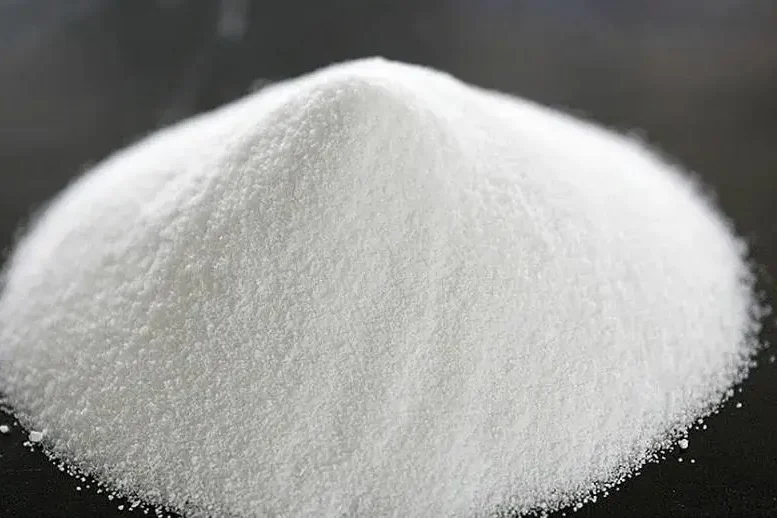
Plastic & Resin Powders
PVC resin powder, polyethylene powder, and other plastic powders may require check screening before mixing, extrusion, or packaging.
Fine powder screening removes lumps and oversized material. For powders that tend to adhere to the mesh or develop static electricity, we can evaluate ultrasonic screening equipment.

Color & Filler Masterbatch
Color masterbatch and filler masterbatch pellets may contain oversized pellets, broken pieces, and fines after production.
Screening separates these materials before packing. Where frequent color changes are required, accessible screen frames and discharge outlets make cleaning and product changeover easier.
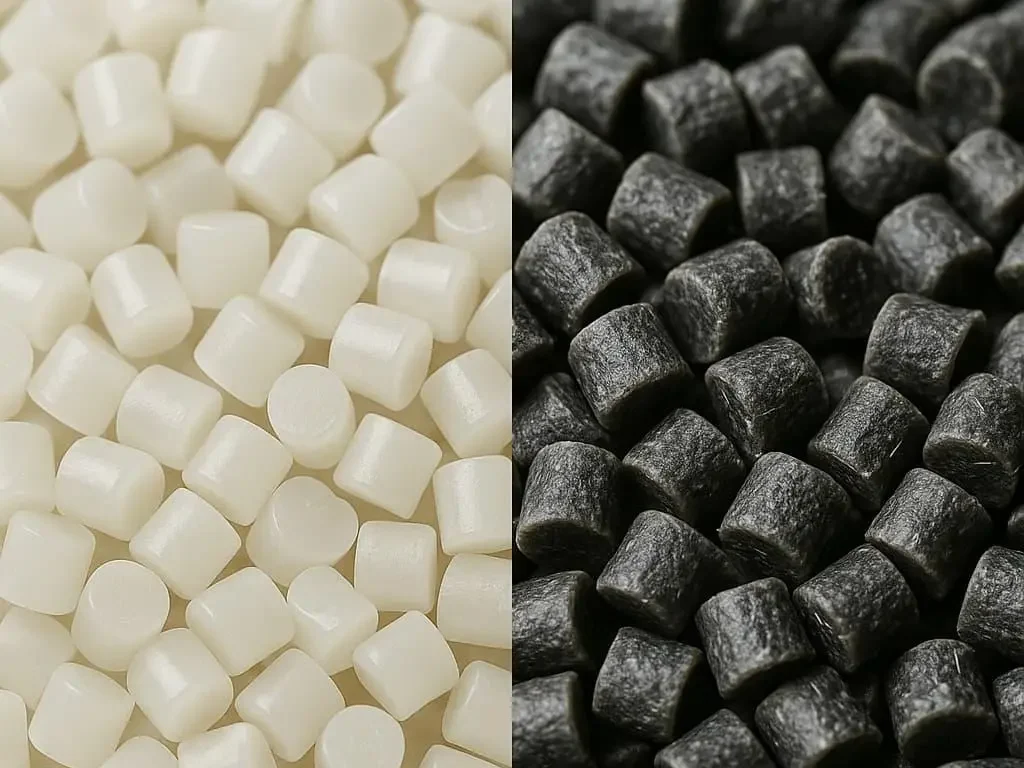
Engineering Plastic Granules
PA, PBT, PC, and reinforced plastic granules may require particle size control before further processing.
Multi-deck vibrating screens can remove oversized particles and fines while collecting the required pellet fraction. Screen openings are selected according to the actual pellet dimensions and product specification.
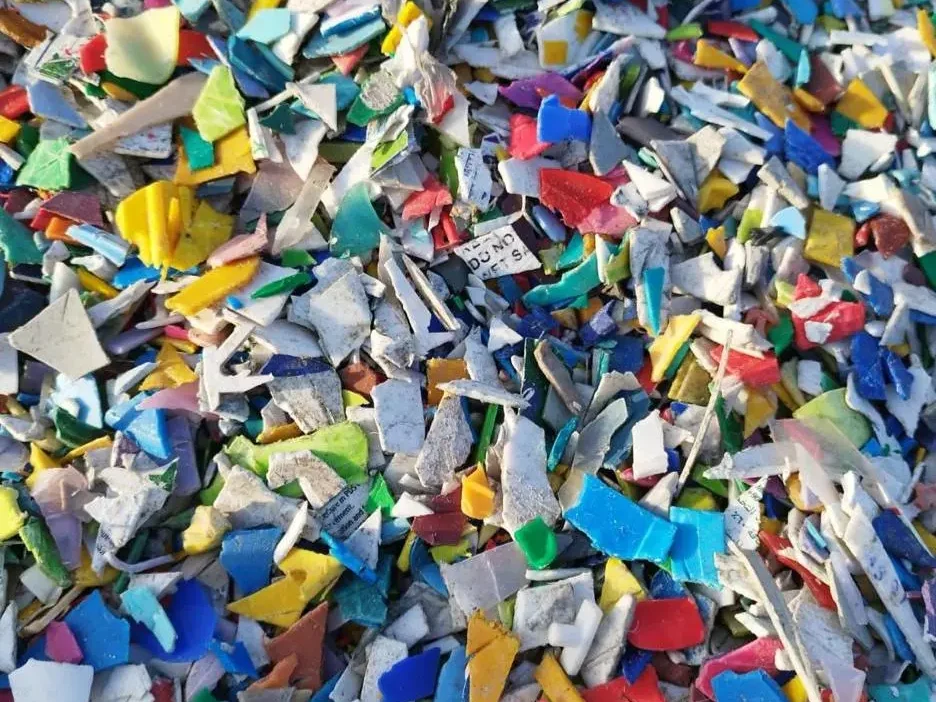
Plastic Regrind & Crushed Materials
Plastic regrind and irregular crushed pieces may contain a wide range of particle sizes after shredding or granulation.
Screening removes large fragments and separates smaller particles before washing, re-extrusion, or other processing stages. Perforated screen plates can be considered for larger, irregular materials.
Plastic Screening Applications
Plastic pellets, recycled flakes, and resin powders behave differently during screening. Particle shape, static electricity, moisture, and feeding conditions can affect separation efficiency and processing capacity. Sanyuantang selects screening equipment based on these common processing challenges.
Oversized Pellets & Fines
Plastic pellets may contain joined pellets, oversized pieces, and fines after pelletizing or conveying. These unwanted particles can affect product consistency and downstream processing. Vibrating screens separate them from acceptable pellets before storage or packaging.
Irregular Plastic Flakes
Recycled PET, PP, and PE flakes vary in size, thickness, and shape. Thin or lightweight pieces may move unevenly across the screen, making accurate separation more difficult. Screen aperture, surface design, and vibration movement need to match the actual material.
Static Electricity & Mesh Blinding
Fine PVC and PE powders may adhere to the screen surface because of static electricity or particle cohesion. This can block mesh openings and reduce throughput. Suitable screen selection and ultrasonic assistance can help reduce blinding in fine powder applications.
Material Changeover & Cleaning
Switching between different plastic grades or masterbatch colors can leave residual pellets or powders inside the screening machine. Removable screens, accessible discharge outlets, and easy-to-clean contact surfaces help reduce material carryover between production batches.
Common Challenges in Plastic Screening
Plastic materials vary in particle shape, flowability, temperature, and electrostatic behavior. These characteristics can affect screening performance even when the same screen opening is used.
Screening Equipment for Plastics & Recycling
Sanyuantang supplies vibrating screens for plastic pellets, flakes, powders, masterbatch, and recycled materials. Our equipment can be configured with different screen surfaces, deck quantities, contact materials, and discharge arrangements.
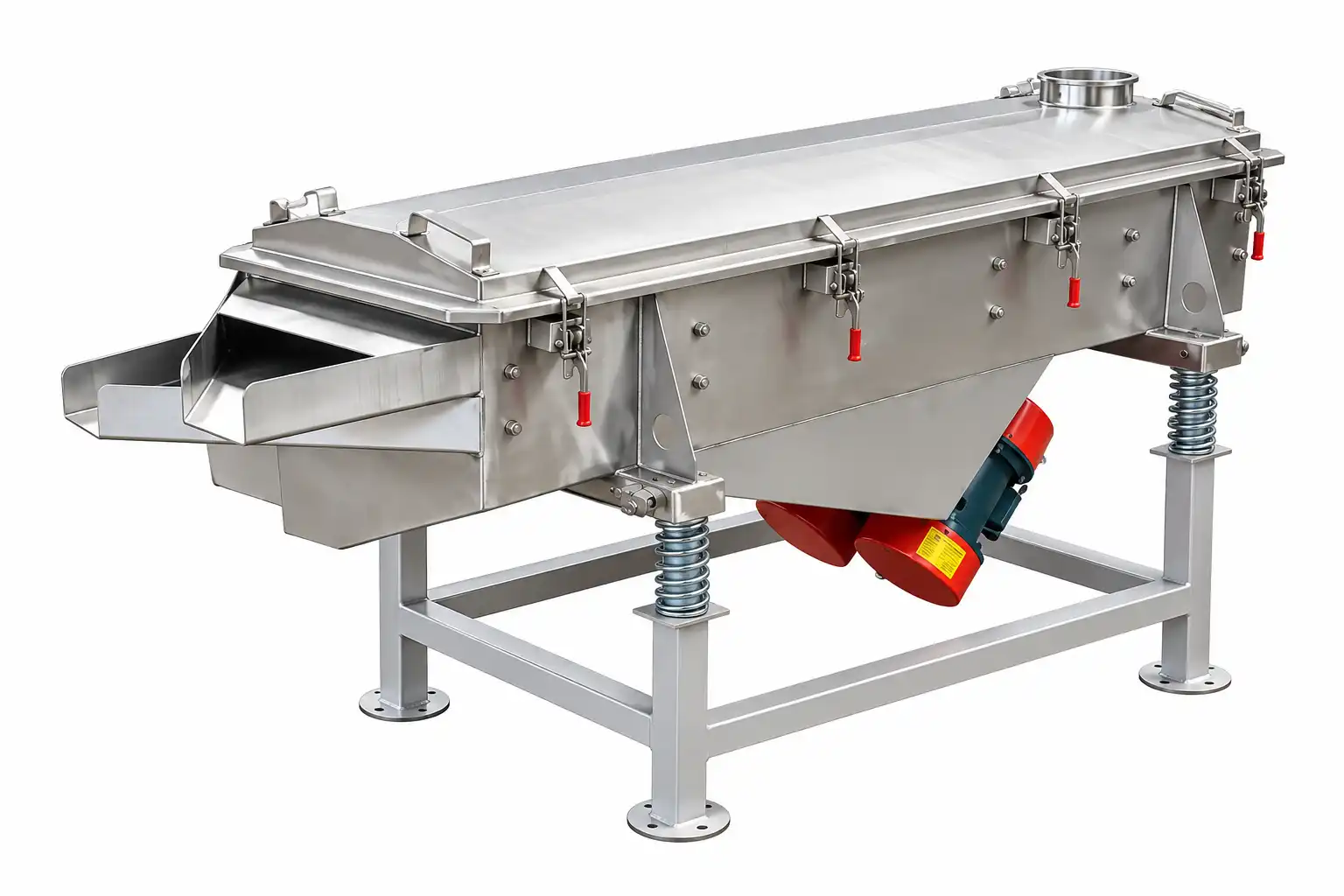
Linear Vibrating Screen
Our linear vibrating screen uses two vibration motors to move materials along a rectangular screening surface. It is suitable for continuous grading of plastic pellets, recycled flakes, masterbatch, and crushed plastic materials.
The SYZ series supports single- and multi-deck screening arrangements for different particle size fractions.
- Screen aperture: 2-100 mesh; examples include 2, 3, 5, and 8 mm
- Reference capacity: 300–4,000 kg/h across selected series configurations
- Suitable materials: PP and PE pellets, PET flakes, masterbatch, engineering plastic granules, and plastic regrind
- Main duty: Continuous pellet grading, fines removal, and multi-size separation
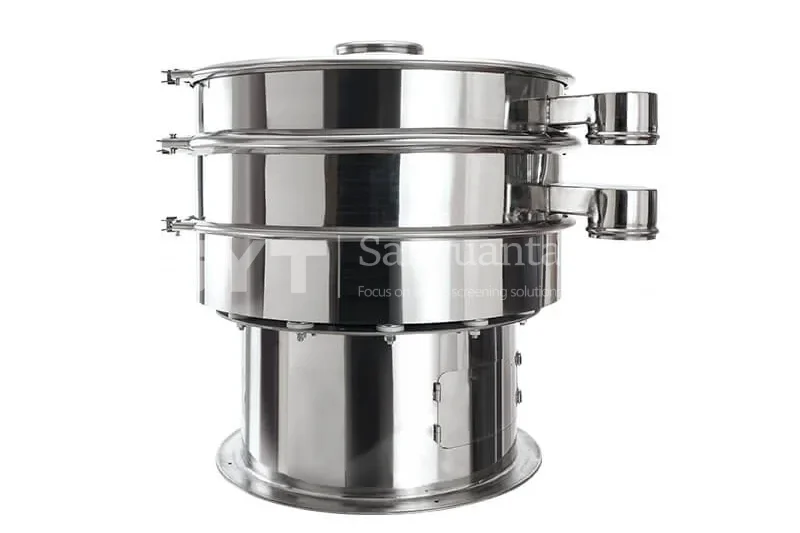
Rotary Vibrating Screen
Our rotary vibrating screen uses three-dimensional vibration to distribute plastic materials across a circular screen surface.
It can be used for plastic pellet grading, reclaimed pellet screening, and resin powder impurity removal. Single- or multi-deck configurations are available according to the required separation.
- Screen aperture: 2–500 mesh, depending on material
- Reference capacity: 100–3,000 kg/h across selected series configurations
- Suitable materials: Plastic pellets, resin powders, recycled plastic particles, and masterbatch
- Main duty: Oversize removal, check screening, and particle size classification
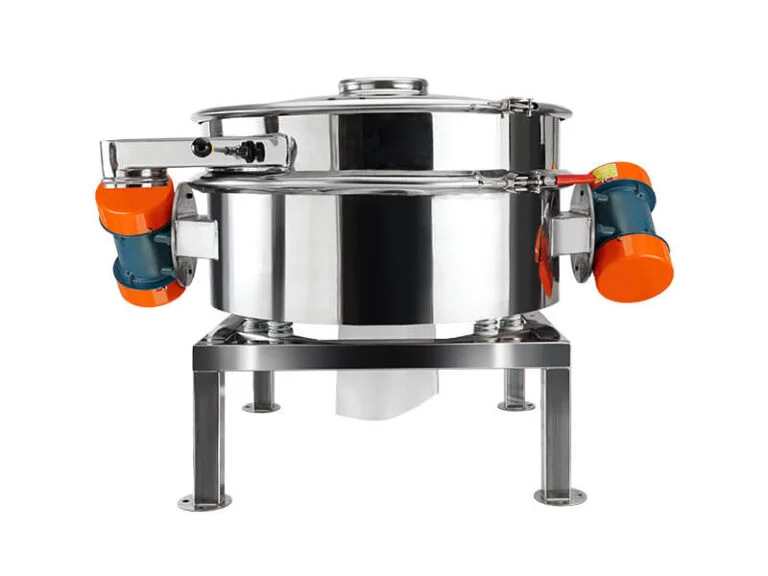
Inline Sifter
An inline sifter is a compact screening machine that can be installed beneath feeding equipment or connected to material transfer points.
It is suitable for continuous check screening where the available installation height is limited or where only one unwanted size fraction needs to be separated.
- Screen aperture: 2-100 mesh
- Capacity: Determined by machine size, screen opening, and material conditions
- Suitable materials: Plastic pellets, masterbatch, resin powders, and recycled granules
- Main duty: Compact check screening before conveying, storage, or packaging
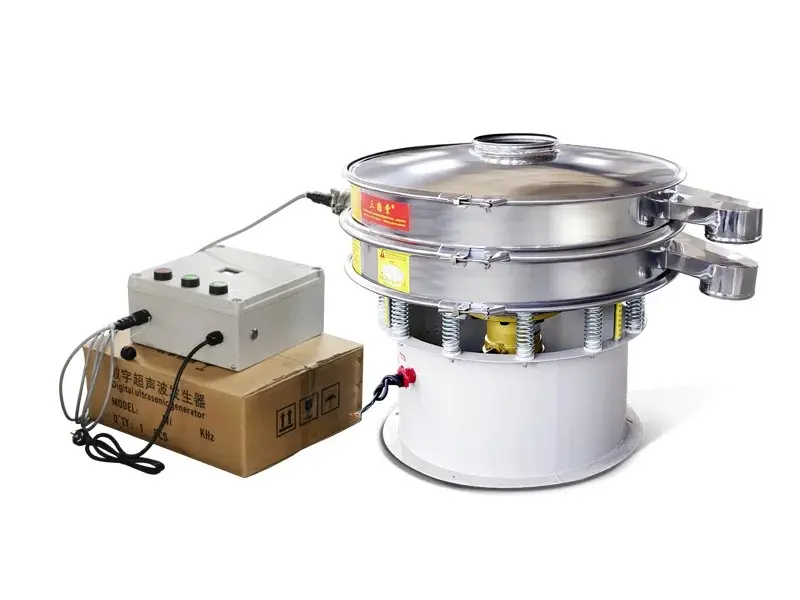
Ultrasonic Vibrating Screen
Our ultrasonic vibrating screen combines conventional vibration with high-frequency ultrasonic energy applied to the mesh.
It can help screen selected fine plastic powders that are prone to adhesion or mesh blockage. The machine is configured according to powder characteristics and the required screening accuracy.
- Screening range: Approximately 10–635 mesh, depending on model
- Capacity: Determined by machine size, mesh opening, and powder testing
- Suitable materials: PVC resin powders, polyethylene powders, and selected fine plastic additives
- Main duty: Fine powder sieving and reduction of mesh blinding
Screening capacities are equipment series reference values, not guaranteed performance for every plastic material. Actual capacity depends on particle size, screen aperture, bulk density, moisture, and machine configuration.
Screen Mesh & Aperture Selection for Plastic Materials
The right screen opening depends on the size, shape, and type of plastic material being processed. Plastic flakes and larger regrind are generally screened with perforated plates, while smaller pellets and fine resin powders may require woven wire mesh. Sanyuantang selects screen surfaces based on the required separation and material handling conditions.
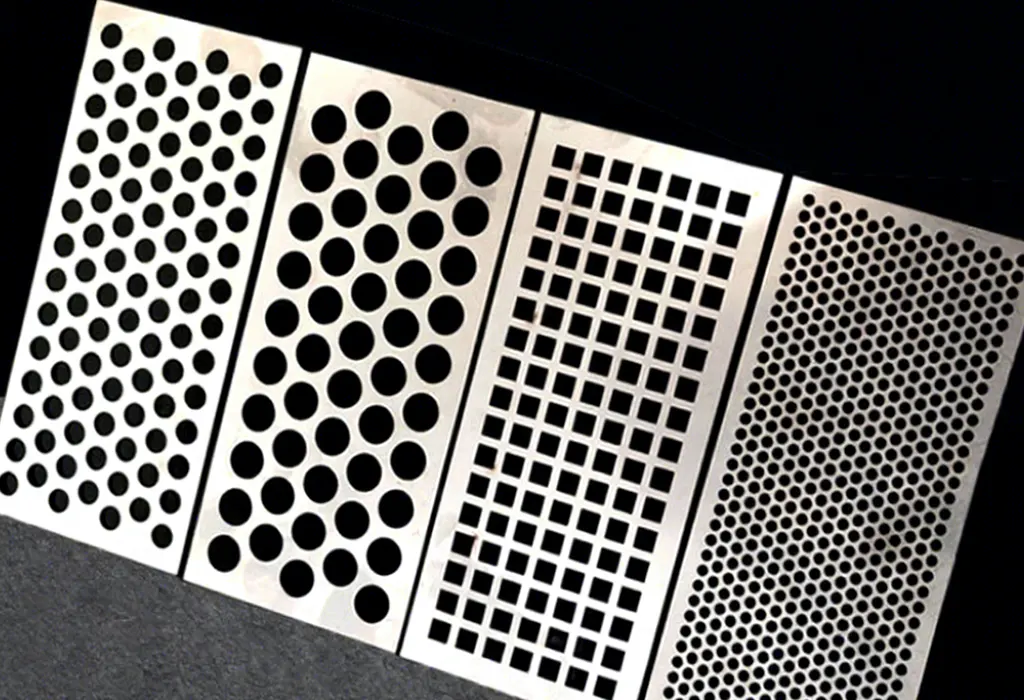
Perforated Plate for Plastic Flakes & Regrind
Perforated screen plates are suitable for recycled PET flakes, crushed PP and PE materials, and larger plastic particles. Round or square openings can be selected to remove oversized pieces and separate different particle sizes.
For example, a 15 × 15 mm square perforated plate was used in one of our plastic recycling projects. The opening size should be selected according to the actual flake dimensions, as thin or irregular pieces may pass through the screen depending on their orientation.
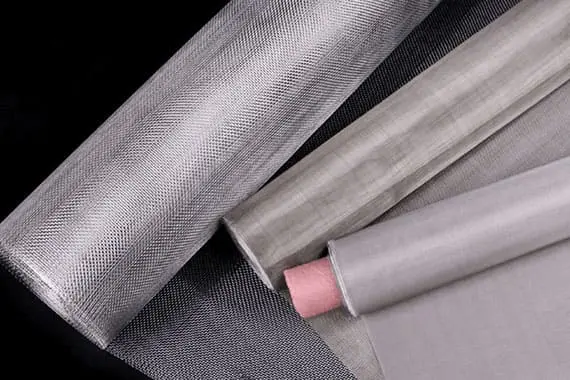
Woven Mesh for Pellets & Fine Powders
Woven wire mesh provides smaller, more precise openings for plastic pellet grading and resin powder screening. It is commonly used to remove fines from PP and PE pellets or oversized particles from PVC and polyethylene powders.
For pellets, screen openings are usually specified in millimeters. For fine powders, mesh numbers or micron values are more commonly used.
Screen Surface Selection Guide
| Plastic Material | Recommended Screen Surface | Main Screening Purpose |
|---|---|---|
| PET flakes | Perforated plate | Oversized flake removal |
| PE film regrind | Perforated plate | Coarse size separation |
| PP/PE pellets | Perforated plate or woven mesh | Oversize and fines separation |
| Masterbatch pellets | Perforated plate or woven mesh | Pellet grading |
| PVC resin powder | Fine woven mesh | Impurity and lump removal |
| Fine PE powder | Fine woven mesh | Fine powder screening |
For irregular plastic flakes or materials with a wide particle size distribution, we recommend sample screening tests to confirm the suitable aperture, screen surface, and processing capacity.
Plastic Screening, Cooling & Conveying Systems
Sanyuantang provides screening, cooling, and conveying equipment for plastic pellet production and recycling lines. Our vibrating screens, spiral elevators, and feeding systems can be connected to existing equipment for continuous material grading, cooling, and transfer.
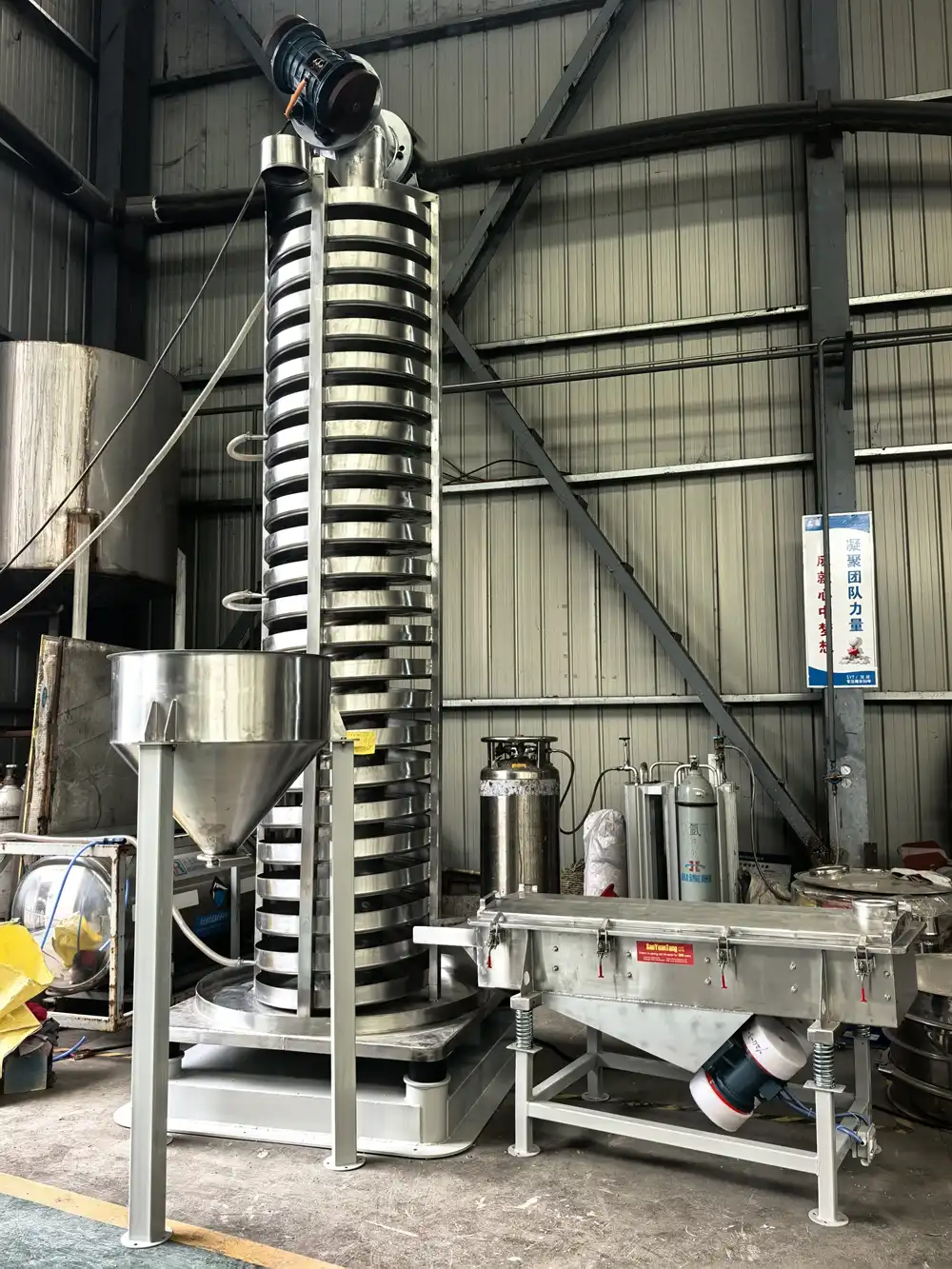
Plastic Pellet Screening After Extrusion
Plastic pellets may require cooling and size separation after extrusion and pelletizing. Extrusion & Pelletizing → Cooling → Screening → Collection / Packaging Screening removes oversized pellets, joined particles, and fines before the material enters storage or packaging. For suitable production lines, our linear vibrating screen can be combined with a cooling vertical spiral elevator. This arrangement supports pellet screening, vertical conveying, and further cooling within the available installation space. We configure the screen openings, conveying height, cooling method, and discharge arrangement according to the actual operating conditions.
Plastic Powder Feeding & Screening
PVC powder, polyethylene powder, and other resin powders may require enclosed feeding and screening before mixing or extrusion. Bag Dumping → Vacuum Conveying / Screw Feeding → Powder Screening → Mixing or Collection A screw feeder can deliver powder at a controlled rate, while a vacuum conveyor can transfer suitable materials between enclosed equipment. We select the feeding and screening arrangement according to powder flowability, target mesh, production capacity, and the existing processing line.
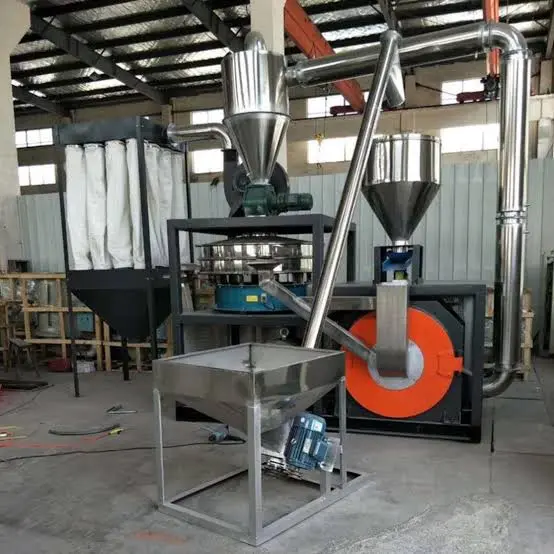
Plastic Screening Projects & Test Results
Explore our plastic screening projects and test results to see how Sanyuantang equipment handles different plastic materials, screen sizes, and processing capacities.
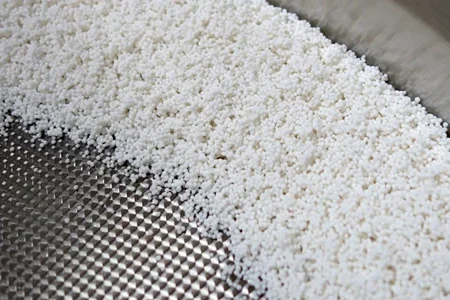
Recycled Plastic Screening Project in Malaysia
A Malaysian plastic recycling company needed to remove oversized pieces from recycled plastic material while maintaining a processing capacity of 150–200 kg/h.
Sanyuantang supplied an SY-1000 rotary vibrating screen with a 15 × 15 mm square perforated plate to separate oversized pieces from accepted material.
- Location: Malaysia
- Material: Recycled plastic flakes and pellets
- Equipment: SY-1000 Rotary Vibrating Screen
- Screen opening: 15 × 15 mm
- Screen diameter: 1,000 mm
- Capacity: 150–200 kg/h
- Contact material: SUS304 stainless steel
Recorded passing rate: ≥95%
The screening system achieved a recorded product passing rate of at least 95%, allowing accepted material to proceed to further processing.

Masterbatch Screening & Cooling Project in Japan
A Japanese masterbatch manufacturer needed to screen and cool hot plastic pellets after pelletizing, with a processing capacity of 400 kg/h.
Sanyuantang supplied an SYZ-515 linear vibrating screen and a cooling vertical spiral elevator to remove oversized pellets, reduce material temperature, and transfer pellets to the next production stage.
- Location: Japan
- Material: Masterbatch and plastic pellets
- Screening equipment: SYZ-515 Linear Vibrating Screen
- Screen openings: 8 mm and 2 mm
- Capacity: 400 kg/h
- Cooling equipment: Water- and air-cooled vertical spiral elevator
- Conveying height: 3.5 m
- Recorded temperature: 130°C reduced to 35°C
The vibrating screen separated oversized pellets and fines, while the spiral elevator cooled and conveyed the material vertically. The system achieved a recorded outlet tem
Screen Cleaning & Material Changeover
Plastic screening equipment needs regular cleaning, especially when switching between different resin grades, colors, or particle sizes. Residual pellets, powders, and flakes can remain on the screen surface, inside the frame, or around discharge outlets, leading to material contamination between batches.
Sanyuantang designs screening equipment with accessible components to simplify inspection, cleaning, and screen replacement.
Removable Screen Frames
Allow operators to remove and clean screens when changing materials or replacing worn mesh.
Accessible Discharge Outlets
Make it easier to clear trapped pellets, flakes, and powder residues.
Easy-to-Clean Contact Surfaces
Help reduce material buildup inside the screening machine.
Screen Inspection & Replacement
Regular checks help identify damaged, blocked, or worn screens that may affect separation accuracy.
Before maintenance, the machine must be isolated from its power supply and all moving parts must come to a complete stop.
Screen Mesh Replacement Video
Custom Plastic Screening Solutions from Sanyuantang
Sanyuantang provides customized screening, cooling, feeding, and conveying equipment for plastic pellet production and recycling lines. We select machine sizes, screen openings, and equipment configurations according to the material, required capacity, and production process.
Our customization options include:
| Customization Options | Available Configurations |
| Screen Mesh & Aperture | Woven mesh or perforated plates with customized openings for plastic pellets, flakes, and resin powders. |
| Machine Size & Screening Decks | Different screen dimensions and 1–5 screening decks for required capacity and particle size separation. |
| Equipment Materials | Carbon steel, 304 or 316 stainless steel contact parts according to material and cleaning requirements. |
| Feeding & Conveying | Custom inlet and outlet connections, feed hoppers, screw feeders, and conveying equipment. |
| Screening & Cooling Systems | Linear vibrating screens combined with cooling spiral elevators for hot plastic pellets. |
| Material Screening Tests | Sample testing to confirm suitable screen openings, separation performance, and processing capacity. |
Our engineering support covers material screening tests, machine size selection, custom screen surfaces, feeding and discharge connections, and equipment layout. For plastic flakes and irregular regrind, we can evaluate screen passage using actual material samples. For pellet cooling applications, we review the required cooling conditions and conveying height before determining the equipment combination.
Share your material type, particle size, required screening capacity, and existing production line details with our team. We can help select a suitable plastic screening and conveying arrangement.
Project Review
Plan Your Plastic Screening & Recycling Process
Share your material type, particle dimensions, target aperture, required capacity, temperature, and production line layout. Our team can review suitable screening, cooling, feeding, and conveying equipment.
Screening, cooling and conveying equipment
Plastic Screening FAQs
What screening machine is used for plastic pellets?
Linear vibrating screens and rotary vibrating screens are commonly used for plastic pellet grading. They remove oversized pieces, joined pellets, and fines before packaging or further processing. Linear screens are suitable for continuous classification, while rotary screens provide flexible check screening and multi-deck separation. The equipment is selected according to the pellet size, required capacity, and number of size fractions.
How do you separate oversized plastic flakes in recycling?
Oversized plastic flakes can be removed using a vibrating screen fitted with a suitable perforated plate. The opening is selected according to the actual flake dimensions and required separation. Because flakes are irregular and may pass through openings in different orientations, material testing is recommended. Screening can be installed after crushing, washing, or drying, depending on the recycling process.
What screen opening is suitable for PP and PE pellets?
PP and PE pellet screen openings are usually specified in millimeters. The correct size depends on the actual pellet dimensions and whether the process needs to remove oversized pellets, fines, or both. A multi-deck screen may use different upper and lower openings to collect the required pellet fraction. We recommend confirming the aperture using material samples.
What is the difference between a linear and rotary vibrating screen for plastics?
A linear vibrating screen moves materials along a rectangular screening surface and is suitable for continuous grading of pellets, flakes, and granular plastics. A rotary vibrating screen uses three-dimensional vibration across a circular screen and is commonly used for check screening and particle classification. The choice depends on material shape, screening capacity, available space, and the required separation.
Can a vibrating screen remove fine powder from recycled plastic pellets?
Yes. A vibrating screen can separate fine particles and dust from recycled plastic pellets when the fines are smaller than the screen opening. Single- or multi-deck configurations can be selected according to the required separation. For lightweight or electrostatic materials, screen design and feeding conditions are important. Testing can help confirm the achievable fines removal performance.
Can Sanyuantang customize a plastic screening and conveying system?
Yes. Sanyuantang can configure vibrating screens, custom screen surfaces, feeding equipment, and conveying systems for plastic pellet production and recycling applications. We can also combine suitable screening equipment with cooling vertical spiral elevators. Our team reviews the material, required particle size, throughput, temperature, and installation space before recommending an equipment arrangement.