
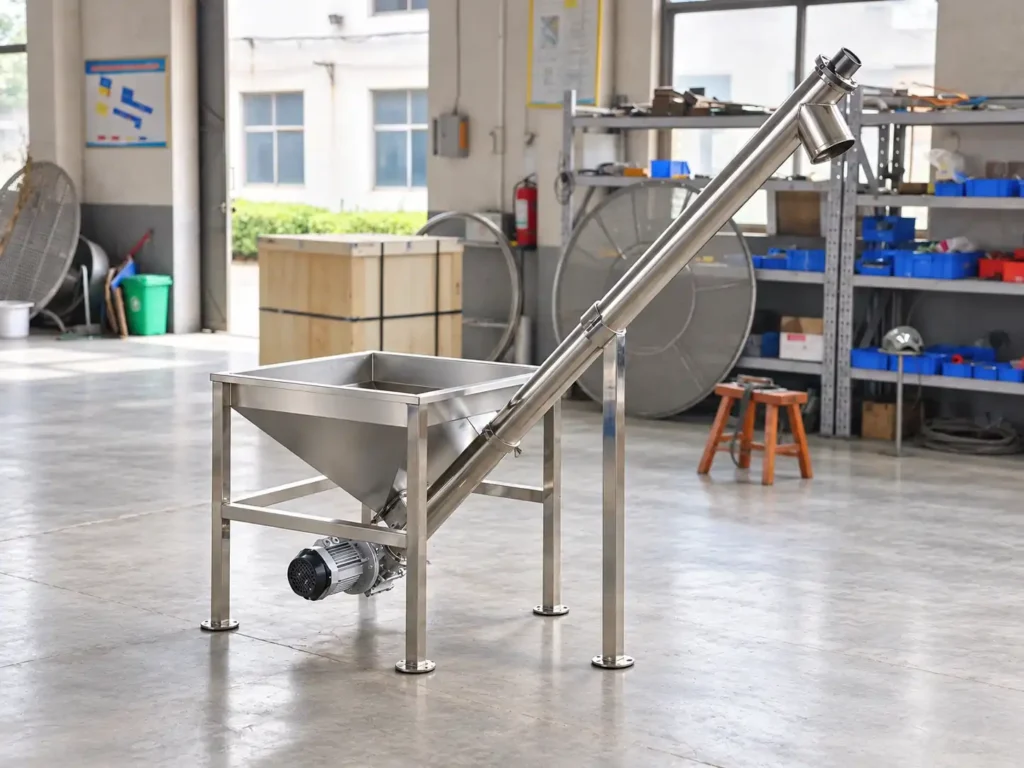
Powder Feeding Equipment Manufacturer
Powder feeding equipment moves dry powders and bulk solids from a hopper, silo or container into the next machine at a controlled rate. Sanyuantang supplies screw feeders with hopper, vacuum feeders, double motor and electromagnetic vibrating feeders, and rotary airlock valves from Xinxiang, China. Tell us your material and target output, and we will recommend a suitable type.
Powder Feeders We Manufacture
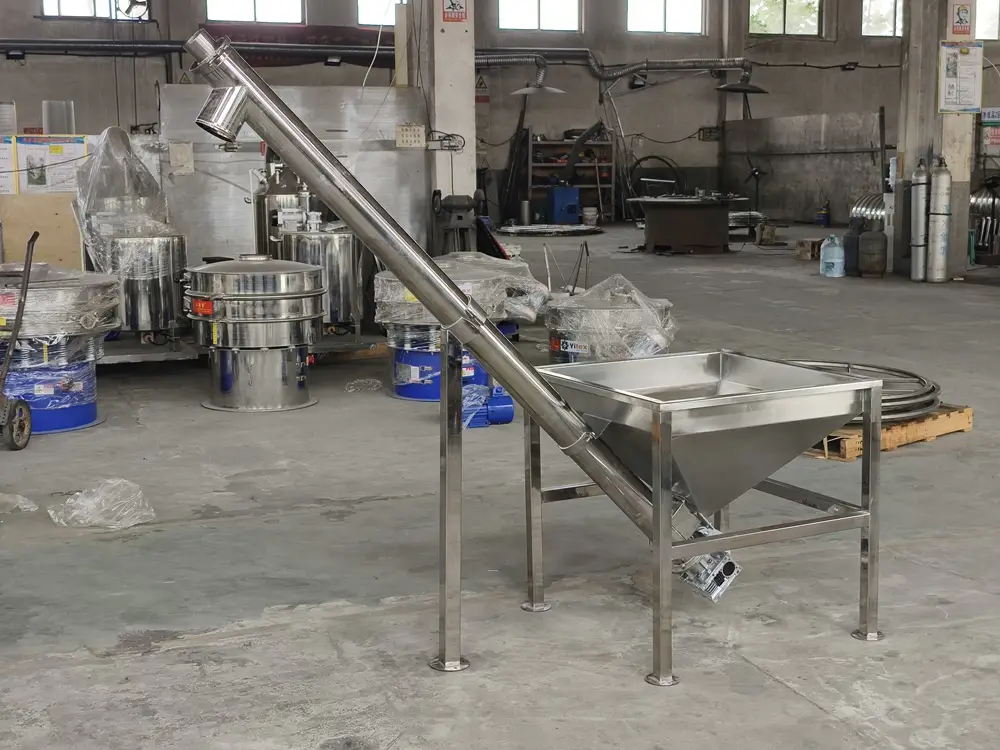
Screw Feeder with Hopper
A screw feeder with hopper takes powder or small granules from a storage hopper and pushes it forward with a rotating screw, so the output stays steady and easy to set. It loads mixers, packing machines, extruders and reactors. Hopper capacity is 70–350 kg, screw diameter 100–250 mm, and capacity 2–22 m³/h. Choose stainless steel for food and pharma lines, or carbon steel for general industry. Length and incline angle are made to your layout.
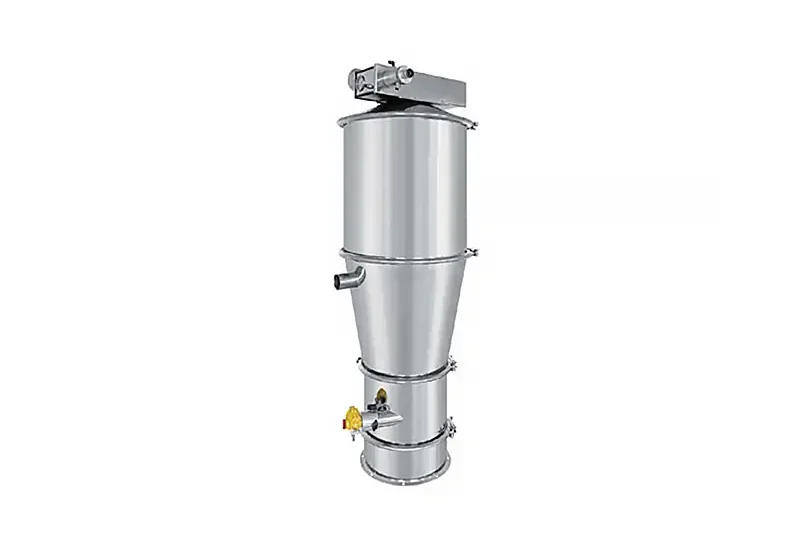
Vacuum Feeder for Powder
A vacuum feeder draws powder through a hose into a closed hopper, helping contain dust and reduce exposure to the product. When the hopper is full, the conveying cycle stops and a discharge valve releases material into the next machine. A back-blow filter is cleaned between cycles. Typical applications include tablet presses, capsule fillers, mixers, sifters and packing machines. The listed model range is 80–4,000 kg/h; actual capacity depends on the powder, conveying route and distance.
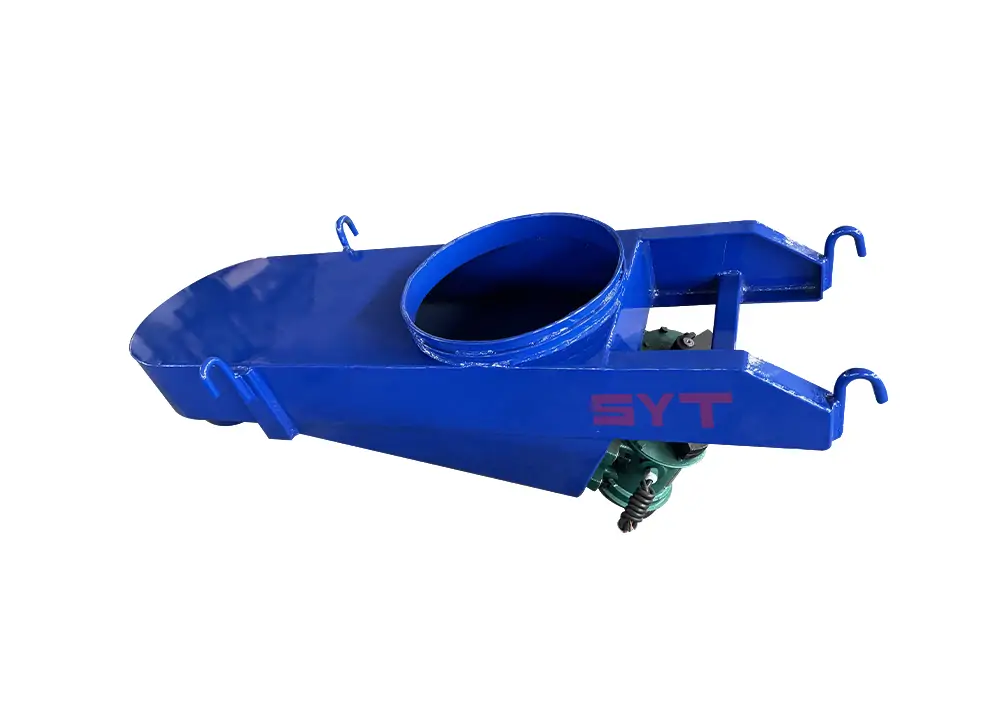
Double Motor Vibrating Feeder
The GZG double motor vibrating feeder uses two counter-rotating motors to move material along a trough. It suits lumps and coarse granules and feeds crushers, screens and belt conveyors evenly. Open, closed, hanging and pedestal arrangements are available. Trough size, feed opening and drive are selected around the material and required output.
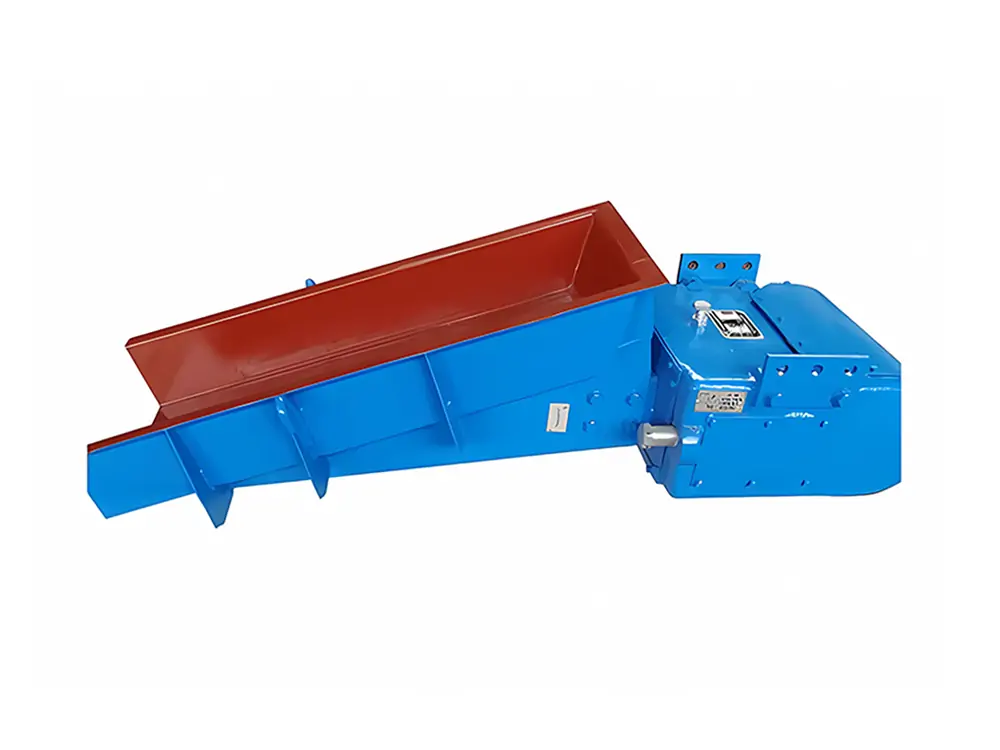
Electromagnetic Vibrating Feeder
An electromagnetic vibrating feeder drives the trough with magnetic pulses rather than a rotating motor drive. Adjusting the controller changes the vibration amplitude and feeding rate. It is used for batching, weighing and controlled feeding of granules and small lumps. Open or closed troughs and hanging or pedestal arrangements can be selected for the installation.
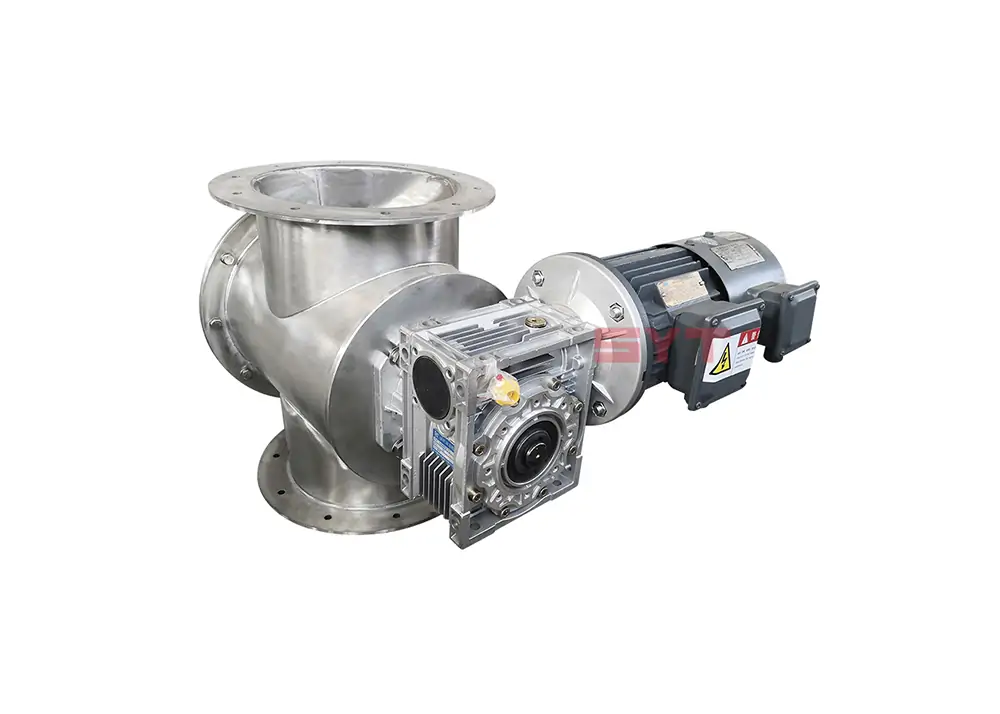
Rotary Airlock Valve
A rotary airlock valve discharges dry powder from a silo, hopper or dust collector while limiting airflow between the connected sections. A bladed rotor turns inside the housing, carrying material in pockets to the outlet. It is used beneath cyclones and ash hoppers and in pneumatic conveying systems. Rotor size, speed, seals and temperature rating must match the material and operating conditions.
Feeder Selection
How to Choose a Powder Feeder
Start with material flow, dust control and the receiving machine. Capacity figures refer to listed models and must be checked against the actual material and layout.
| Feeder Type | Best For | Selection Notes |
|---|---|---|
| Screw feeder with hopper | Free-flowing powder and small granules; steady dosing into mixers and packers. | Listed capacity: 2–22 m³/h. Check hopper bridging, moisture and required dosing accuracy. |
| Vacuum feeder | Enclosed transfer of fine or dusty powder from drums, bags and containers. | Listed model range: 80–4,000 kg/h. Capacity depends on material, hose diameter and conveying distance. |
| Double motor vibrating feeder | Lumps and coarse granules feeding crushers, screens and belt conveyors. | Select trough, drive and feed opening for the load. Fine dusty powder may require an enclosed arrangement. |
| Electromagnetic vibrating feeder | Adjustable feeding for batching, weighing and dosing of granules and small lumps. | Confirm the required flow range and input size. Large, sticky or heavy material needs careful assessment. |
| Rotary airlock valve | Controlled discharge beneath silos, cyclones and dust collectors. | Confirm particle size, abrasion, temperature and pressure difference before selecting a rotor and seal. |
Contain dust
Consider an enclosed vacuum feeder when dust or contamination is the main concern.
Feed a mixer or packer
Consider a screw feeder for steady dosing along a fixed route.
Handle coarse material
Consider a double motor vibrating feeder for crushers and screens.
Adjust the feeding rate
Consider an electromagnetic feeder for controlled batching and weighing.
Discharge across a pressure difference
Consider a rotary airlock valve, with its sealing and pressure rating matched to the system.
What to Send Us for a Quote
Send these details so we can size the feeder and identify the right configuration. Photos of the material and existing line are helpful.
Material and particle size
Name the powder or granules and give the particle size range.
Bulk density
Give the loose bulk density so mass and volume flow can be compared.
Flow behaviour
Tell us whether the material cakes, bridges, absorbs moisture or sticks.
Target output
Specify the required hourly output and any dosing accuracy requirement.
Layout and distance
Share a sketch with horizontal distance, lifting height and inlet and outlet positions.
Process requirements
List hygiene, cleaning, corrosion, temperature or explosion-protection requirements.
Powder Feeders by Industry
Chemical
Pigments, resins, catalysts and additives may be dusty, corrosive or prone to sticking. Enclosed vacuum conveying and suitable screw feeder contact materials can help control exposure and material loss.
Pharmaceutical
Excipients and granules may need to be loaded into tablet presses and capsule fillers. Confirm the cleaning method, contact materials and containment requirements when selecting a vacuum feeder.
Food
Flour, starch, sugar and seasoning need suitable product contact surfaces and a cleanable design. Screw feeders with hopper and vacuum feeders are common choices.
Plastics
Masterbatch, fillers and pellets need a steady supply to mixers and extruders. Vacuum loaders and screw feeders reduce manual handling and help keep receiving hoppers supplied.
Mining and Building Materials
Ore, coal, aggregates and mineral powders need equipment matched to the load and wear. GZG vibrating feeders handle coarse material; rotary valves serve suitable fine-material discharge duties.
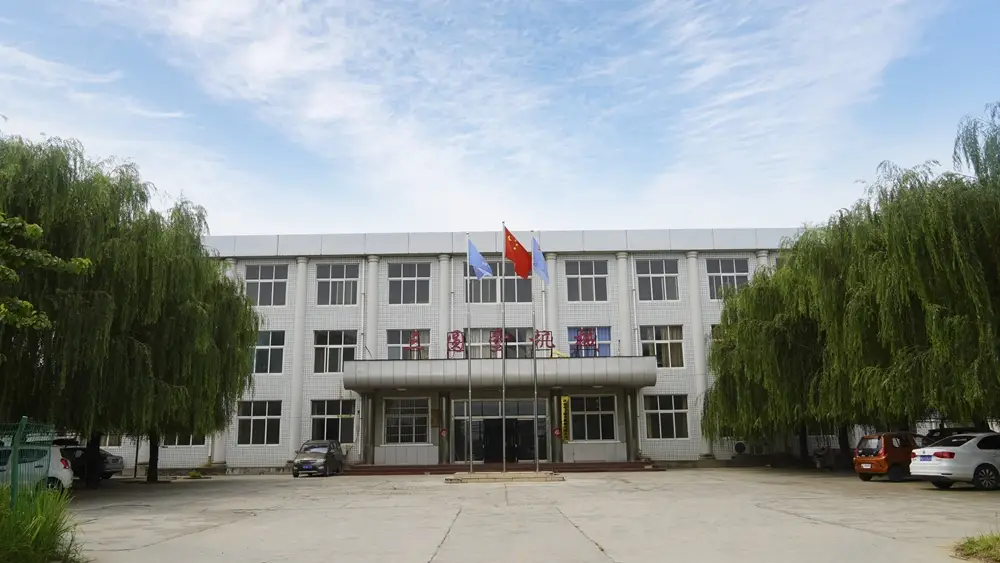
Built in Xinxiang: Our Manufacturing Base
Sanyuantang is based in Xinxiang, Henan, China, a centre for vibrating and conveying machinery. Feeder selection starts with your powder, required output and installation space. Hopper size, screw length, trough arrangement and contact materials are discussed against the duty before the configuration is confirmed.
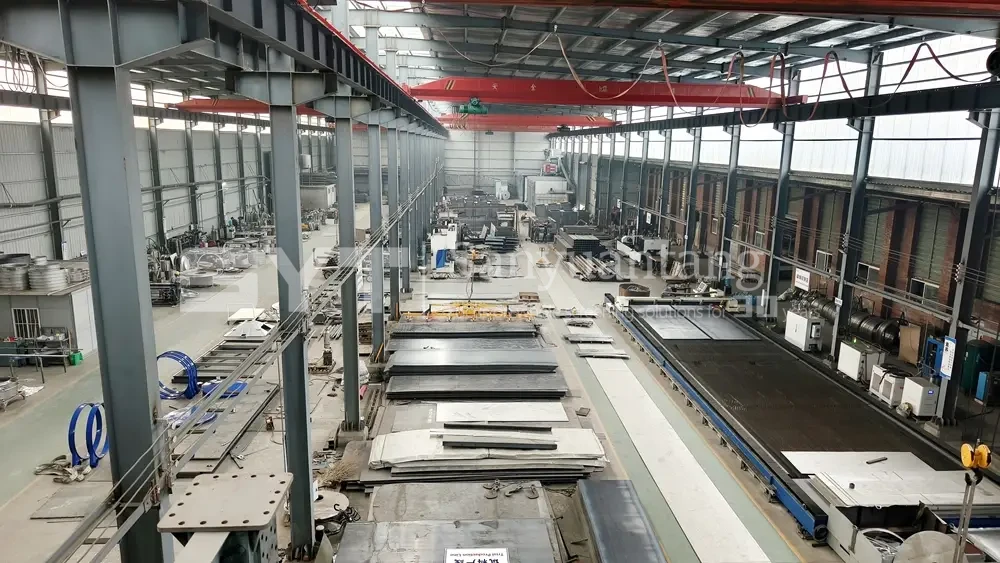
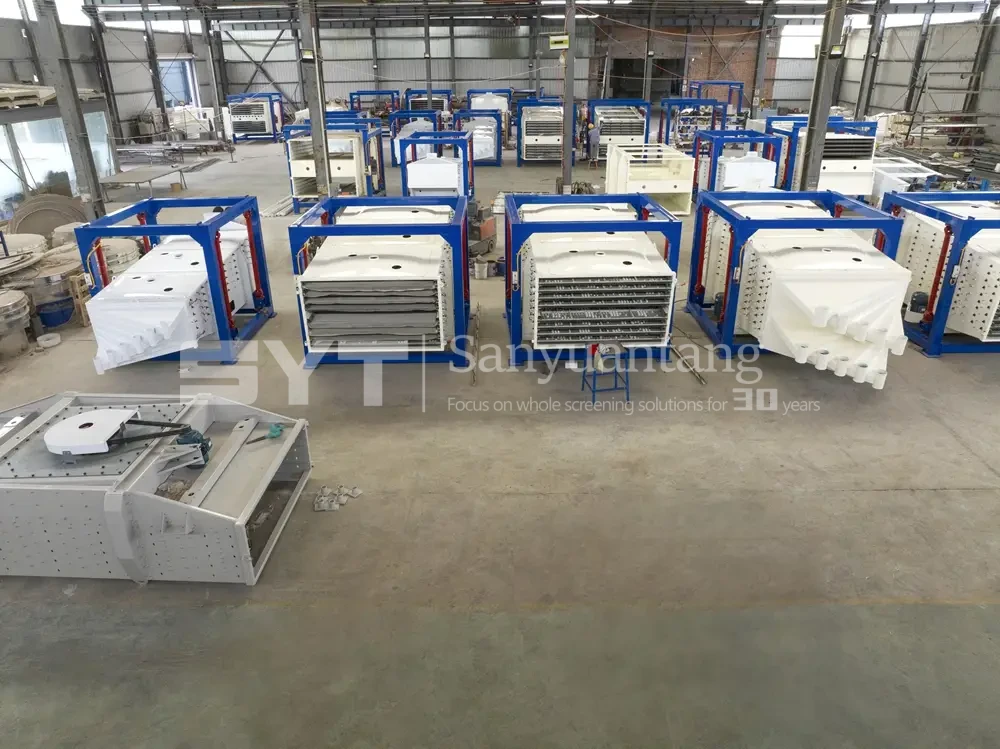
Explore our service capabilities and processing systems, or send a layout drawing to discuss how the feeder will connect to your line.
Powder Feeding Equipment FAQ
Which powder feeder is best for fine, dusty powder?
A vacuum feeder is often a suitable starting point. Its enclosed hose, filter and hopper help contain dust during transfer. A screw feeder with a closed cover may suit a short, fixed route. The final choice depends on flow behaviour, cleaning needs and the receiving machine.
What is the difference between a screw feeder and a vacuum feeder?
A screw feeder pushes material along a fixed tube from a hopper and doses it by screw speed. A vacuum feeder lifts material by suction and drops it in batches, and it can follow a flexible hose around obstacles. Screw feeders suit dosing; vacuum feeders suit loading.
When should I use an electromagnetic feeder instead of a double motor feeder?
Consider an electromagnetic feeder when you need to adjust the feeding rate during batching or weighing. A double motor GZG feeder is generally used for heavier loads of coarse or lumpy material feeding crushers and screens. Confirm feed size and required output before choosing a model.
What does a rotary airlock valve do in a feeding system?
It meters dry material from a silo or dust collector while limiting airflow between the two sides. Rotor pockets carry material to the outlet, and flow depends on rotor volume, speed and filling. Select the rotor, seal and temperature rating for the actual material and pressure conditions.
What information do you need to quote a powder feeder?
The material and particle size, bulk density, flow behaviour, target output, layout and distance, and any hygiene or explosion-protection needs. Photos of the current line help, too.
Request a Quote
Tell us what you are feeding, how much per hour and where the material needs to go. Include your company, material, bulk density, particle size, target output, conveying distance and any cleaning or process requirements in your message. Our team can recommend a feeder type and prepare a quotation.