What Is a Linear Vibrating Screen?
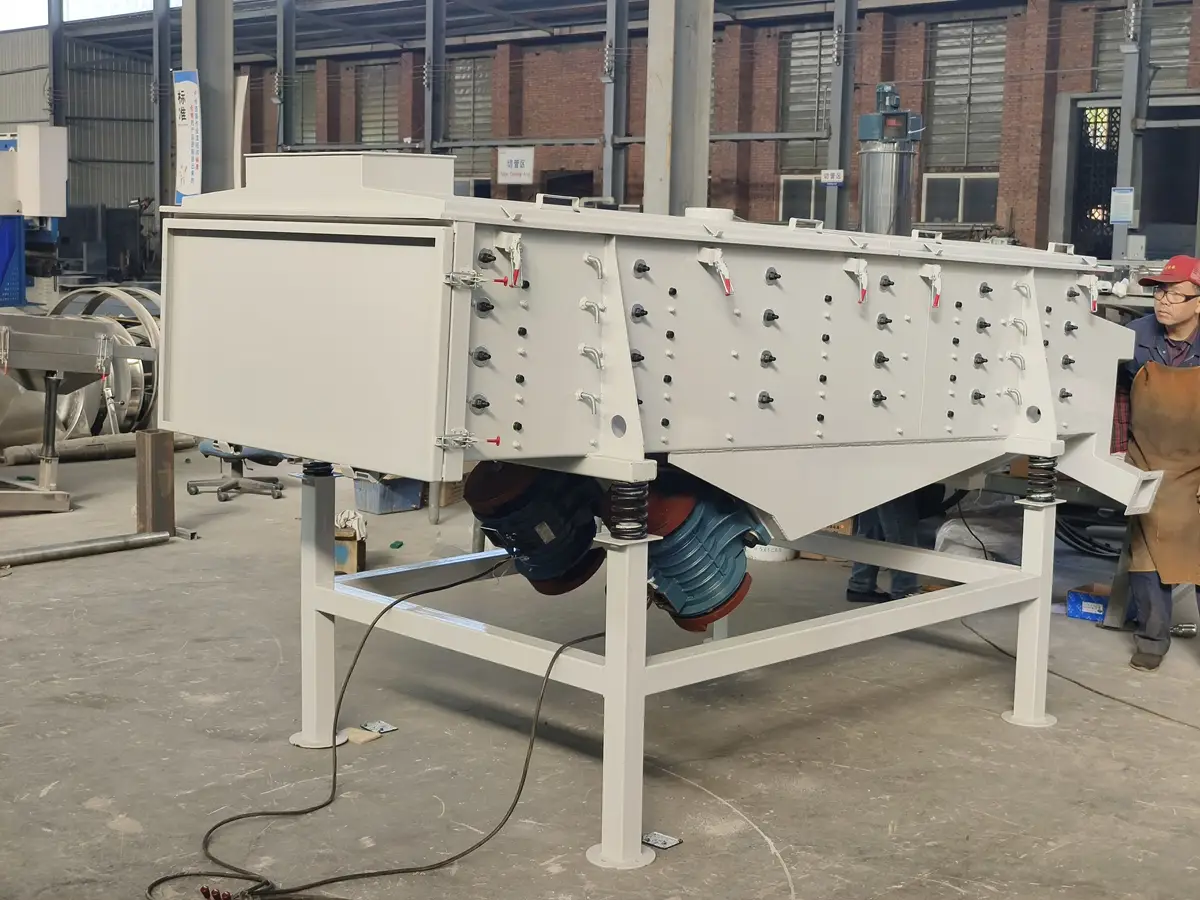
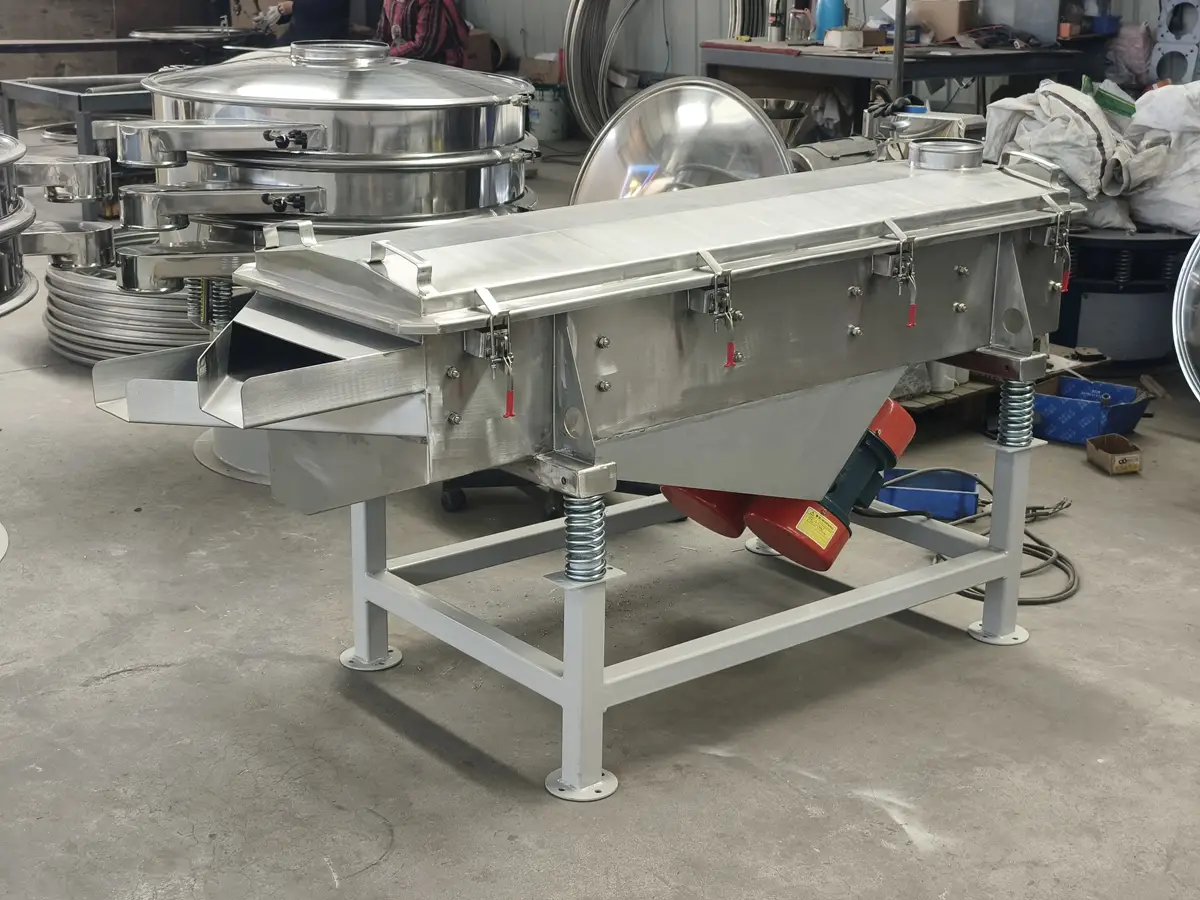
A linear vibrating screen, also known as a linear vibratory screener or linear vibrating sieve, is an industrial screening machine used for particle size classification, impurity removal, and grading of dry powders and granular materials. It operates with two counter-rotating vibration motors that generate linear motion, moving materials forward across the screen surface while smaller particles pass through the mesh and oversized particles discharge separately.
Single-deck and multi-deck configurations allow continuous screening and separation into multiple particle sizes. Linear vibrating screens are widely used for screening quartz sand, plastic granules, grain, fertilizer, chemical powders, and other bulk materials. Sanyuantang supplies linear vibrating screens with customizable screen sizes, mesh openings, contact materials, and discharge arrangements to meet different processing capacities and production-line requirements.
Functions of Linear Vibrating Screen
A linear vibrating screen is used for particle size classification, impurity removal, protective screening, and solid-liquid separation. Its linear vibration conveys materials across the screen surface while separating particles by size. Sanyuantang linear vibrating screens support coarse and fine grading, dust and fines removal, and multi-grade separation using single or multiple screen decks. They can also be configured for dewatering and liquid-solid separation, depending on the material properties and screening requirements.
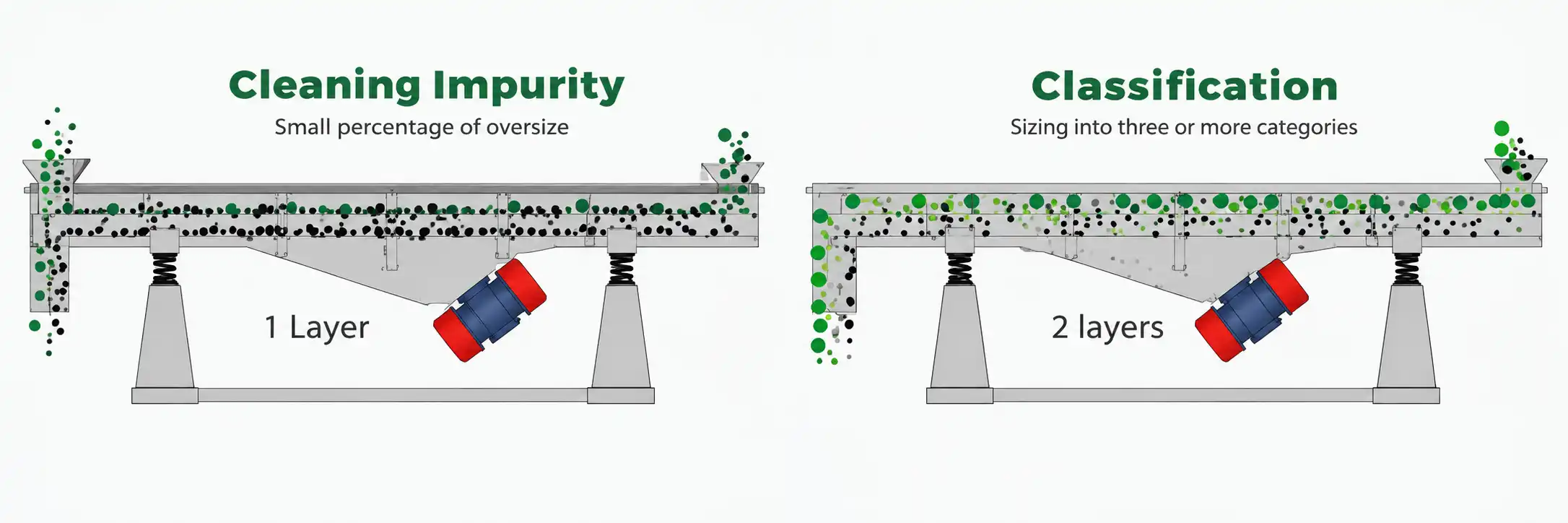
| Screening Function | Function & Features | Typical Applications |
| Particle Size Classification | Separates bulk materials into different particle size fractions using single or multiple screen decks. | Sand, fertilizer, grain, plastic granules |
| Impurity Removal | Removes oversized particles, lumps, and foreign materials to improve product consistency. | Chemical powders, food ingredients, plastic pellets |
| Fine and Coarse Separation | Separates fine particles from coarse materials using selected mesh apertures. | Quartz sand, abrasives, mineral powders |
| Material Scalping | Removes large particles and unwanted debris before downstream processing to protect equipment. | Minerals, recycled plastics, agricultural materials |
| Product Quality Screening | Removes off-size particles from finished products before packaging or further processing. | Fertilizer, chemical granules, food powders |
How Does a Linear Vibrating Screen Work?
A linear vibrating screen operates through two counter-rotating vibration motors that generate synchronized linear motion. The combined excitation force moves materials forward along the screen surface while separating particles according to size. During vibration, smaller particles pass through the screen mesh, while oversized particles continue toward the discharge outlet.
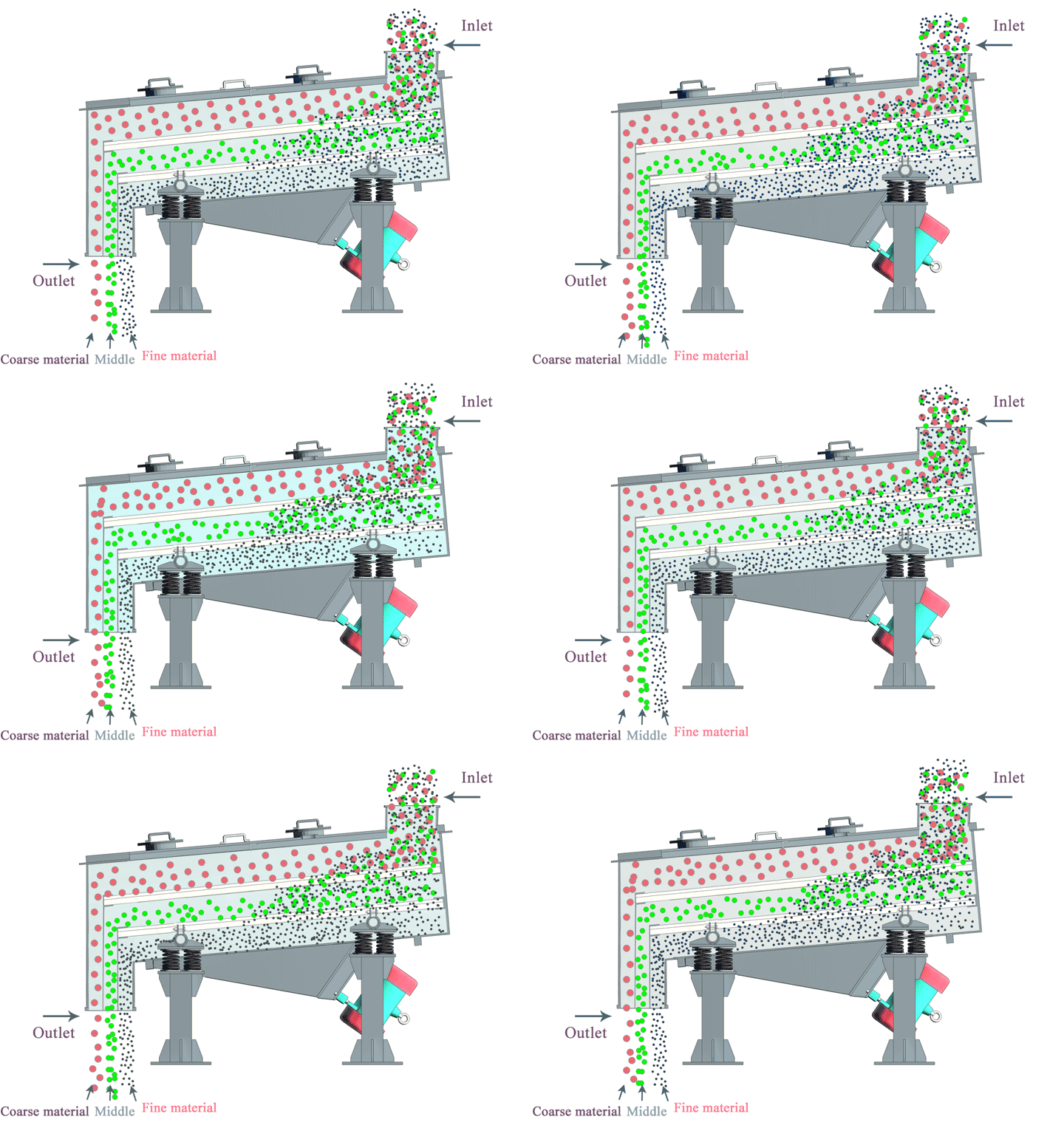
Working Principle of a Linear Vibrating Screen
- Vibration Generation: Two counter-rotating motors produce a directional excitation force, driving the screen box in a linear vibrating motion.
- Material Feeding: Powders or granules enter through the feed inlet and spread across the vibrating screen surface.
- Particle Stratification: Repeated vibration loosens the material bed, allowing finer particles to move toward the screen mesh while coarser particles remain above.
- Screening and Classification: Undersized particles pass through the mesh openings. Multiple screen decks can separate materials into different particle size fractions.
- Continuous Discharge: Oversized and screened materials move toward their respective outlets for collection or transfer to downstream equipment.
- Screening Performance: Screening efficiency and throughput depend on vibration amplitude, screen inclination, mesh aperture, material characteristics, and feed rate. Sanyuantang can adjust the screen configuration according to the required separation accuracy and production capacity.
Working Video
Linear Vibrating Screen Components & Parts
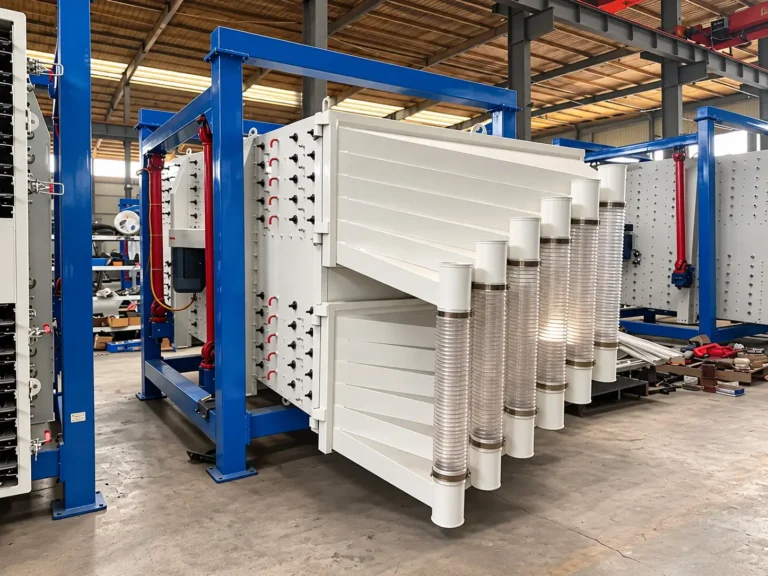
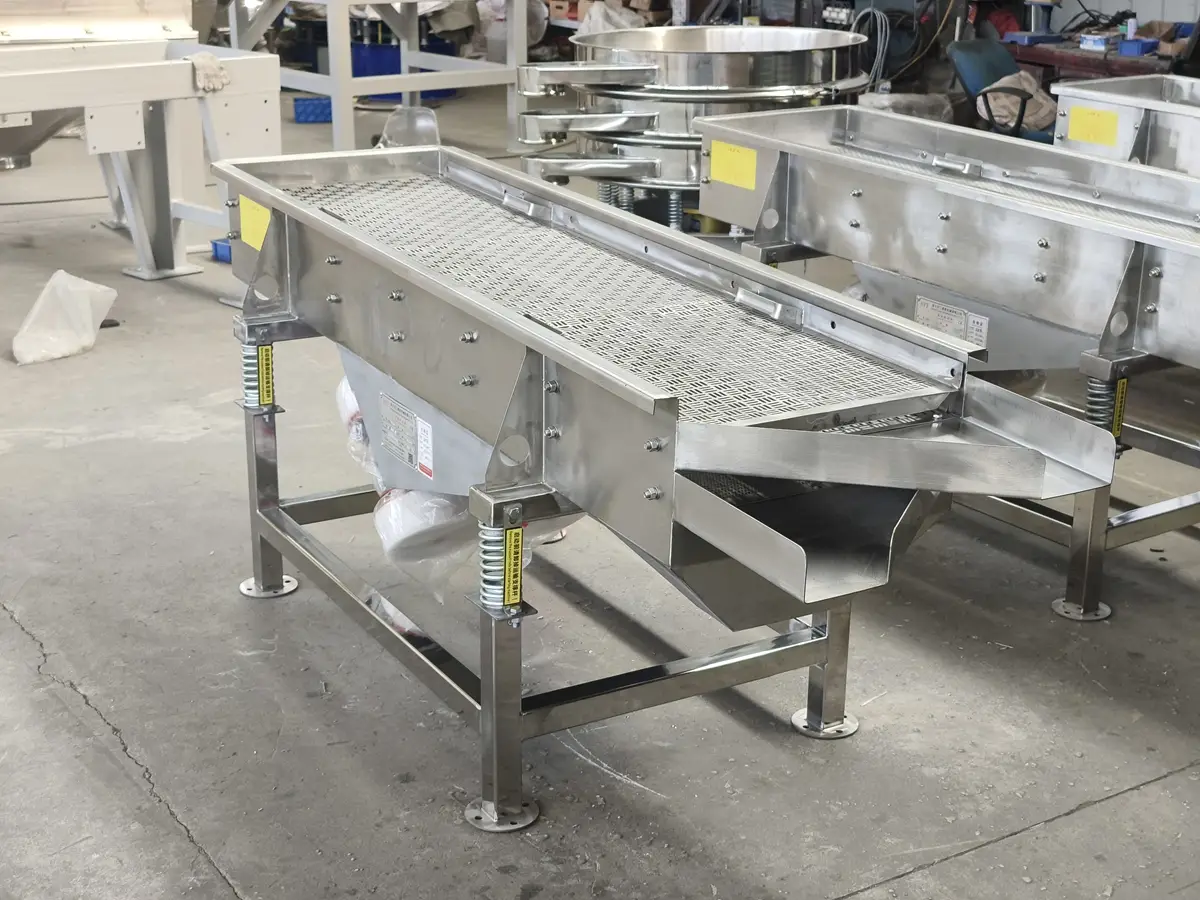
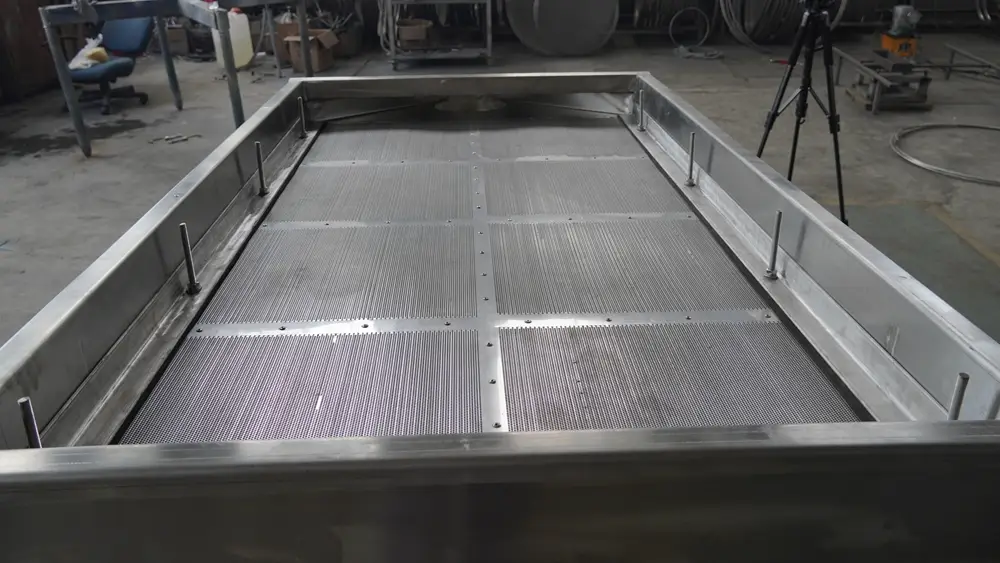
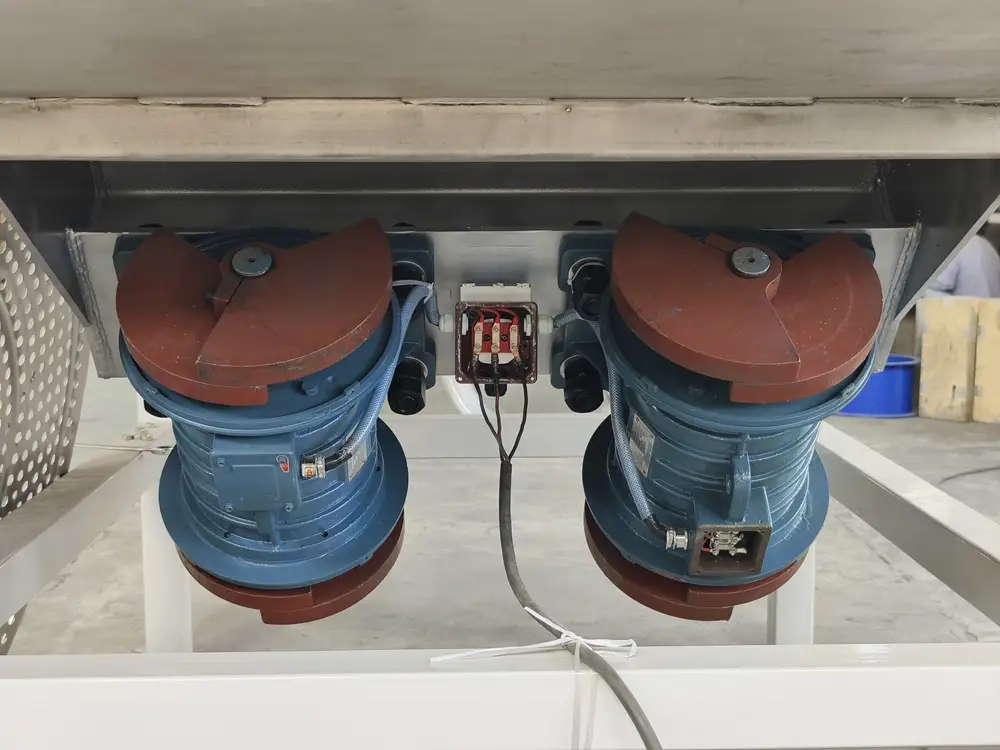
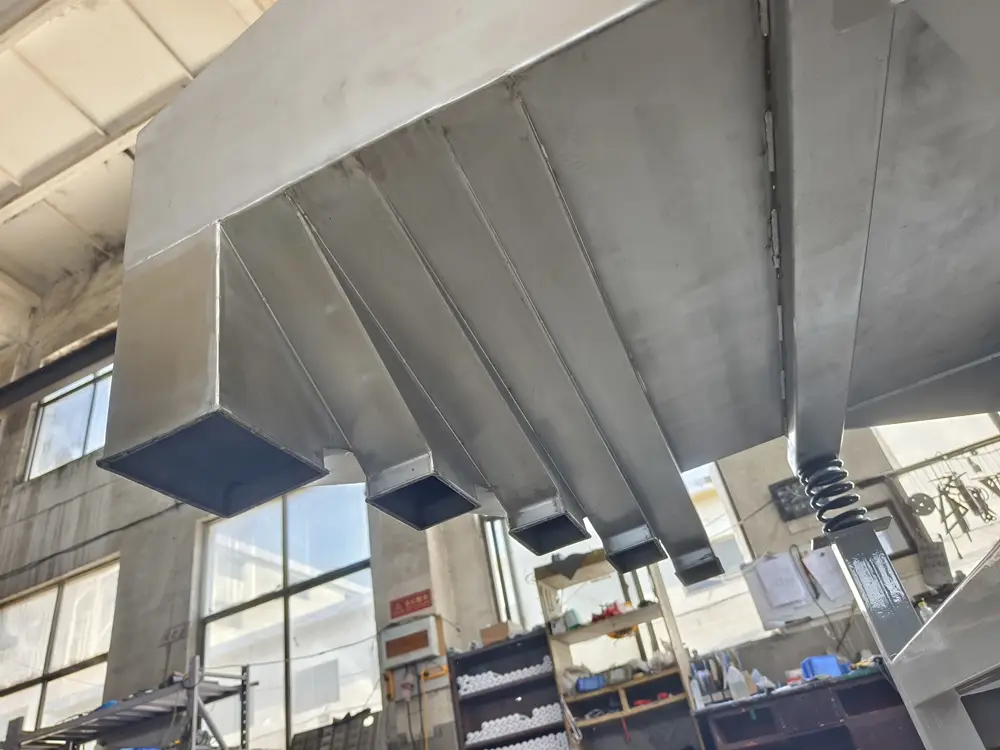
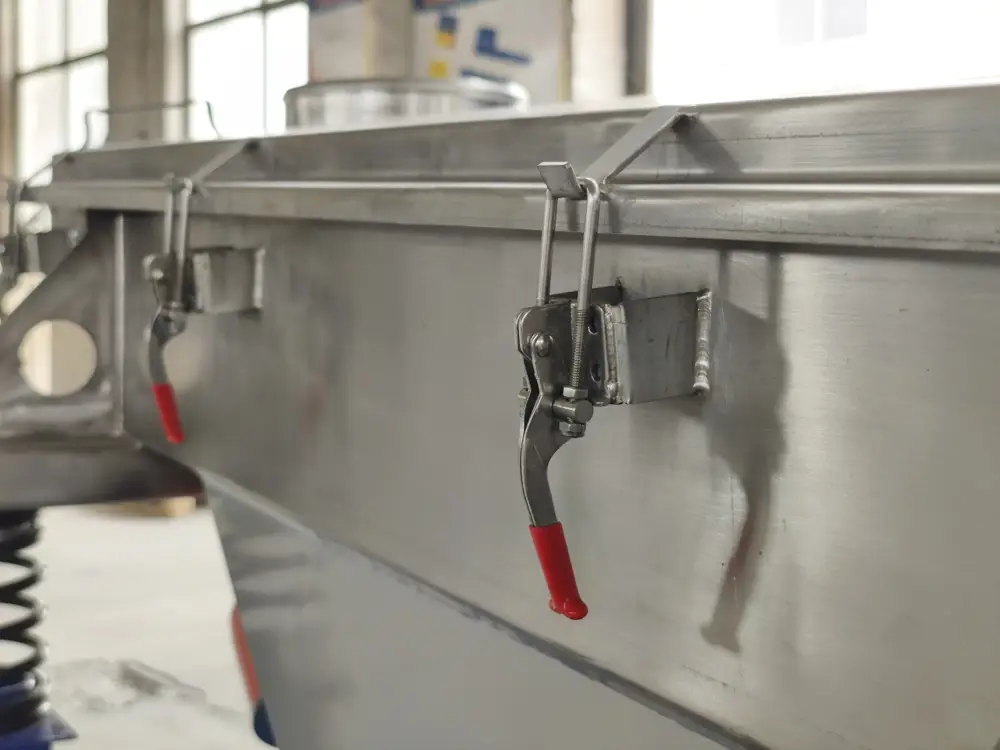
A linear vibrating screen consists of a screen box, screen frames, screen mesh, dual vibration motors, isolation springs, and a supporting structure, together with material feeding and discharge components. These parts work together to generate linear motion, separate particles by size, and maintain stable screening performance. Sanyuantang offers single-deck and multi-deck configurations, with replaceable screen meshes and accessible components for routine inspection, cleaning, and maintenance.
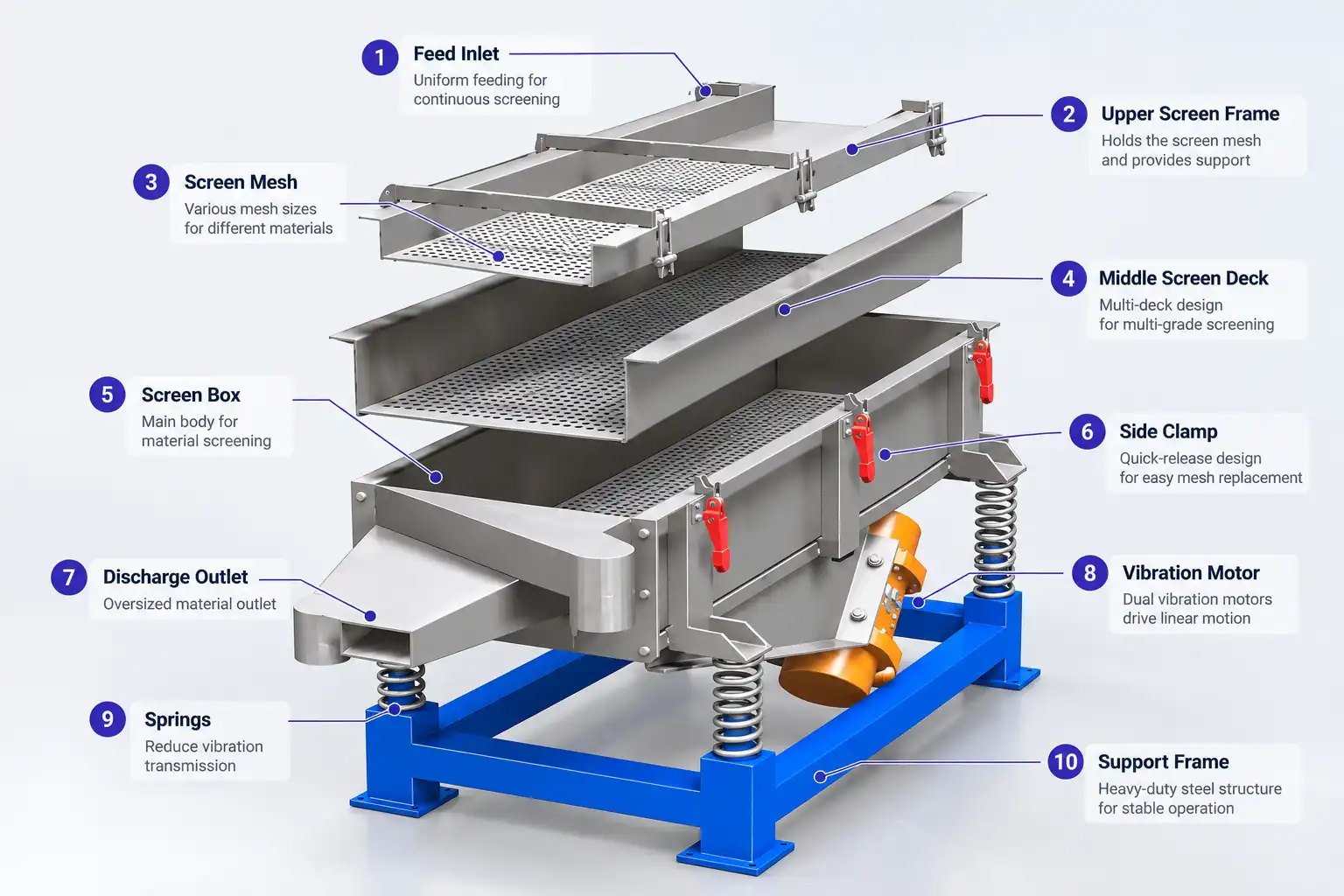
Main Components of a Linear Vibrating Screen
| Component | Function & Features |
|---|---|
| Feed Inlet | Directs incoming materials onto the screen surface for continuous feeding and even distribution. |
| Screen Frame | Supports and tensions the screen mesh to maintain a stable screening surface. |
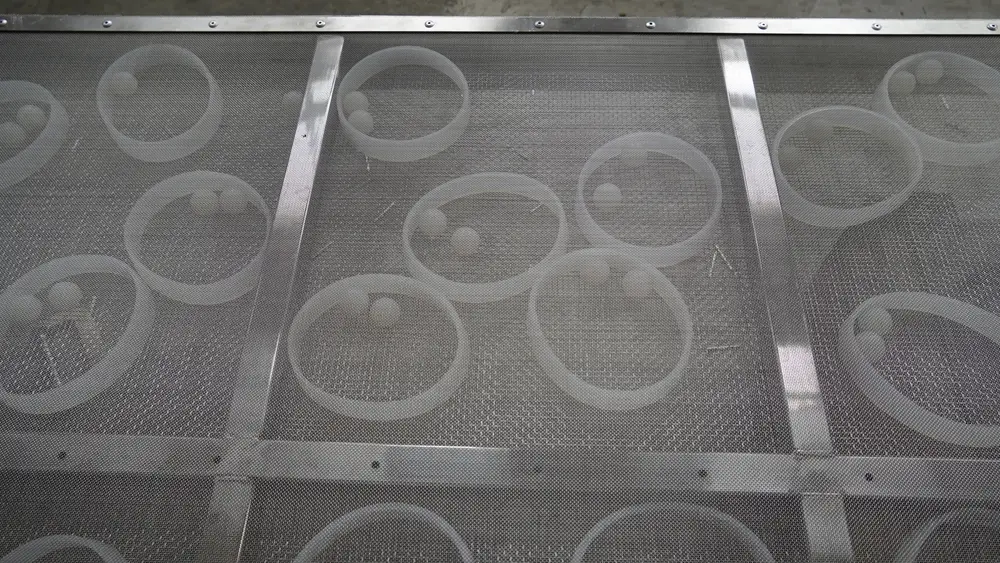
| Screen Mesh | Separates particles by aperture size, with interchangeable mesh specifications for different grading requirements. |
| Screen Decks | Allow multiple mesh layers to classify materials into different particle size fractions. |
| Screen Box | Houses the screening decks and withstands dynamic loads during operation. |
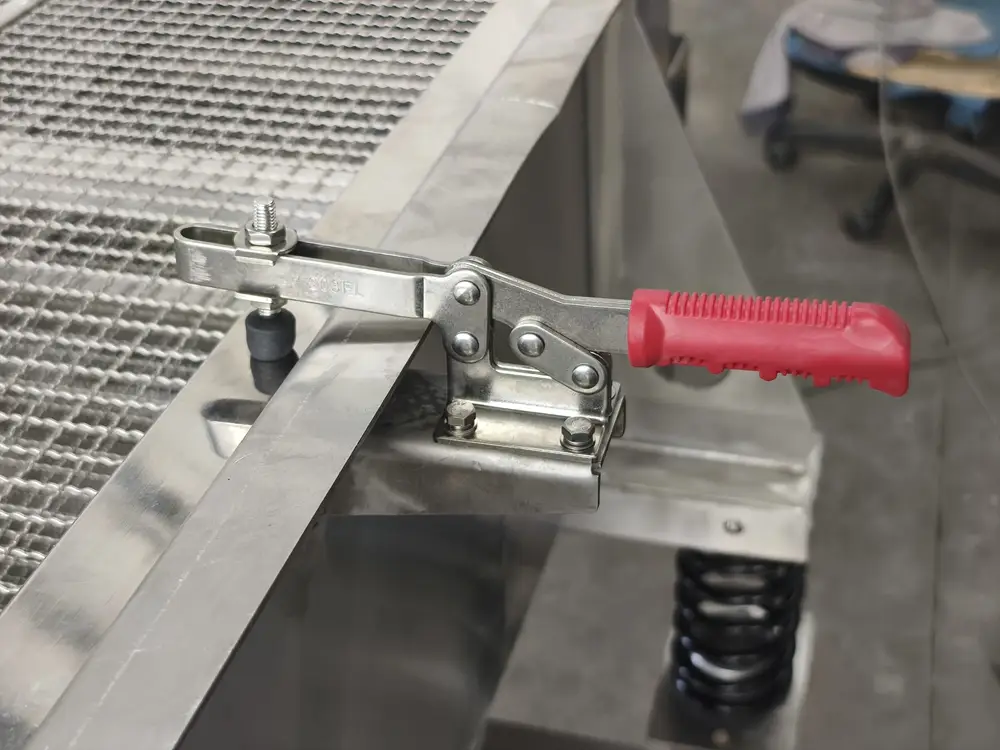
| Screen Clamps | Secure the screen frames and allow access for cleaning, inspection, and mesh replacement. |
| Discharge Outlets | Direct separated materials to individual collection points or downstream conveyors. |
| Vibration Motors | Two counter-rotating motors generate synchronized excitation forces for linear screening motion. |
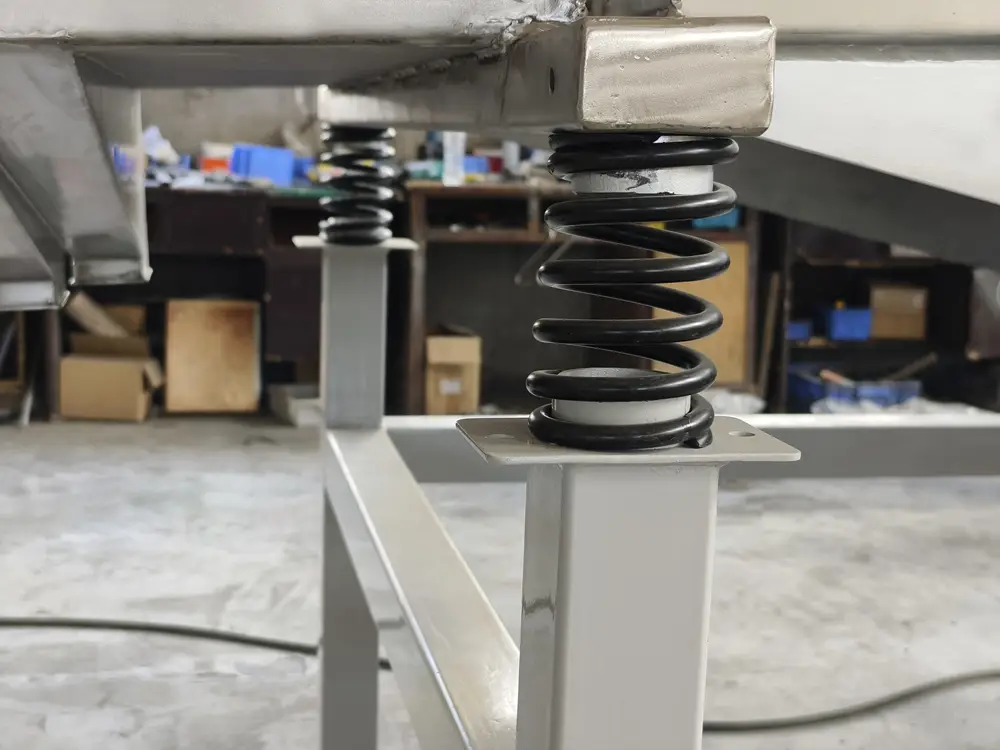
| Isolation Springs | Support the vibrating screen box while reducing vibration transmission to the support structure. |
| Support Frame | Provides a rigid base and maintains equipment stability during operation. |
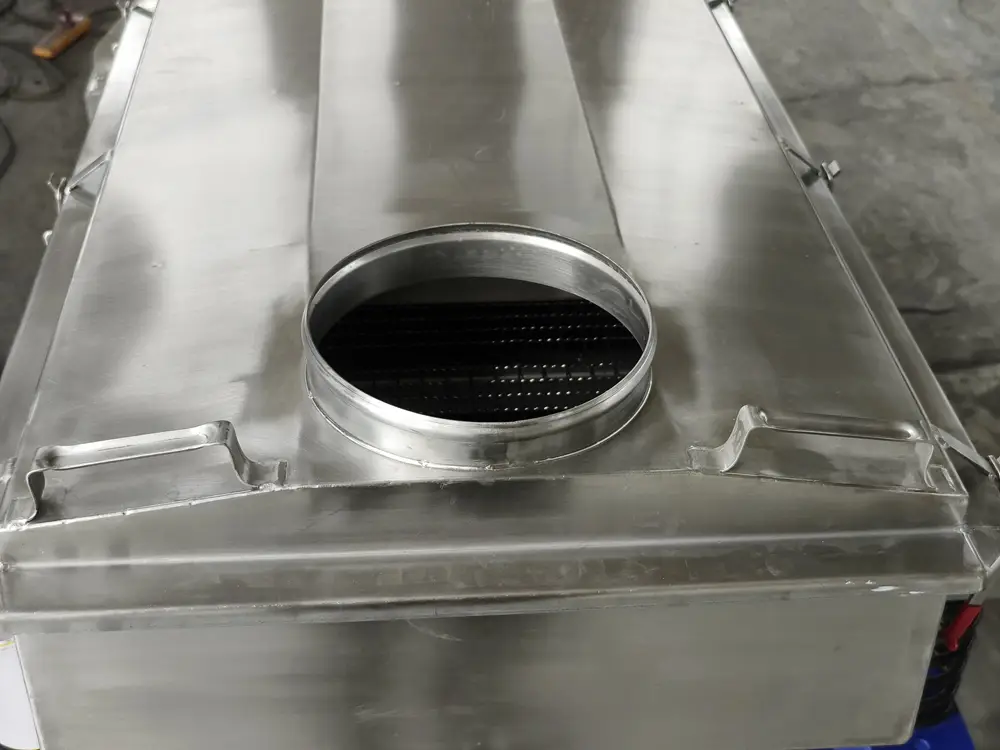
Parts Details Show
Applications & Materials
Linear vibrating screens are widely used for particle size classification, fines removal, impurity separation, and protective screening in industrial material processing. Screen mesh, contact materials, and discharge configurations can be selected according to material characteristics, required capacity, and production conditions.
Chemical Processing
Suitable for screening resin powders, pigments, and chemical granules to remove oversized particles and impurities. Enclosed designs and compatible contact materials can be specified for different processing requirements.
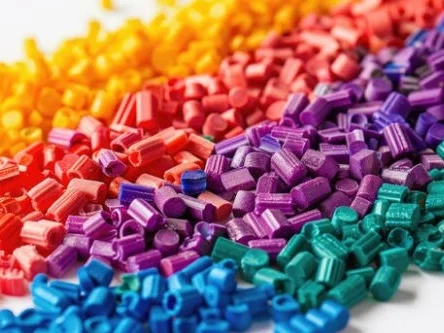
Plastics & Recycling
Used for classifying plastic pellets, masterbatch, and recycled plastic granules. Fine particles, oversized material, and irregular granules are separated before further processing or packaging.

Food Processing
Suitable for grading sugar, salt, yeast powder, and grains. Stainless steel contact parts and enclosed screening structures can be configured for food processing applications.
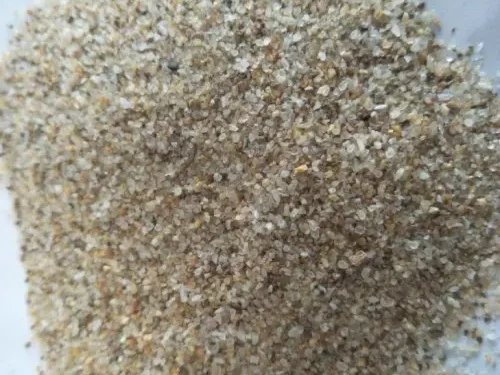
Minerals & Abrasives
Used for particle size classification of quartz sand, ceramic sand, alumina, and mica. Screen mesh and wear-resistant components are selected according to material abrasiveness and required separation sizes.

Fertilizer Processing
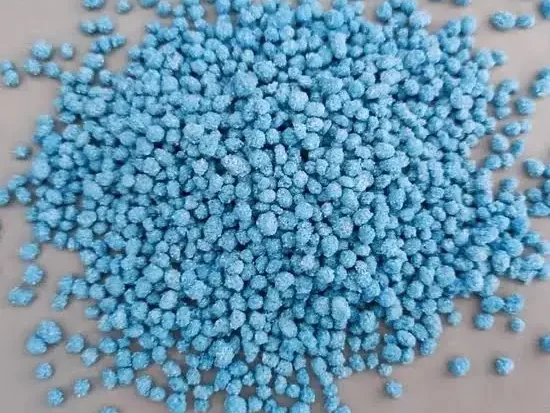
Separates oversized particles and grades organic fertilizer and fertilizer granules into specified size fractions, supporting consistent product sizing before packaging.

Feed Processing
Used for screening feed pellets, meat meal, and grain mixtures. Single- or multi-deck configurations support fines removal, impurity separation, and multi-grade particle classification.
Materials Testing Videos
Advantages
The SYZ series linear vibrating screens combine continuous material screening, multi-grade classification, and flexible equipment configurations. Designed for industrial powder and granular processing, they provide the following advantages:
Continuous Screening Capacity
Handles 300–4,000 kg/h of material with continuous feeding and automatic discharge, depending on material properties and screen configuration.
Multi-Grade Particle Classification
Supports 1–5 screen decks, allowing separation into up to 6 particle size fractions in a single screening process.
Stable Dual-Motor Drive
Two counter-rotating vibration motors generate consistent linear motion, with a nominal vibration frequency of 960 cycles/min for controlled material movement.
Multiple Screen Sizes
Available in SYZ520, SYZ825, SYZ1030, SYZ1225, and SYZ1530 models to accommodate different screening areas, production capacities, and installation layouts.
Dust-Controlled Screening
Optional enclosed screen covers and sealed connections help reduce dust escape during powder and granular material processing.
Customizable and Easy to Maintain
Replaceable screen meshes, accessible screen frames, and adjustable inlet/outlet configurations simplify maintenance and production-line integration.
Specifications
SYZ Series linear vibrating screens are available in different screen sizes and motor configurations to meet industrial particle grading and separation requirements. The specifications below cover seven standard models, including screen dimensions, material size range, vibration frequency, screen inclination, and motor power. We also offer customized screen decks and mesh configurations based on material properties and required throughput.
| Model | Screen Size (W × L) | Feed Particle Size | Motor Power |
| SYZ-520 | 500 × 2000 mm | 0.074–20 mm | 2 × (0.37–0.75 kW) |
| SYZ-525 | 500 × 2500 mm | 0.074–20 mm | 2 × (0.37–0.75 kW) |
| SYZ-530 | 500 × 3000 mm | 0.074–20 mm | 2 × (0.37–0.75 kW) |
| SYZ-1020 | 1000 × 2000 mm | 0.074–40 mm | 2 × (0.75–1.1 kW) |
| SYZ-1025 | 1000 × 2500 mm | 0.074–40 mm | 2 × (0.75–1.5 kW) |
| SYZ-1030 | 1000 × 3000 mm | 0.074–40 mm | 2 × (0.75–1.5 kW) |
| SYZ-1225 | 1200 × 2500 mm | 0.074–40 mm | 2 × (0.75–1.5 kW) |
Standard Operating Parameters
| Operating Parameter | Specification |
| Vibration Frequency | 960 vibrations/min |
| Screen Inclination | 1–7° |
| Vibration Amplitude | 1–4.5 mm |
| Number of Screen Decks | 1–5 |
Screen Mesh and Aperture Sizes
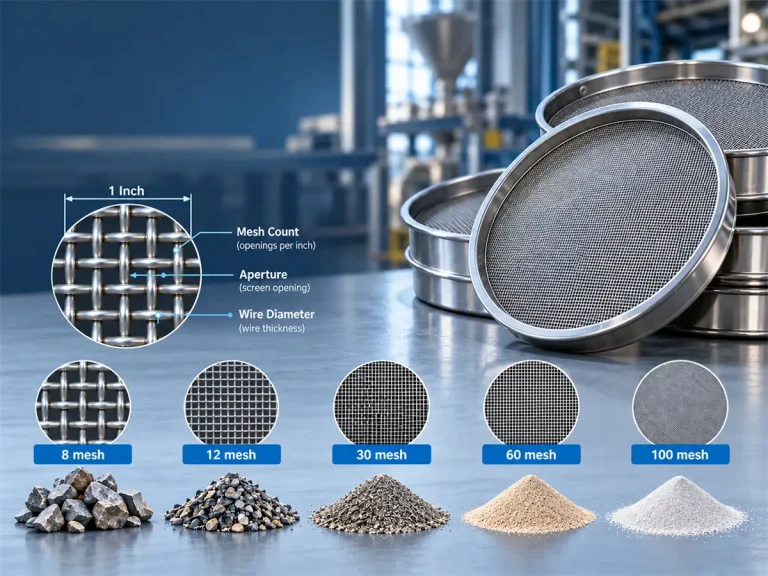
Screen openings are selected according to the target cut size, particle size distribution and required product specification. For engineering selection, aperture dimensions in millimetres or micrometres are generally more precise than mesh number alone.
| Mesh | Approximate Aperture |
|---|---|
| 10 | 2.00 mm |
| 20 | 850 μm |
| 40 | 425 μm |
| 60 | 250 μm |
| 80 | 180 μm |
| 100 | 150 μm |
| 120 | 125 μm |
| 200 | 75 μm |
For quick reference, use our Mesh Size Converter to convert mesh numbers into approximate aperture sizes in millimeters or microns.
Single-Deck and Multi-Deck Screening
Sanyuantang linear vibrating screens are available with single-deck and multi-deck configurations to meet different particle classification requirements. A single-deck screen separates materials into two size fractions, while multi-deck screens use progressively finer mesh apertures to produce multiple grades in one continuous operation. Our SYZ Series supports 1–5 screen decks, with mesh sizes and discharge outlets configured according to material properties, required throughput, and target particle sizes.
| Deck Arrangement | Product Fractions | Typical Duty |
|---|---|---|
| Single Deck | 2 | Scalping or fines removal |
| Two Decks | 3 | Coarse, intermediate and fine separation |
| Three Decks | 4 | Multi-grade classification |
| Multiple Decks | Depends on arrangement | Additional product size fractions |
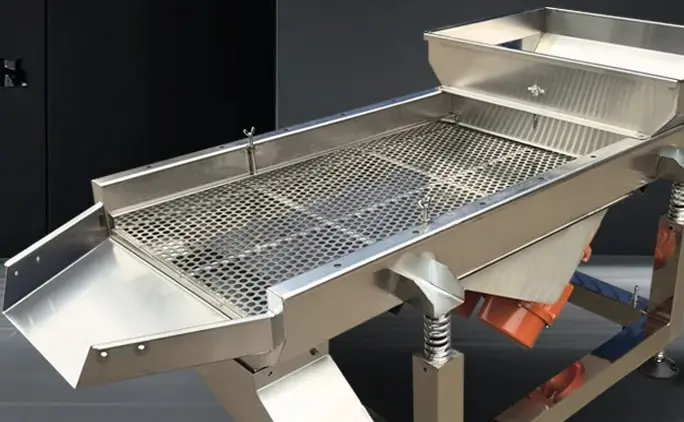
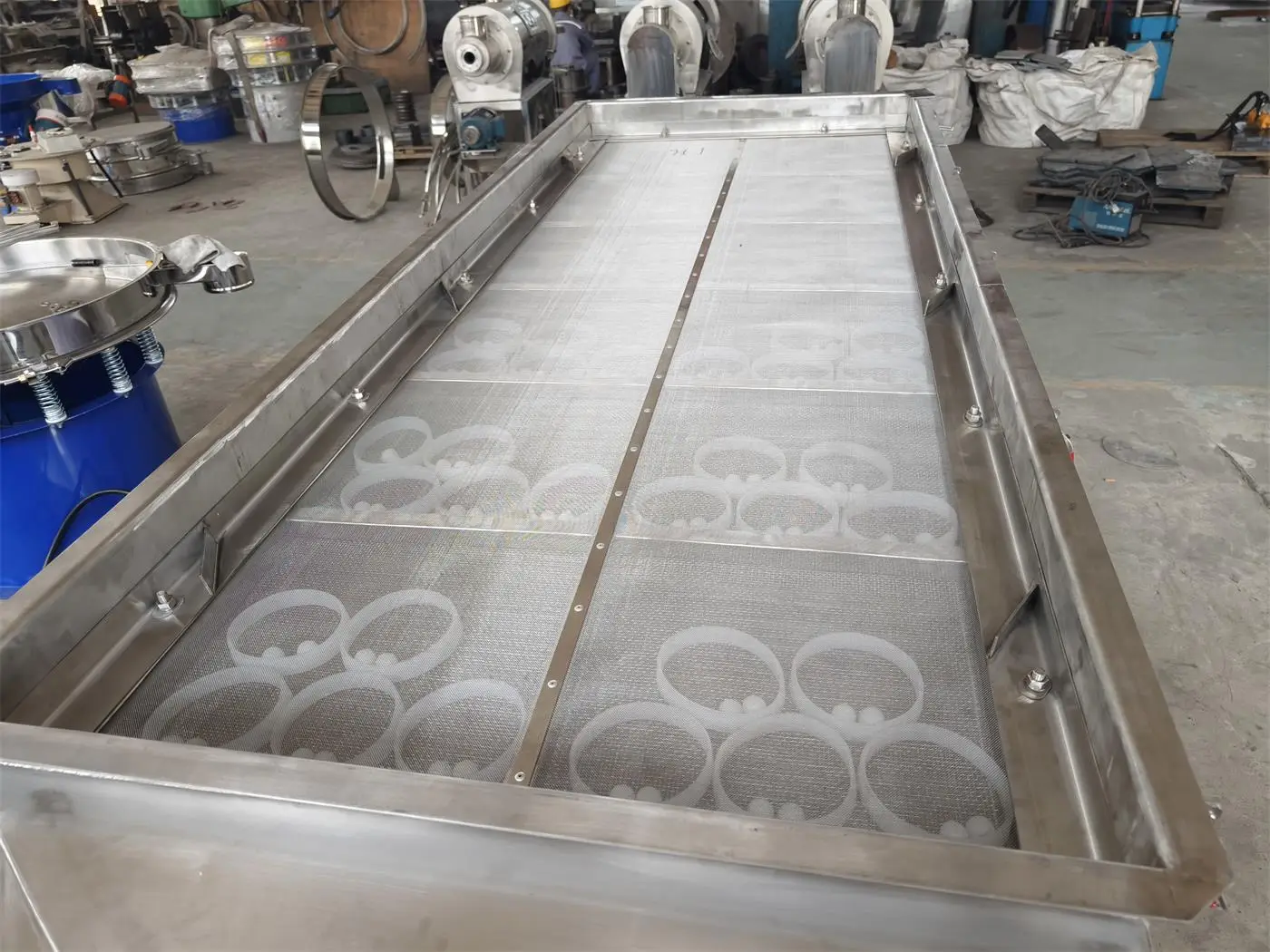
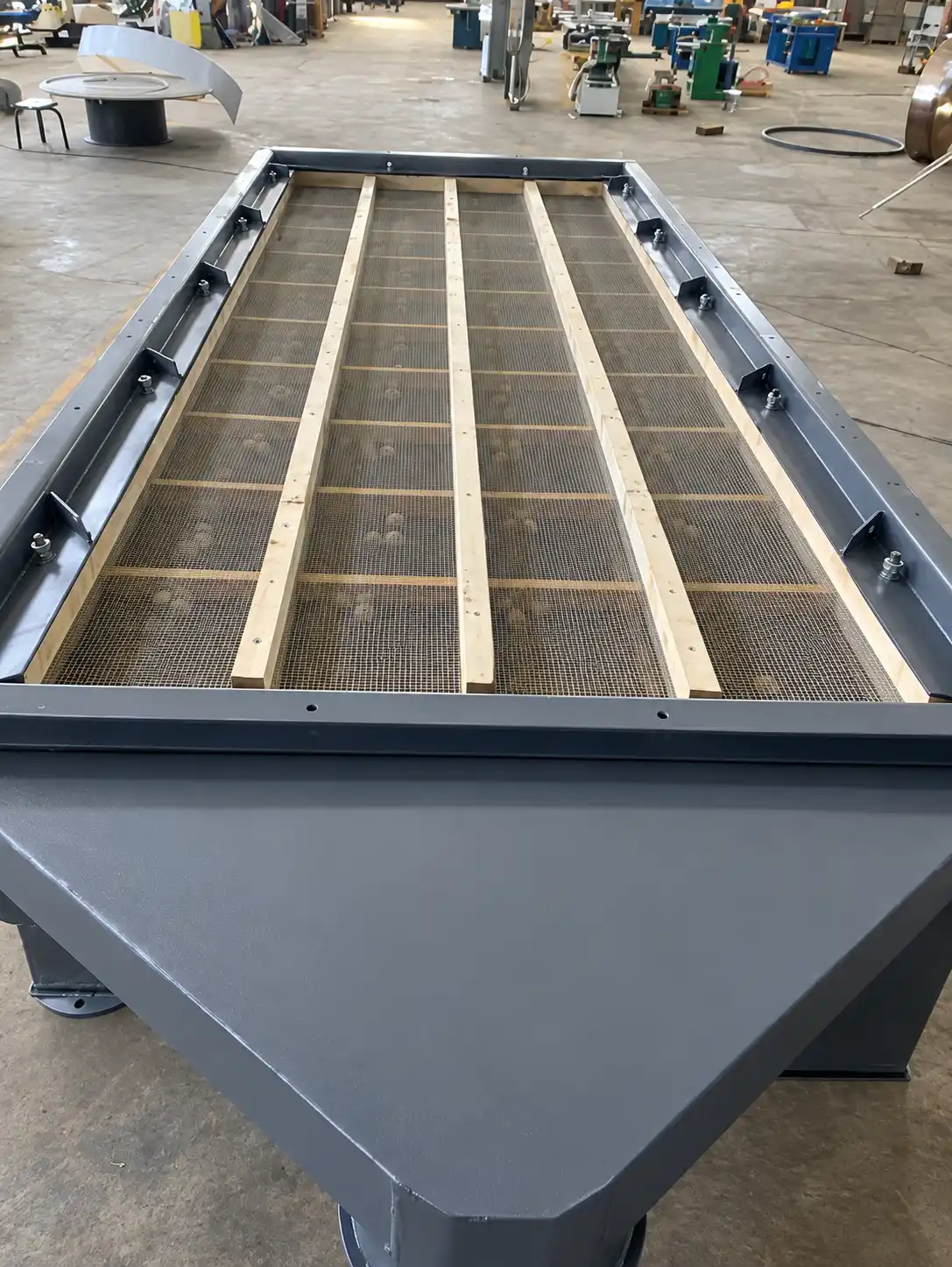
Screen Mesh Frames & Screen Types
Linear vibrating screens are available with different screen frames, mesh materials, and cleaning systems to meet specific screening requirements. The screen frame provides structural support and maintains mesh tension, while the screening surface determines particle separation accuracy. Frame and mesh configurations can be selected according to material properties, screening capacity, abrasion resistance, and maintenance requirements.
Screen Frame Options
- Hook Plate Screen Frame: A simple screen mounting structure designed for convenient mesh installation, cleaning, and replacement.
- Steel Screen Frame: Provides rigid support and durability for heavy-duty screening and abrasive materials.
- Wooden Screen Frame: A lightweight frame suitable for selected screening applications requiring frequent mesh replacement.
- Perforated Plate Support Frame: Uses a perforated metal plate to support the screen mesh and maintain stability during operation.
Screen Mesh Materials
- Carbon Steel Wire Mesh: Suitable for general screening of dry bulk materials where corrosion resistance is not critical.
- Stainless Steel Wire Mesh: Available in SS304 and SS316 for applications requiring corrosion resistance and material compatibility.
- Brass & Copper Wire Mesh: Available for selected applications with specific material or screening requirements.
Linear Vibrating Screen Motor Installation Angle & Adjustment
The installation angle of the dual vibration motors affects material movement, screening efficiency, and discharge speed. By adjusting the motor mounting angle and eccentric weights, the linear vibrating screen can be configured to control vibration direction and amplitude for different materials. Proper adjustment helps maintain consistent material flow and particle separation across the screen deck.
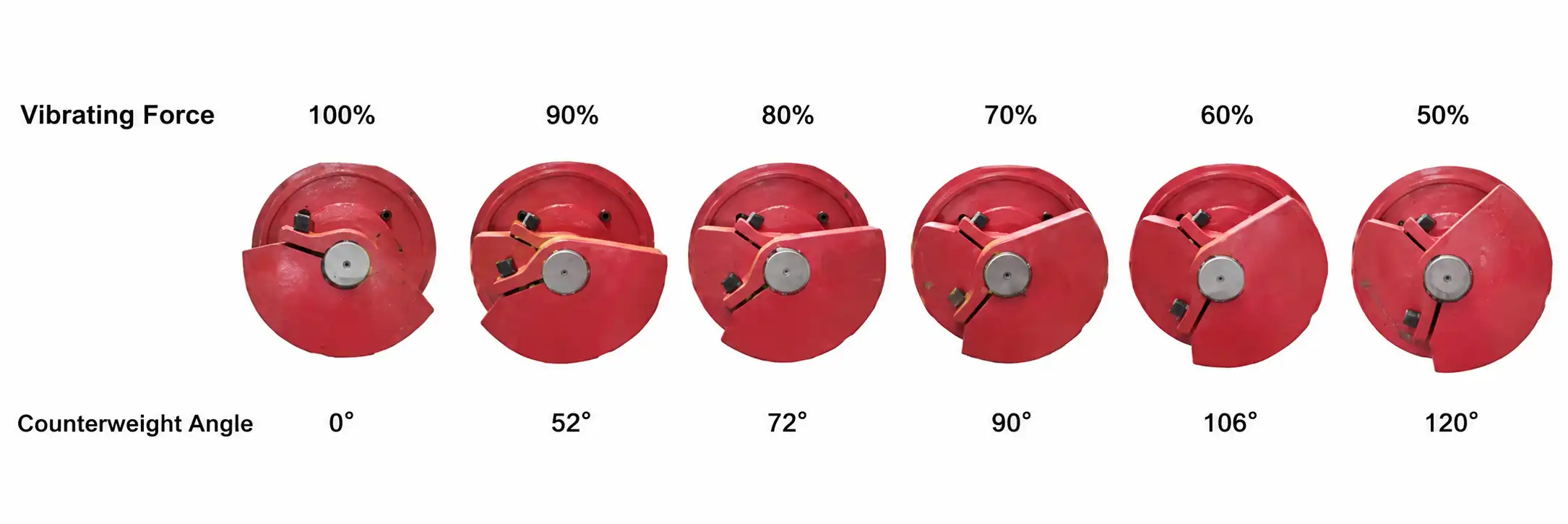
Motor Angle & Vibration Adjustment
- Motor Installation Angle: Determines the direction of excitation force and influences material conveying speed and residence time.
- Eccentric Weight Adjustment: Changes the excitation force and vibration amplitude to suit different material properties and screening requirements.
- Dual-Motor Synchronization: Two counter-rotating vibration motors generate linear motion for continuous material conveying and screening.
Linear Vibrating Screen vs. Other Screening Machines
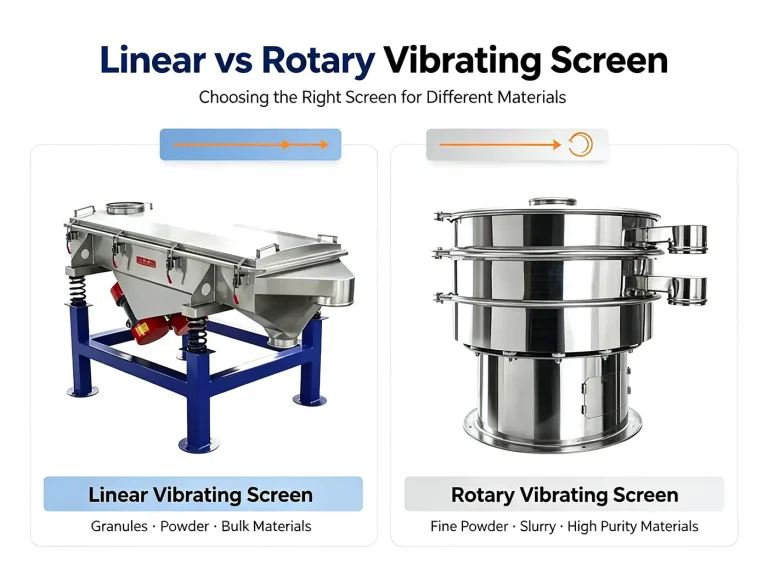
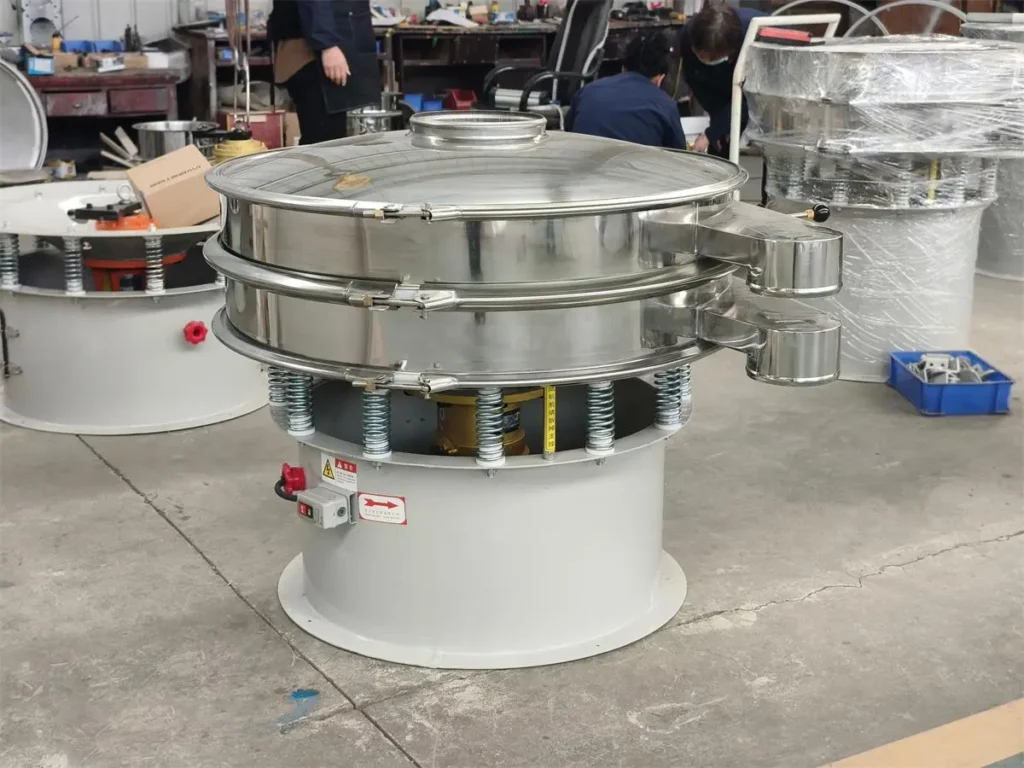
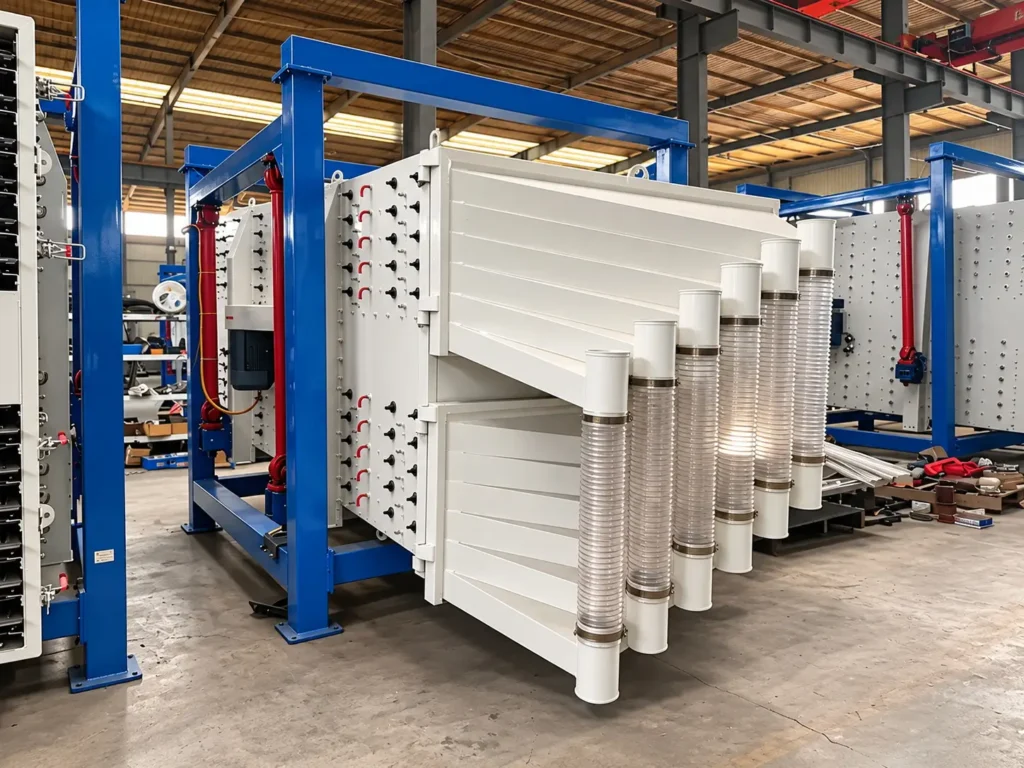
Different screening machines are designed for specific material properties, particle sizes, and production capacities. Linear vibrating screens are commonly used for continuous grading and impurity removal of dry powders and granular materials, while circular vibro sifters, gyratory sifters, and ultrasonic vibrating screens serve different screening requirements. The comparison below helps buyers select suitable equipment based on screening motion, material characteristics, and production needs.
Comparison of Industrial Screening Machines
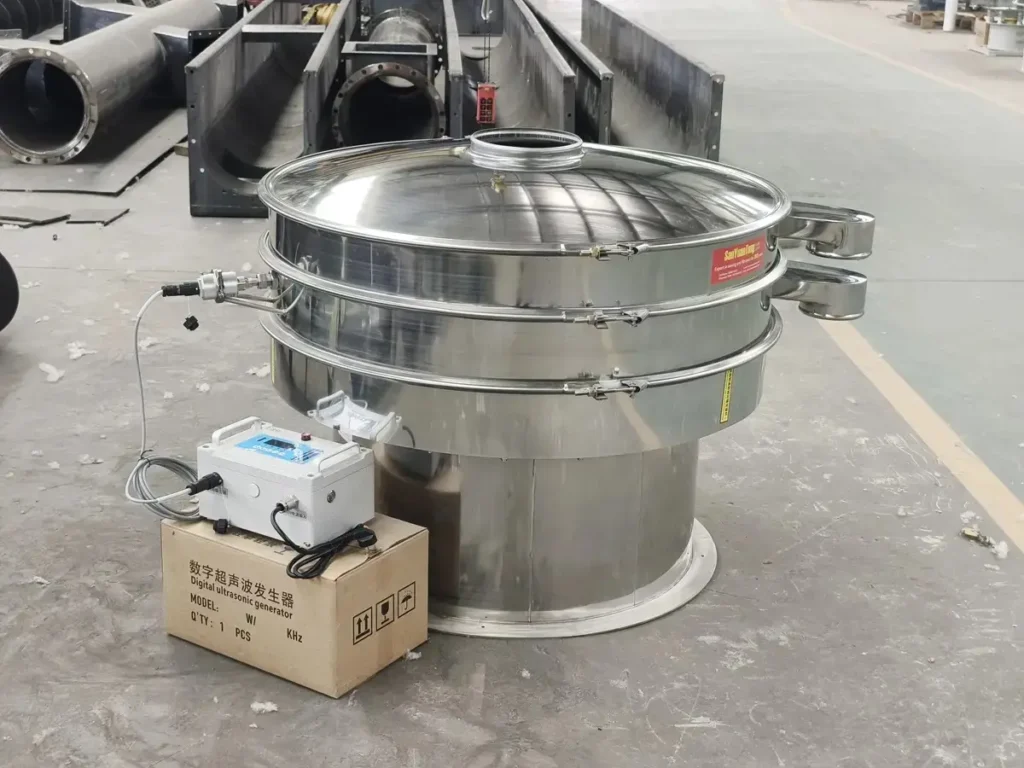
| Comparison | Linear Vibrating Screen | Circular Vibro Sifter | Gyratory Sifter | Ultrasonic Vibrating Screen |
|---|---|---|---|---|
| Screening Motion | Linear vibration | Three-dimensional vibration | Gyratory reciprocating motion | Vibration with ultrasonic excitation |
| Screen Design | Rectangular, multi-deck | Circular, multi-deck | Large rectangular screen decks | Circular screen with ultrasonic system |
| Primary Function | Particle grading and impurity removal | Powder sieving and separation | High-capacity, multi-grade classification | Fine powder sieving and mesh deblinding |
| Suitable Materials | Granules, sand, feed, plastic pellets | Food powders, chemicals, dry ingredients | Silica sand, quartz sand, bulk granules | Fine, cohesive, easily blinding powders |
| Screening Precision | Coarse to fine grading | Fine to medium screening | Multi-grade particle classification | Fine and ultrafine powder screening |
| Main Advantage | Continuous conveying and grading | Compact design and versatile screening | Large screening area and high throughput | Reduces mesh blockage |
| Best Suited For | General industrial material classification | Routine powder screening | Large-volume particle grading | Difficult-to-screen fine powders |
How to Choose the Right Screening Machine?
Screening equipment should be selected based on feed particle size, material flowability, target mesh size, required throughput, and the number of product grades. For continuous granular material classification, a linear vibrating screen is often a suitable choice. Gyratory sifters are commonly selected for high-capacity, multi-grade screening, while circular vibro sifters handle routine powder separation. Ultrasonic vibrating screens are better suited to fine powders prone to mesh blinding.
Integration with Material Handling Systems
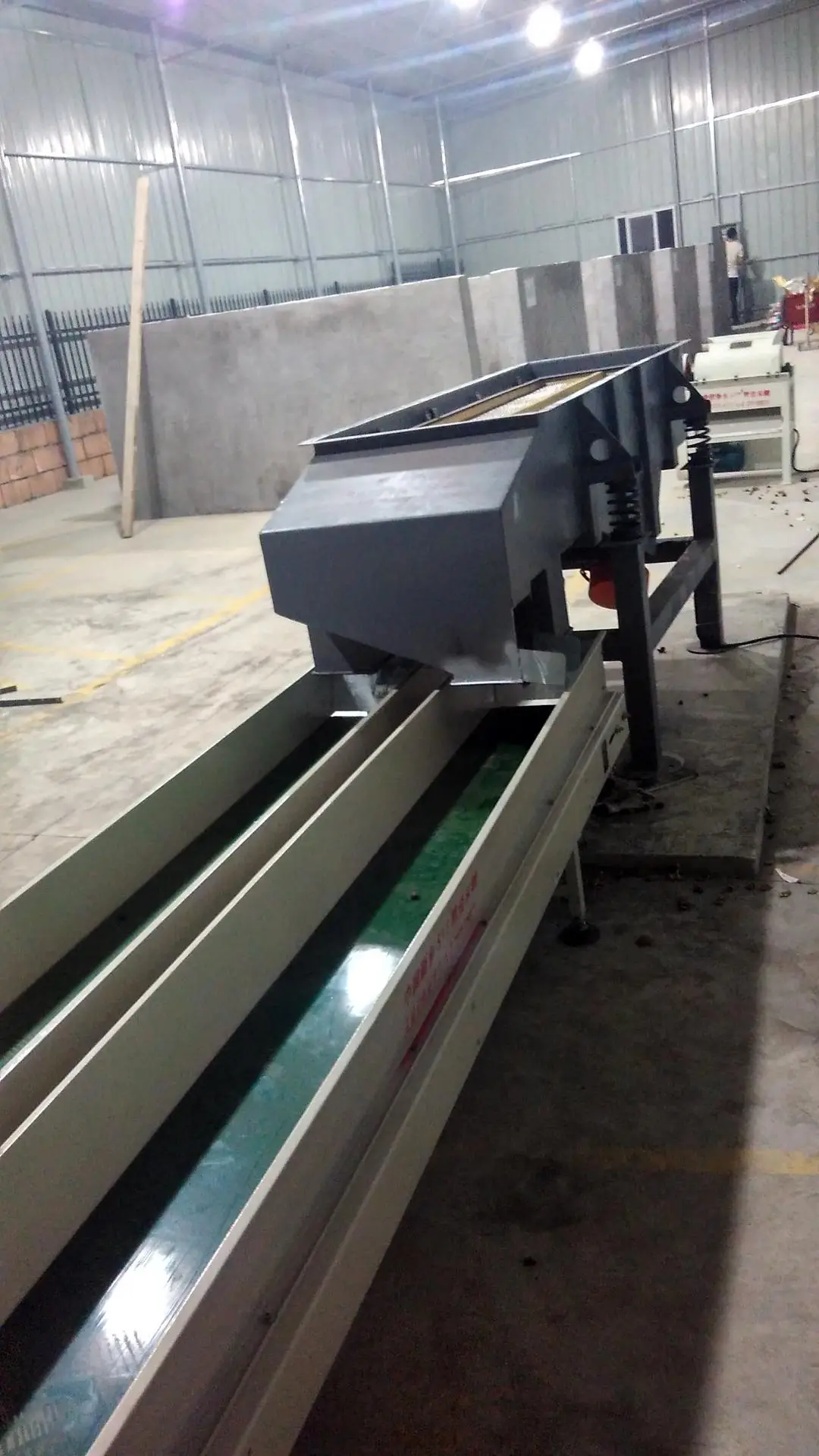
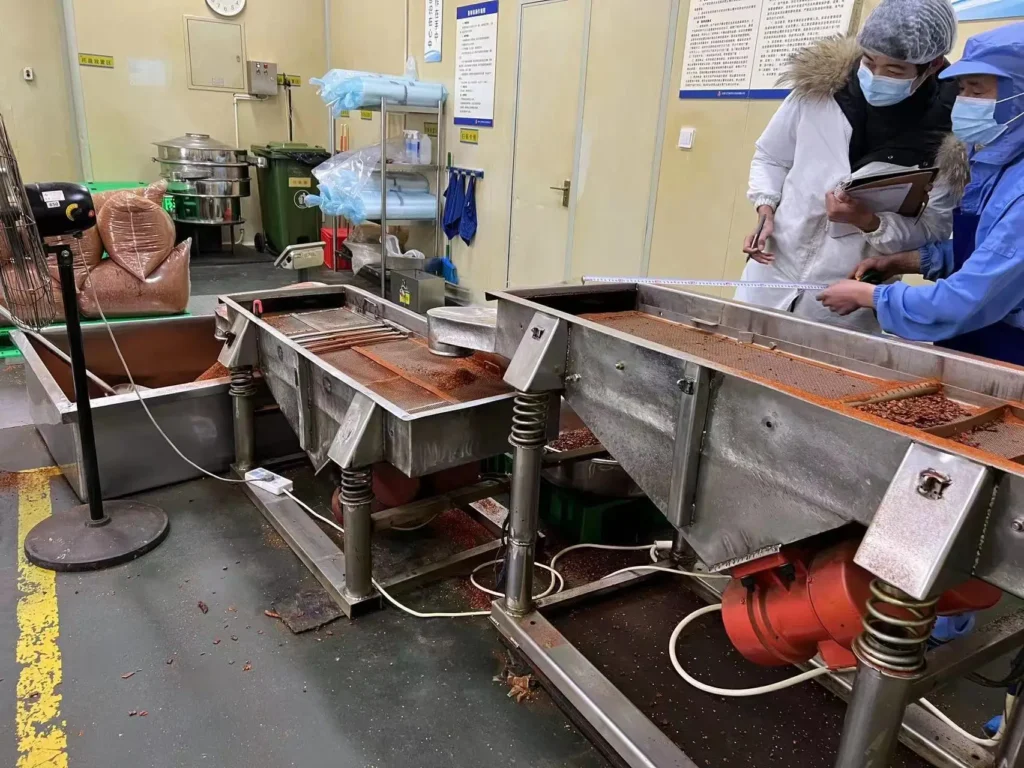
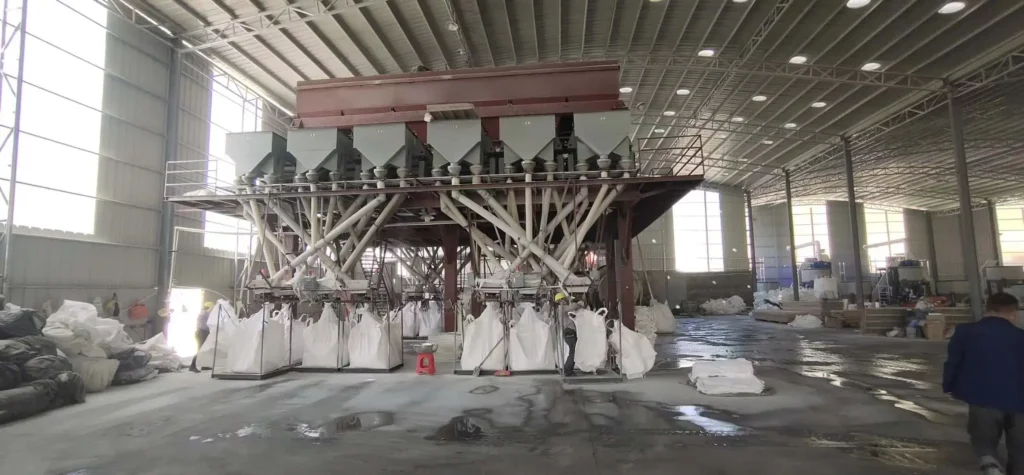
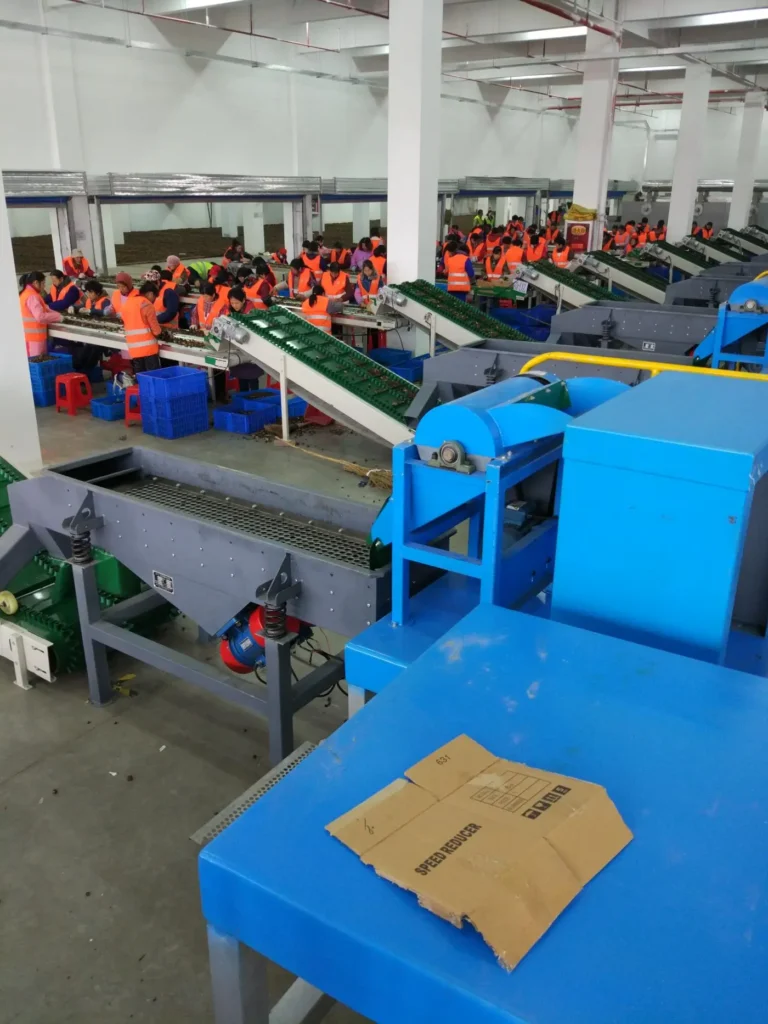
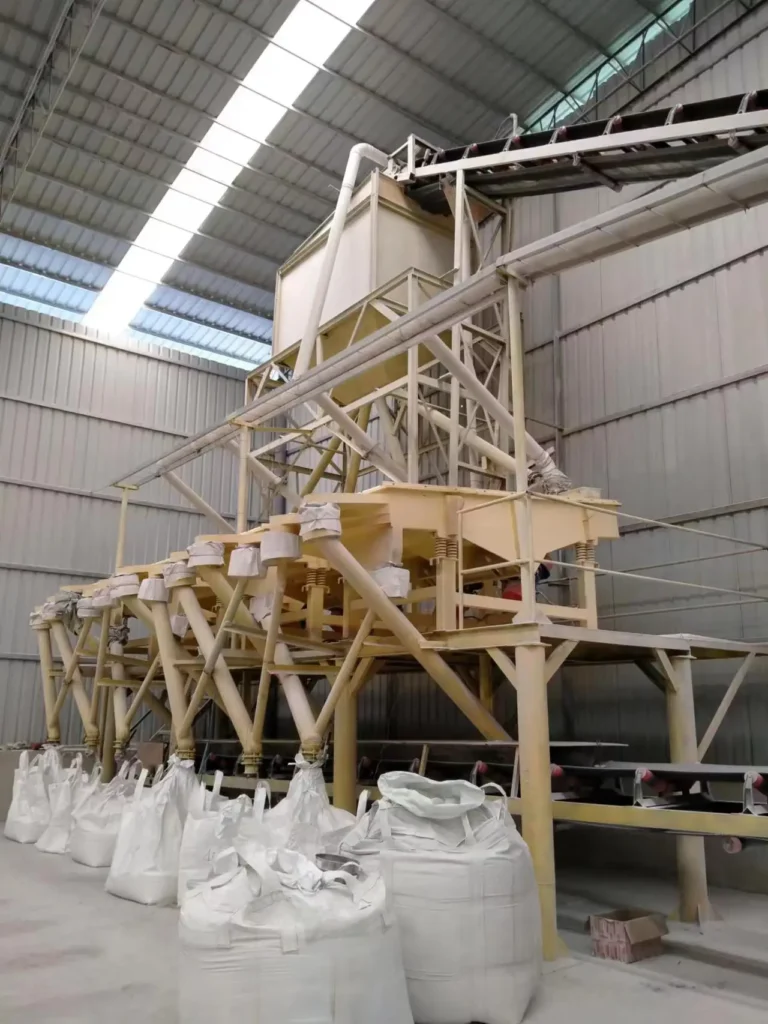
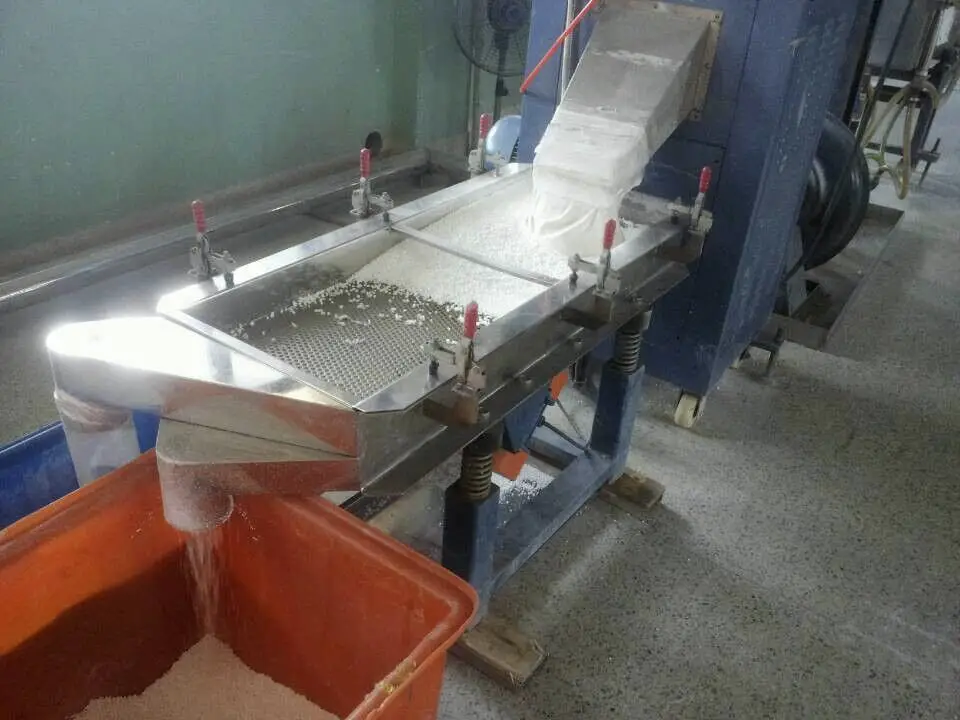
Linear vibrating sieving machines can be integrated with feeding, conveying, and discharge equipment to support continuous material screening and classification. Depending on the production layout, the screen can be connected to screw conveyors, belt conveyors, bucket elevators, storage hoppers, and downstream packaging systems. Equipment connections, feed rates, and discharge heights are configured to maintain consistent material flow, reduce manual handling, and ensure smooth operation throughout the production line.
Compatible Material Handling Equipment
| Equipment | Function & Integration |
| Screw Conveyor | Transfers powders and fine granules from storage hoppers or processing equipment to the vibrating screen for continuous feeding. |
| Belt Conveyor | Moves bulk materials to or from the screening machine, supporting continuous transport between processing stages. |
| Bucket Elevator | Lifts granular materials vertically to the screen inlet where floor space or feeding height is limited. |
| Feeding Hopper | Provides temporary material storage and directs the feed into the screening system. |
| Vibratory Feeder | Delivers material at a controlled rate to maintain consistent loading across the screen surface. |
| Discharge Chutes | Direct separated particle grades into collection bins, conveyors, or downstream equipment. |
| Dust Collection System | Connects to enclosed screening equipment to capture airborne dust during feeding and discharge. |
| Packaging Machine | Receives screened material through a buffer hopper or conveyor for weighing, filling, and packaging. |
Integration with Existing Production Lines
For existing processing lines, the linear vibrating screen can be configured to match the available installation space, feed inlet position, discharge height, and upstream or downstream equipment. Flexible connectors, enclosed chutes, and suitable support frames can be used to accommodate vibration isolation, material transfer, and maintenance access.
Custom Linear Vibrating Screen Solutions
Sanyuantang offers customized linear vibrating screens to match different material properties, screening requirements, and production line layouts. Our engineers can adjust equipment dimensions, screen configurations, contact materials, and feeding arrangements based on your processing conditions.
Available Customization Options
- Screen Size & Dimensions: Customized screen width, length, and overall machine dimensions to suit capacity and installation space.
- Screen Deck Configuration: Single-deck or multi-deck designs with 1–5 layers for different particle size classifications.
- Screen Mesh & Aperture: Selected mesh sizes, screen materials, and aperture arrangements based on target particle sizes.
- Construction Materials: Carbon steel, stainless steel 304/316, or stainless steel contact parts to suit material compatibility requirements.
- Feed Inlet & Discharge Outlets: Customized inlet dimensions, outlet positions, and discharge connections for production line integration.
- Dustproof & Sealing Design: Enclosed screen covers, sealing components, and dust collection connections for powder processing.
- Support Frame & Installation Height: Fixed or mobile support frames with customized feeding and discharge heights.
- Vibration Motor Configuration: Motor power, electrical specifications, and suitable explosion-proof options where required.
For preliminary model selection, please provide:
| Required Information | Details |
|---|---|
| Material | Name and characteristics |
| Bulk Density | kg/m³ or t/m³ |
| Moisture Content | Percentage or material condition |
| Feed Particle Size | Particle size distribution |
| Target Separation | Mesh number or aperture in mm / μm |
| Required Capacity | kg/h or t/h |
| Product Fractions | Number of required size grades |
| Construction Material | Carbon steel or stainless steel |
| Operating Schedule | Working hours per day |
| Installation Space | Available width, length and height |
| Special Requirements | Dust control, wear protection or electrical specifications |
Contact Us
Request a Custom Linear Vibrating Screen
Share your material type, required capacity, target mesh sizes, number of product grades, and installation requirements through the inquiry form below. Our engineers will review your specifications and recommend a suitable machine configuration.
Linear Vibrating Screen Manufacturer & Supplier
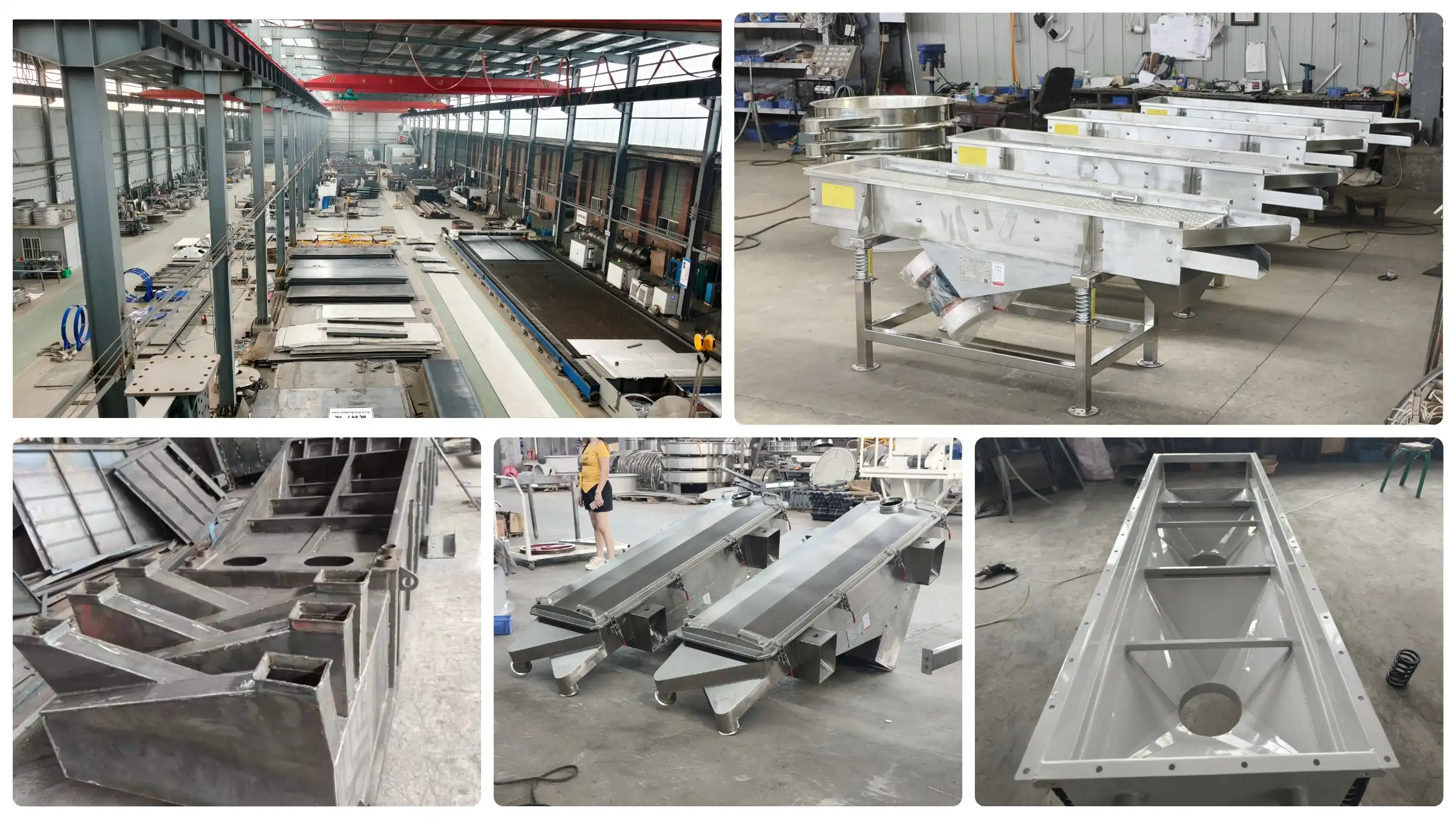
Sanyuantang (Xinxiang Sanyuantang Machine Co., Ltd.) is an experienced Linear Vibrating Screen Manufacturer in China, specializing in industrial screening and material handling equipment since 1994. With an 8,000 m² manufacturing facility, ISO and CE certifications, and equipment supplied to over 70 countries, we provide standard and customized SYZ Series linear vibrating screens for various industrial applications.
Our services cover equipment design, screen mesh selection, production line integration, quality inspection, and installation guidance. We also provide technical troubleshooting, maintenance support, and replacement parts, including screen meshes, vibration motors, springs, and seals, to help minimize equipment downtime.
Learn more about our Technical Services & After-Sales Support.
Customer Installations & Screening Projects
The following projects show linear vibrating screens installed at our customer production sites for material grading, impurity removal, and continuous screening across different industries.
Detergent Powder Screening for Angola Project
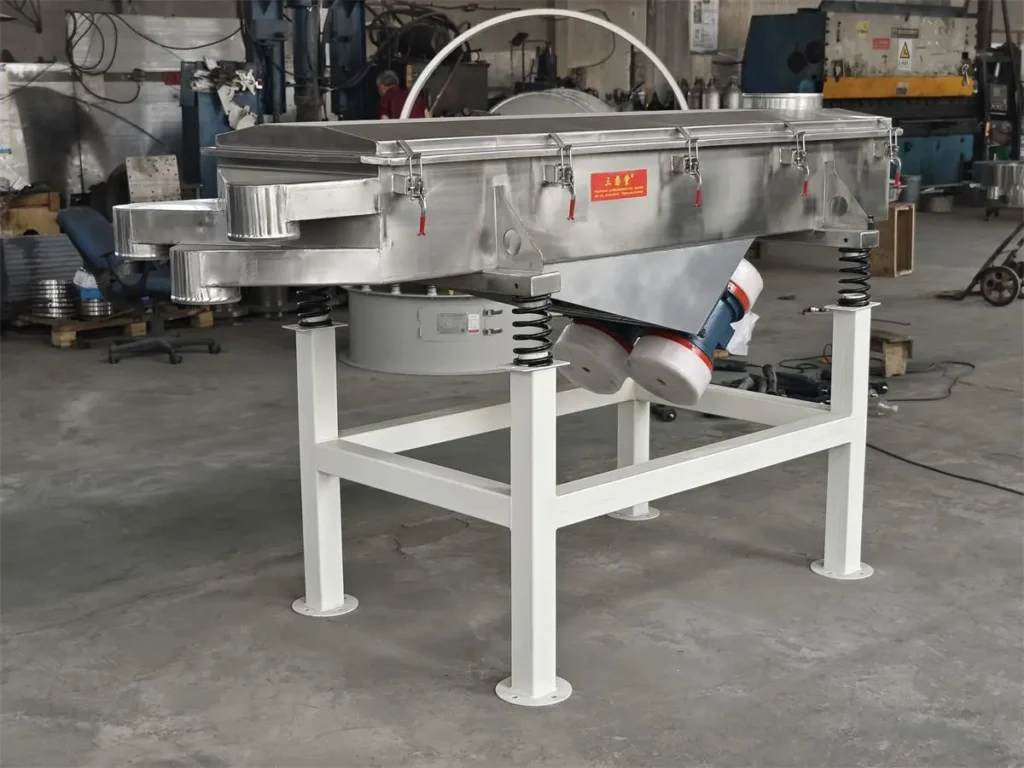
Sanyuantang supplied three stainless steel linear vibrating sieves for a detergent powder production facility established by a UAE-based company in Angola. The project used SYZ-520-2S machines with 4-mesh and 6-mesh screening arrangements to remove oversized particles and impurities.
- Equipment: 3 Sets
- Model: SYZ-520-2S
- Screening Arrangement: 4 Mesh / 6 Mesh
Pet Food Material Screening in Greece
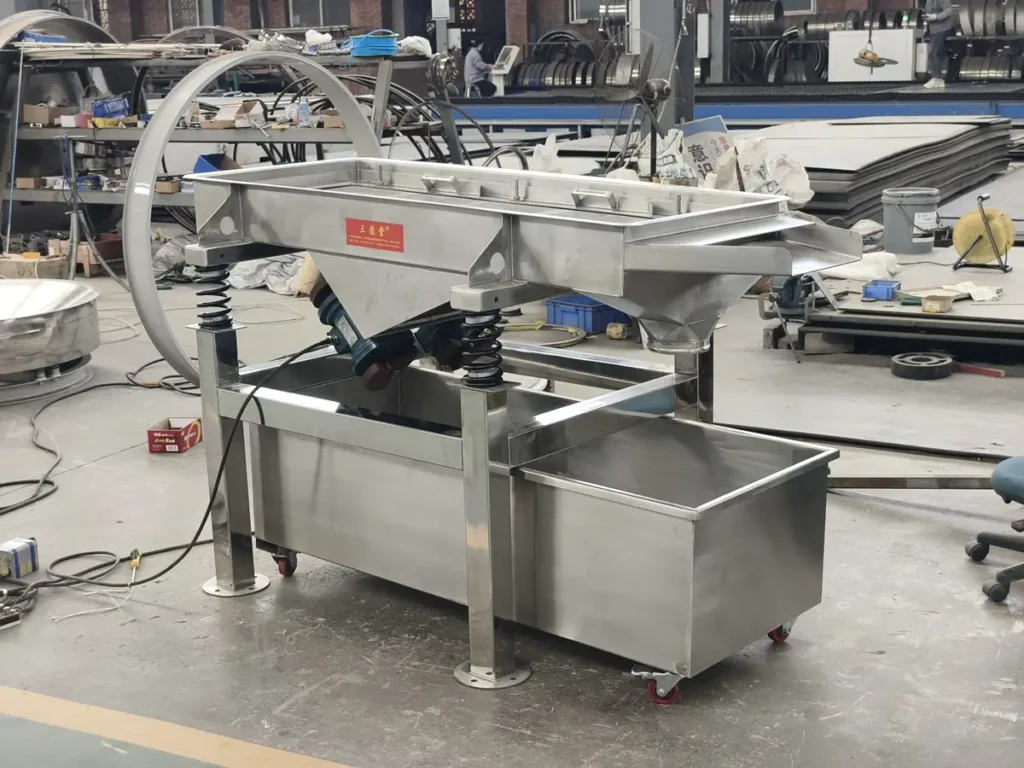
A Greek animal by-products processor ordered two linear vibrating screens for meat meal screening. The recorded project requirements included approximately 30 mm feed particles, a 6 mm screening aperture and a target throughput of 4–5 t/h.
- Equipment: 2 Sets
- Feed Particle Size: Approx. 30 mm
- Screening Aperture: 6 mm
- Customer Target Throughput: 4–5 t/h
Contact Us
Request a Linear Vibrating Screen Quote
Send your material name, feed particle size, target aperture, required capacity and installation requirements. Sanyuantang will review the screen dimensions, deck arrangement and equipment configuration for your application.
Material-specific selection and configuration review
Linear Vibrating Screen FAQs
What is the difference between a linear vibrating screen and a rotary vibro sifter?
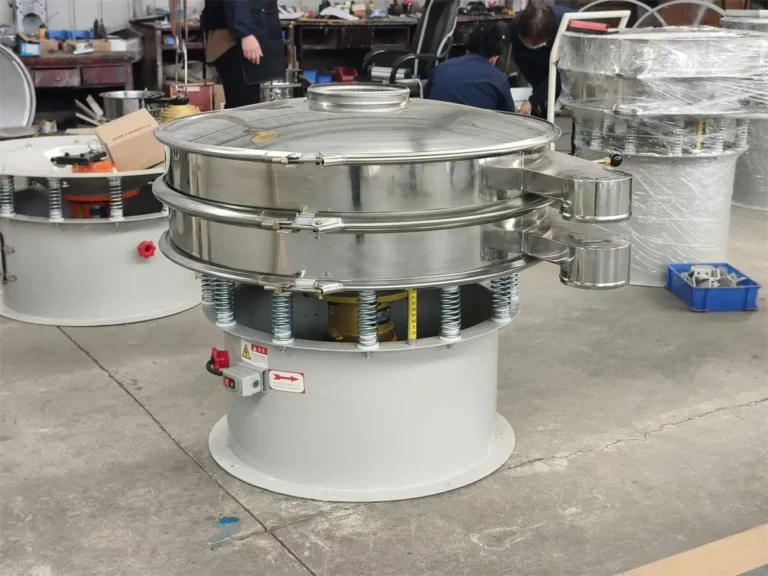
A linear vibrating screen uses directional vibration and a rectangular screening deck. A rotary vibro sifter uses three-dimensional vibration and a circular screen surface. The suitable machine depends on the material, screening duty and production arrangement.
How many screen decks can a linear vibrating screen have?
The published SYZ Series standard range is 1–5 screen decks. A single deck separates material into two fractions, while additional decks allow further particle size classification. Any special deck arrangement must be confirmed for the selected model and application.
What Is the Inclination Angle of a Linear Vibrating Screen?
The screen inclination angle is typically 0°–15° and can be increased up to 25° for specific materials and screening requirements.
What factors affect linear vibrating screen capacity?
Throughput is influenced by effective screening area, feed particle size distribution, bulk density, mesh aperture, material flowability and vibration settings. A high proportion of near-size particles or excessive screen loading may reduce separation efficiency.
Can a linear vibrating screen handle fine powders?
Yes. Linear vibrating screens can process suitable fine powders using appropriately selected screen mesh and operating settings. Cohesive, electrostatic or moisture-sensitive powders may cause mesh blinding and require screening trials or an alternative screening system.
Can screen dimensions and discharge outlets be customized?
Sanyuantang offers different screen dimensions, deck arrangements, construction materials and inlet/outlet configurations. Customization is based on the required capacity, product fractions and installation layout.
What is the capacity of a Sanyuantang linear vibrating screen?
Sanyuantang SYZ Series linear vibrating screens have a published reference capacity of 300kg/h–10 TPH. Actual throughput depends on material properties, screen size, mesh aperture and the required separation accuracy.
What screen widths are available for the SYZ Series?
Confirmed standard screen widths include 500, 1,000 and 1,200 mm for SYZ520, SYZ1030 and SYZ1225. SYZ825 and SYZ1530 are also listed models; their dimensions require factory confirmation.
Can a linear vibrating screen be installed in an existing production line?
Yes. Sanyuantang can configure screen dimensions, support height, feed inlets and discharge outlets to connect with existing conveying and material collection equipment.