
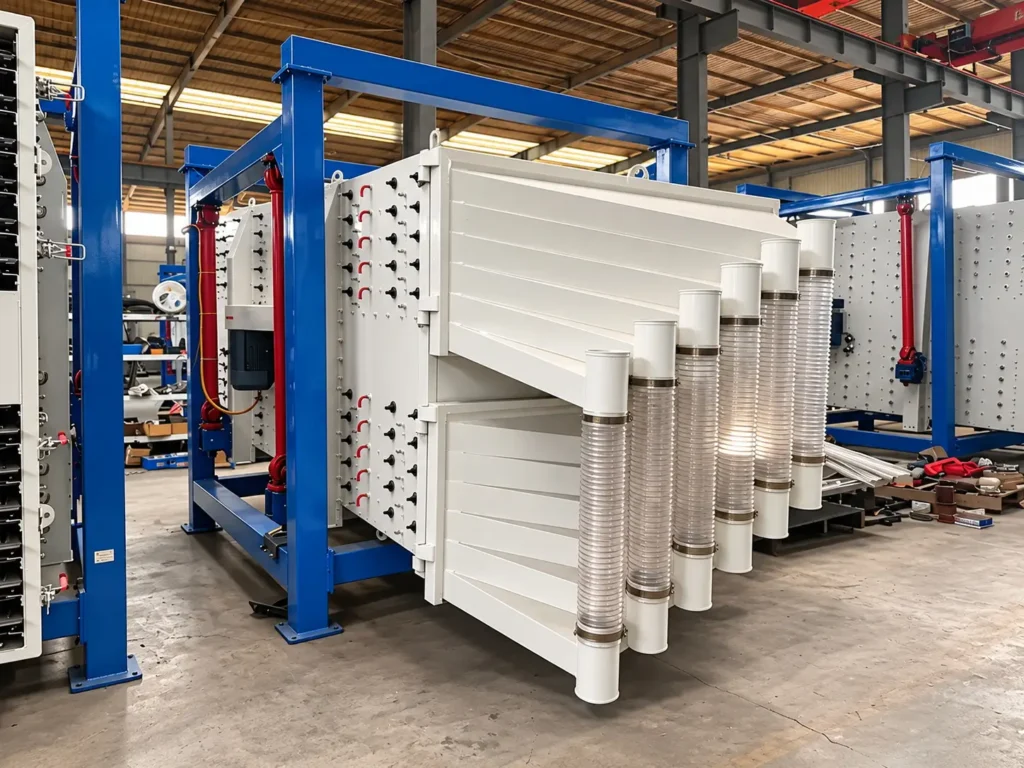
Sand and Gravel Screening Machines and Vibrating Screens
A sand screening machine separates sand, gravel and mineral particles into size grades, removes oversize and fines, and can dewater wet material. Sanyuantang has manufactured vibrating screens in Xinxiang, China since 1994. Selected sand and gravel configurations cover 0.5–200 t/h, with dry screening options from 2 to 200 mesh.
Send us your sand, your target grades and your hourly output. An engineer will recommend a model, and you can arrange a sample for a free test run before you order.
Since 1994 · ISO 9001 quality management · CE documentation by equipment · 1-year machine warranty · Free test run
Jump to: Machines · Selection · Specifications · Applications · Cases · FAQs
Sand and Gravel Screening Machines We Manufacture
Pick a machine by output, grading precision and moisture. Explore the product details or ask us to size a configuration for your sand.
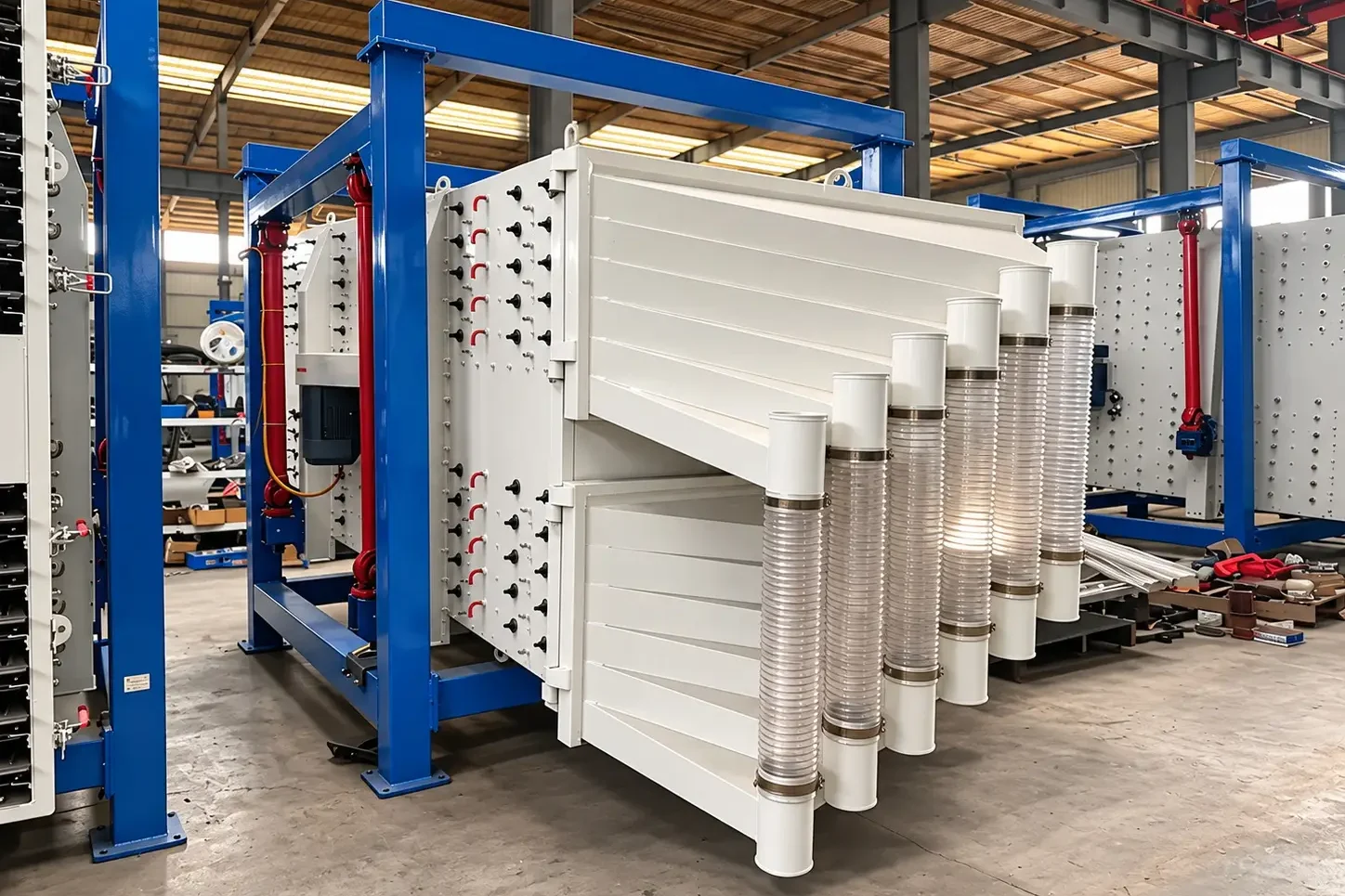
Gyratory Sifter
100 kg/h–25 t/h · 2–200 mesh · 1–10 layers. Models FYBS-1536 and FYBS-2040 are square gyratory screens for multi-grade classification, from fine powders to dry sand.
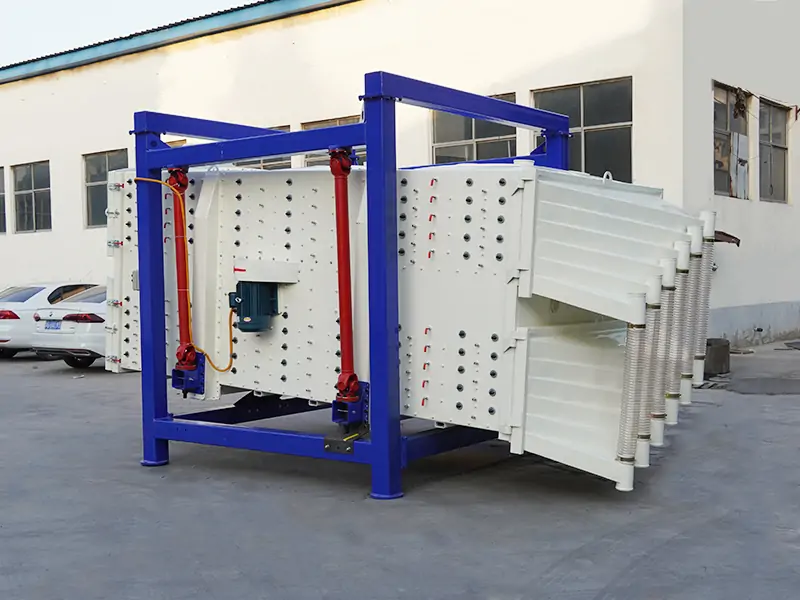
Single Vibration Source Gyratory Screener
2–180 mesh · 0.5–10 t/h · 1–9 layers
One vibration source drives the screen box. Choose it for dry sand lines where grading precision matters more than maximum tonnage.
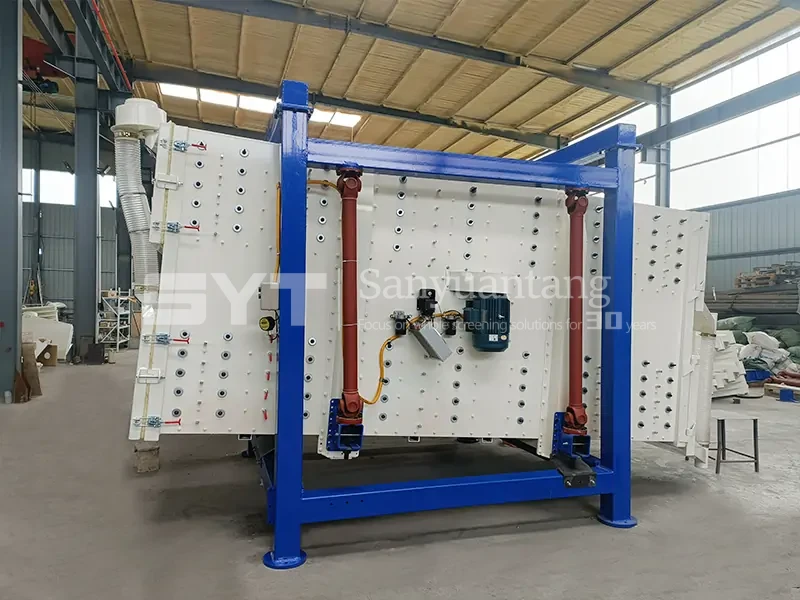
Double Vibration Source Gyratory Screener
2–180 mesh · 0.5–20 t/h · 1–9 layers
Two vibration sources raise output on the same footprint. Built for grading many kinds of dry sand at higher tonnage.
Quartz Sand Vibrating Screen
4–140 mesh · 10–30 t/h · 1–10 layers
Handles coarse and fine screening and multi-layer grading of quartz and silica sand for glass, abrasives, foundry casting, building materials and refractory products.
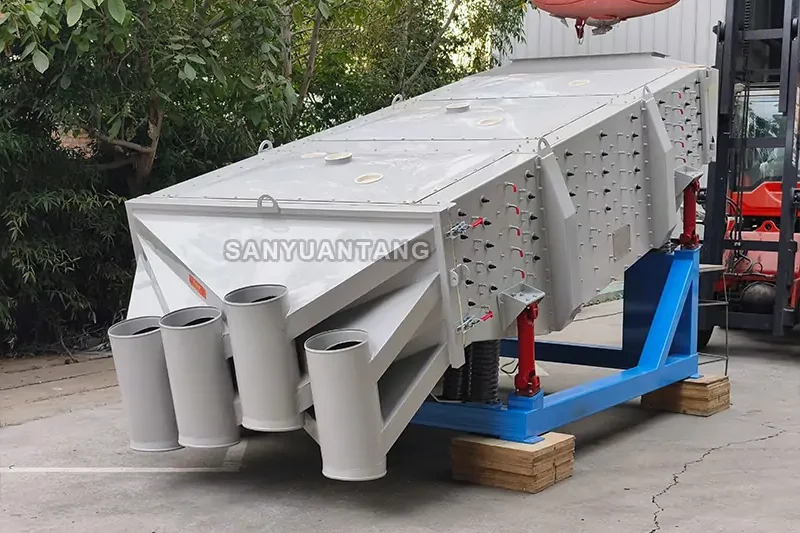
Large-Inclination Swing Probability Vibrating Screen
2–100 mesh · 5–100 t/h · 1–5 layers
A steeply inclined deck moves free-flowing sand and gravel quickly toward the discharge. Use it for coarser material that screens easily and for high-tonnage lines.
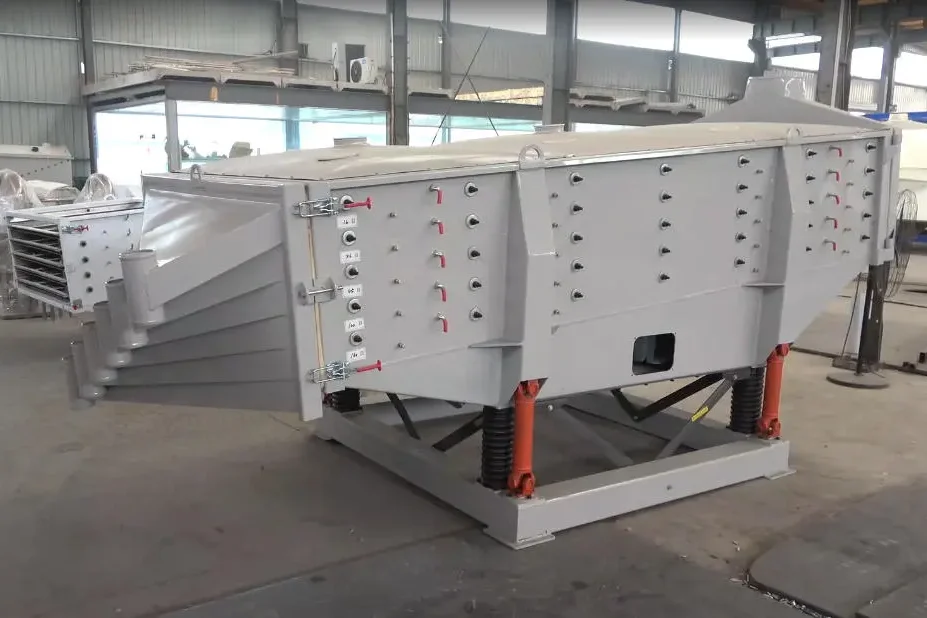
Linear Swing Vibrating Screen
2–100 mesh · 0.5–20 t/h · 1–5 layers
Compact, with high output for its footprint. A practical choice when plant space is limited.
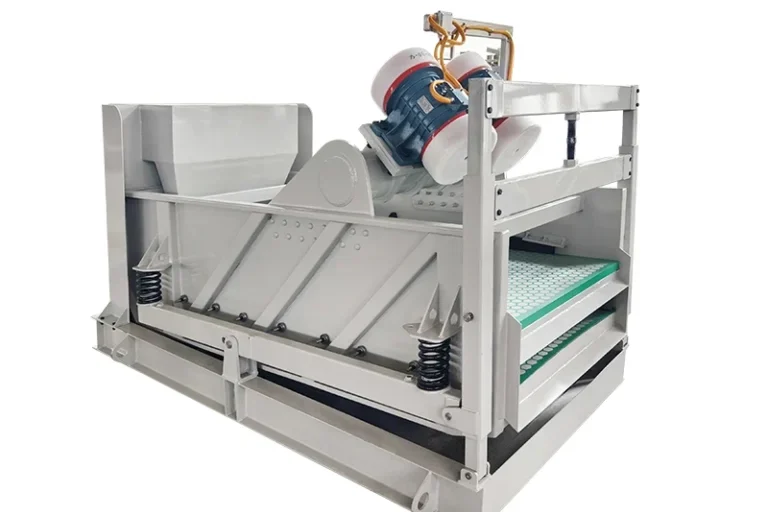
Dewatering Vibrating Screen
0.1–50 mm · 5–200 t/h
Separates water from solids and drains wet sand and slurry. Used in mining, chemicals, food processing, environmental treatment and coal preparation.
Ranges describe selected configurations. Actual output depends on the material, aperture, moisture and feed conditions; the final model and duty are confirmed with your engineer.
How to Choose a Sand Screening Machine
Four facts about your plant decide the model: output, grading precision, moisture and available space. Share them with our engineers to compare suitable configurations.
By Output: Under 20 t/h or Over 20 t/h
Below 20 t/h, gyratory screeners and the linear swing screen cover many dry sand duties. For higher output, compare the Gyratory Sifter up to 25 t/h, quartz sand configurations up to 30 t/h, the probability screen up to 100 t/h and the dewatering screen up to 200 t/h. The machine must also suit the required separation.
By Precision: Grading Accuracy vs Throughput
Gyratory screens give sharper cuts because material travels a long path across the deck. Probability screens give higher throughput because material leaves the deck quickly. If the buyer of your sand specifies grading tightly, as in glass or manufactured sand, start with a gyratory screen. If you are scalping coarse material ahead of another stage, start with a probability screen.
By Moisture: Dry Sand, Wet Sand and Dewatering
Dry classification works best on free-flowing sand. Wet or washed sand may require dewatering before dry grading or stockpiling. Tell us the moisture content of your feed so we can choose the right process.
By Site: Space, Layers and Number of Grades
In a conventional series of decks, four layers split the feed into five fractions. Parallel paired decks increase processing area without adding a new grade. A suitable gyratory configuration can reduce the number of machines and the floor space needed.
What Affects the Price of a Sand Screen
Price depends on screen size, number of layers, frame material (carbon or stainless steel), mesh material, motor power and voltage. Send us your output, grades and moisture, and we quote against those figures.
Sand Screening Machine Specification Comparison
| Machine | Mesh / aperture | Capacity | Layers | Best for |
|---|---|---|---|---|
| Gyratory Sifter | 2–200 mesh | 100 kg/h–25 t/h | 1–10 | Multi-grade classification at high output |
| Single Vibration Source Gyratory Screener | 2–180 mesh | 0.5–10 t/h | 1–9 | Precise grading, moderate tonnage |
| Double Vibration Source Gyratory Screener | 2–180 mesh | 0.5–20 t/h | 1–9 | Dry sand grading at higher tonnage |
| Quartz Sand Vibrating Screen | 4–140 mesh | 10–30 t/h | 1–10 | Quartz and silica sand |
| Probability Vibrating Screen | 2–100 mesh | 5–100 t/h | 1–5 | Coarse, easy-to-screen sand and gravel |
| Linear Swing Vibrating Screen | 2–100 mesh | 0.5–20 t/h | 1–5 | Compact lines with limited space |
| Dewatering Vibrating Screen | 0.1–50 mm | 5–200 t/h | Single or multi-layer | Dewatering and solid-liquid separation |
Capacity depends on bulk density, moisture, mesh size and feed rate. Figures are typical ranges, not guarantees for a given material. Mesh numbers and millimetre apertures describe different screens; confirm the required opening standard with your engineer.
Sand and Gravel Screening Applications
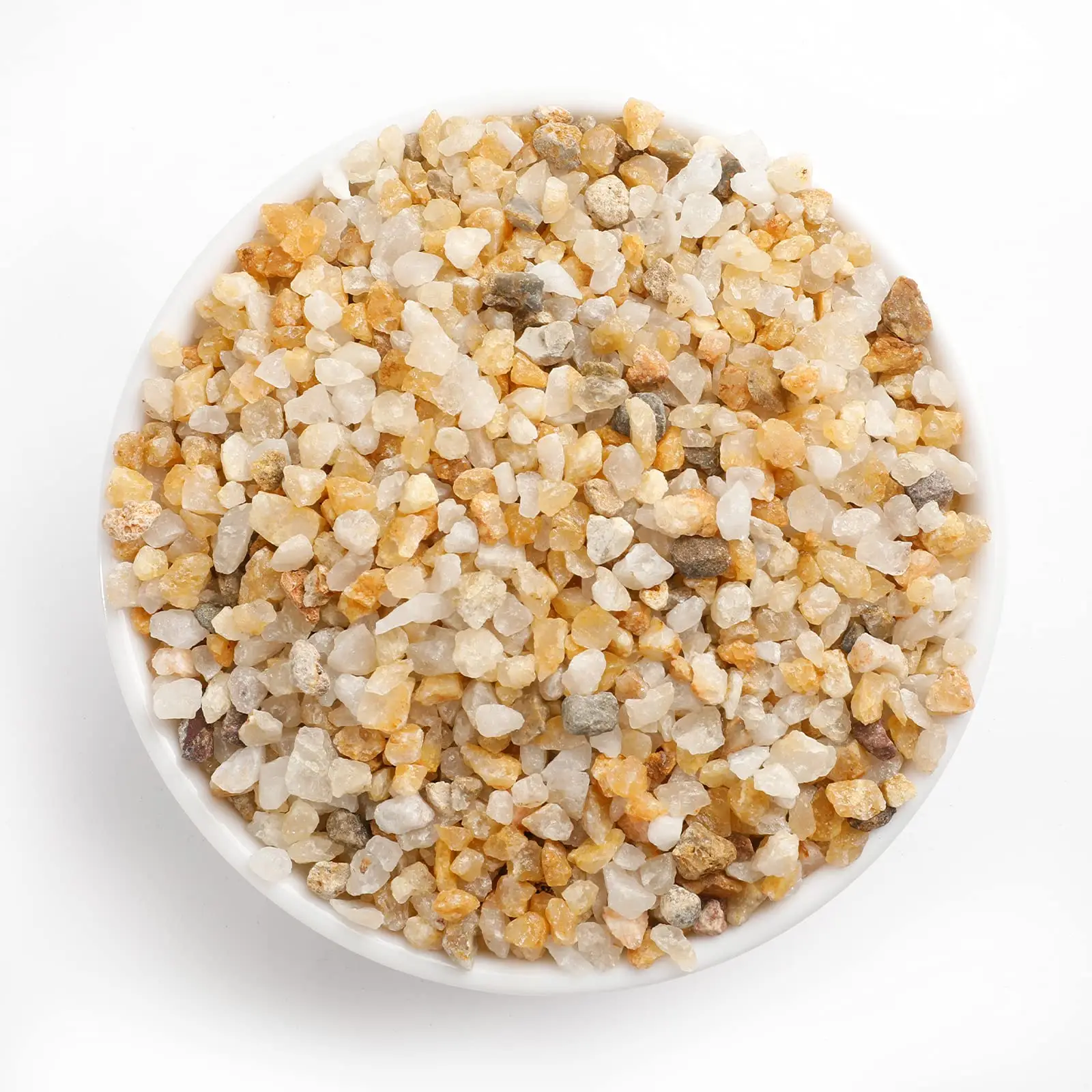
Quartz and Silica Sand
Quartz and silica sand feed glass, abrasives, foundry casting and refractory products. These buyers set tight grade limits, so the line usually needs several layers of different mesh on one gyratory screen.
Manufactured Sand and Aggregates
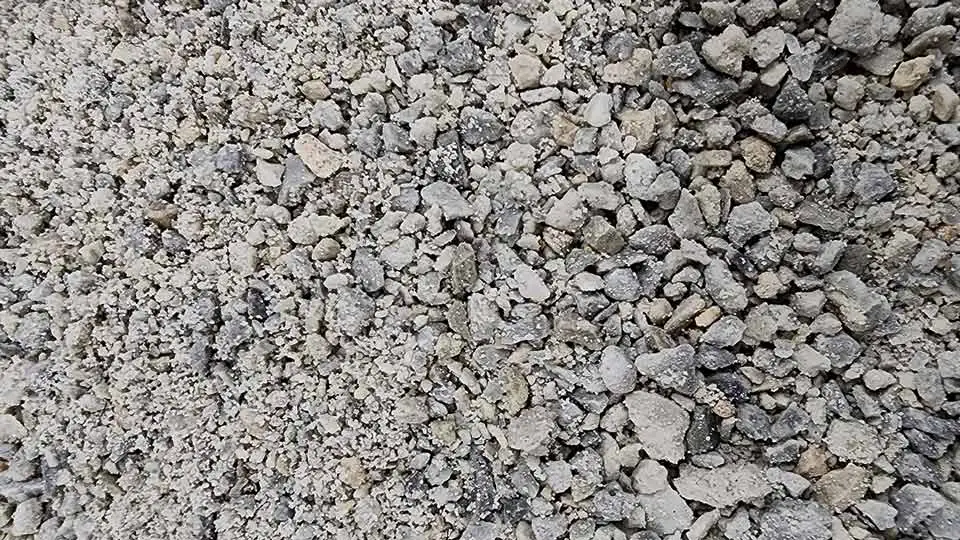
Manufactured sand can carry excess stone powder, including particles of 75 microns or less. Dry classification helps control fines while preserving the required grading. In the UK project below, square-mesh apertures of 3.5–4.5 mm were a starting point; the aperture must be matched to the actual feed and finished-sand specification.
Sand Washing and Dewatering
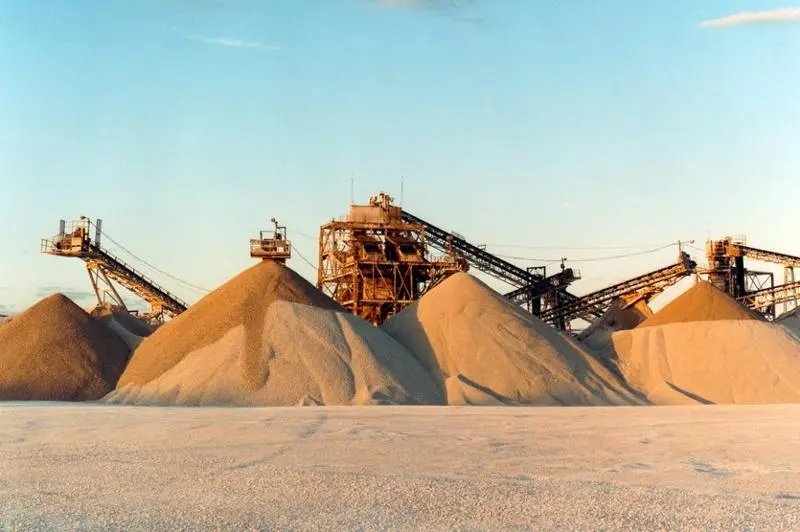
A dewatering screen drains washed sand before stockpiling or the next grading step. It also recovers solids from slurry in mining and environmental treatment.
Minerals
Mica powder, calcium carbonate, bentonite, limestone and brown corundum are among the mineral applications. Gyratory configurations can also be selected for tungsten carbide powder and calcium powder after reviewing particle size, output and material behaviour.
From Screen to Complete Sand Processing Plant
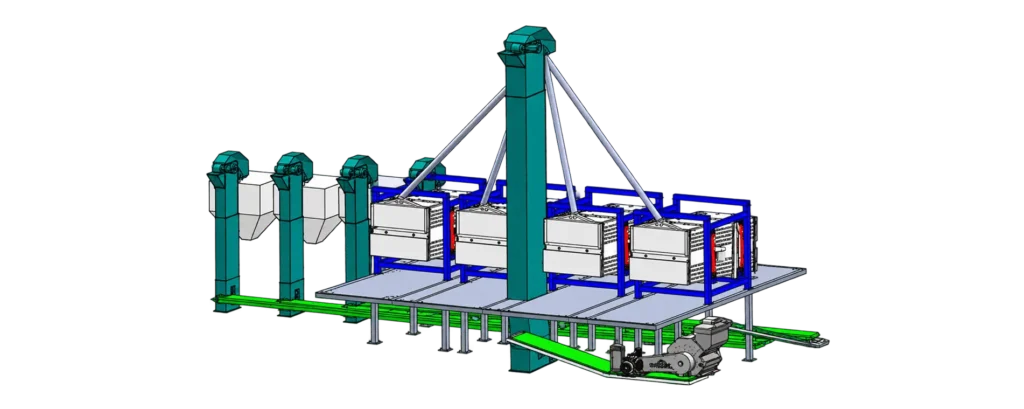
A screen is one step in a sand line. We also supply the belt conveyor systems, vertical conveying equipment and powder feeding equipment around it, and can plan the complete sand processing plant. Describe your site, and our engineers will draw the flow from feed to storage.
Custom Sand Screens and Free Test Run
What You Can Customize
Number of layers, mesh size and mesh material, carbon or stainless steel frame, screen angle, vibration frequency, and voltage (for example 400 V, 50 Hz, 3-phase). Screens are built as modules, so a worn deck can be pulled out and replaced quickly.
Tell us the required electrical supply, material contact surfaces and installation dimensions when requesting a quotation.
How the Test Run Works
- Send your material details and arrange delivery of a representative sand sample.
- We screen the sample on a suitable machine.
- You receive video and screening results.
- An engineer reviews the results and prepares a proposal.
Factory, Quality Control and Certifications
Manufacturing Base in Xinxiang
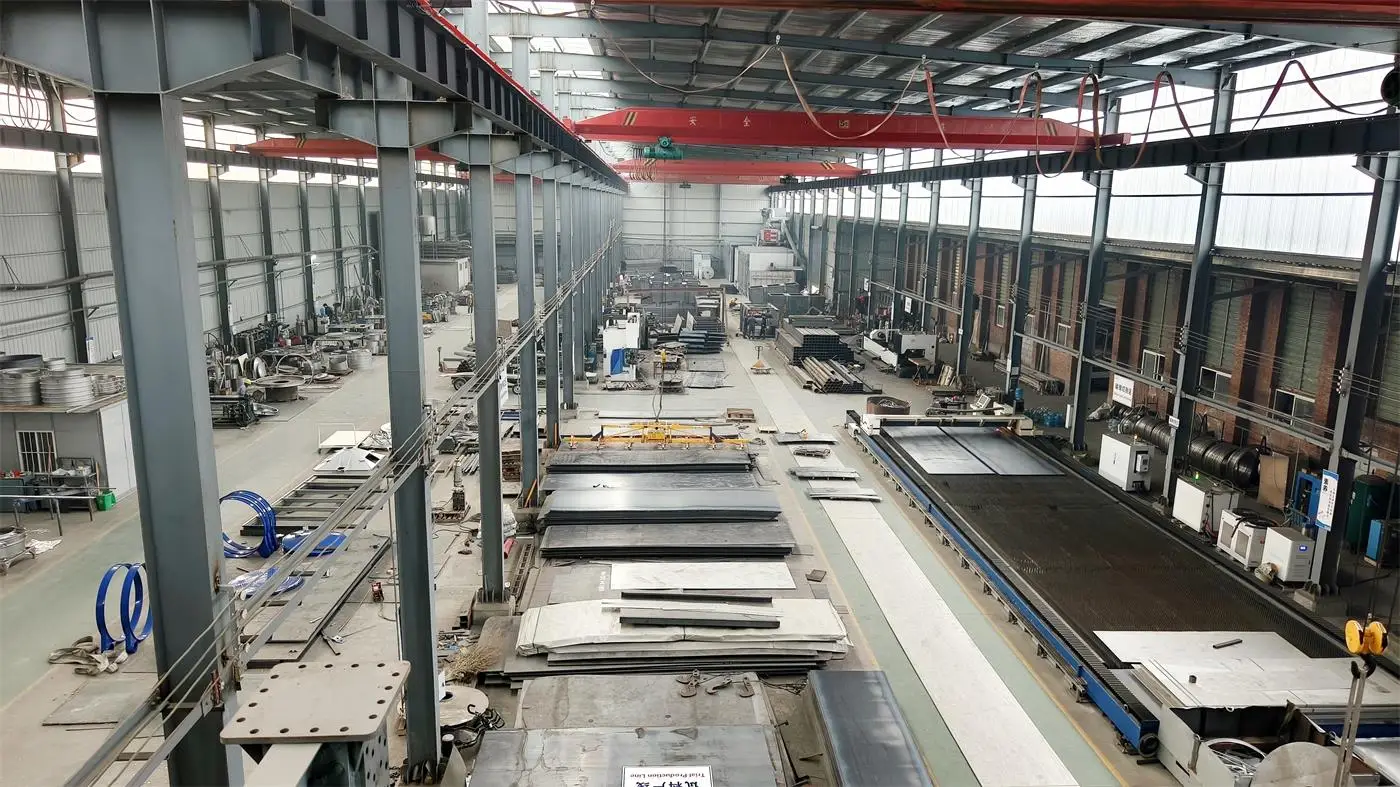
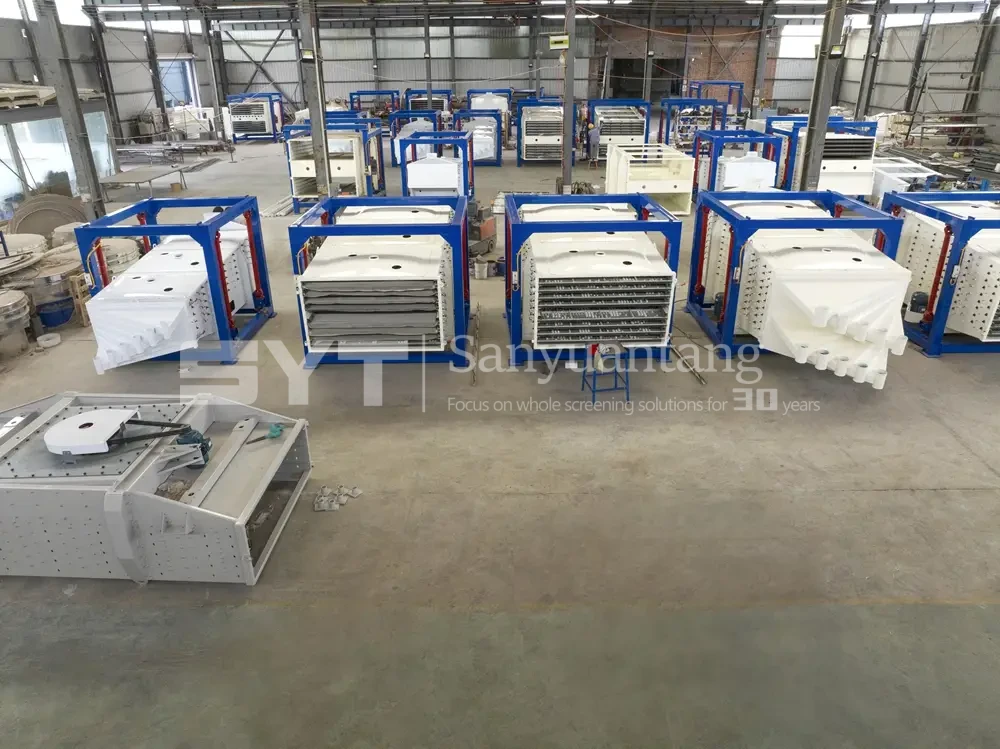
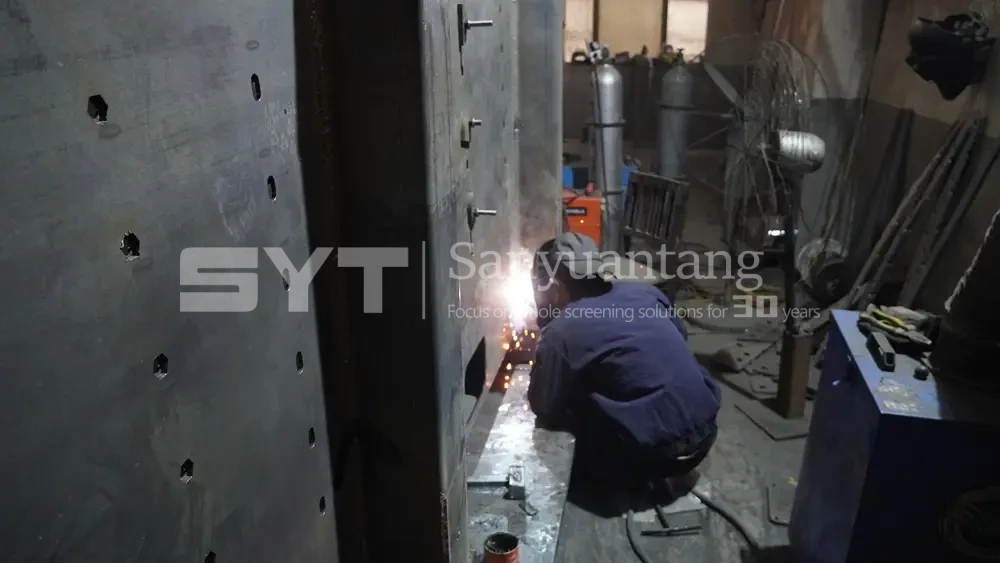
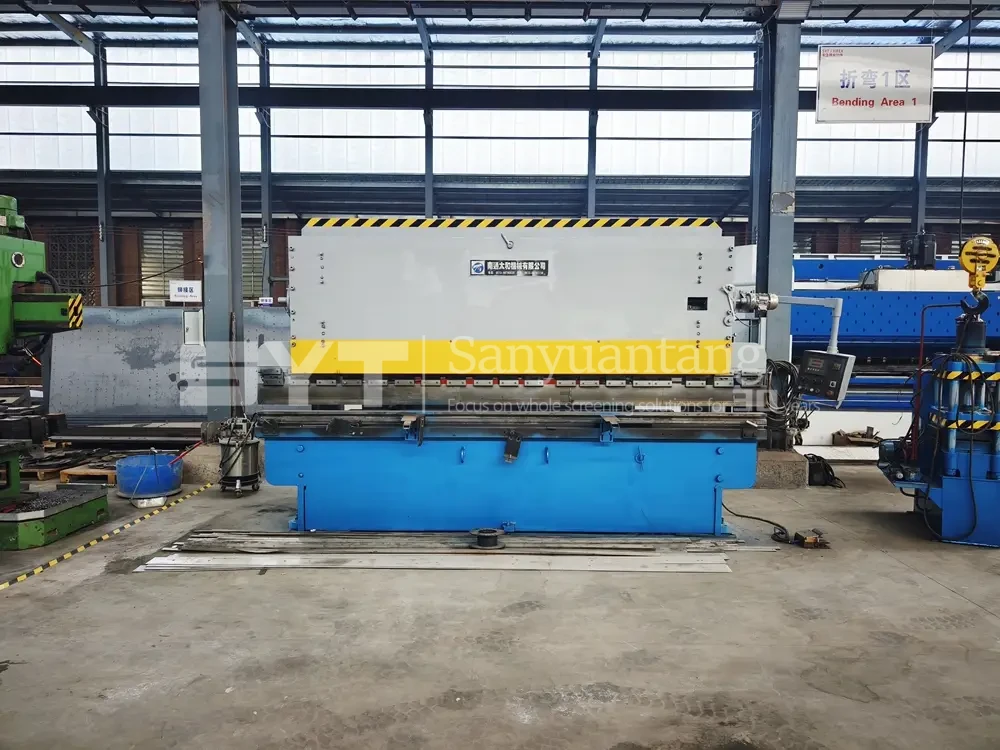
We build our machines ourselves in Xinxiang, Henan. The base covers 8,000 square meters, including 5,000 square meters of heavy-industry workshops with metal processing, welding and assembly equipment. More than 100 staff work here, and two R&D studios focus on screening equipment.
ISO, CE and Patents
Sanyuantang operates an ISO 9001 quality management system and has accumulated more than 40 product patents. CE documentation is confirmed for the applicable equipment and agreed supply scope.
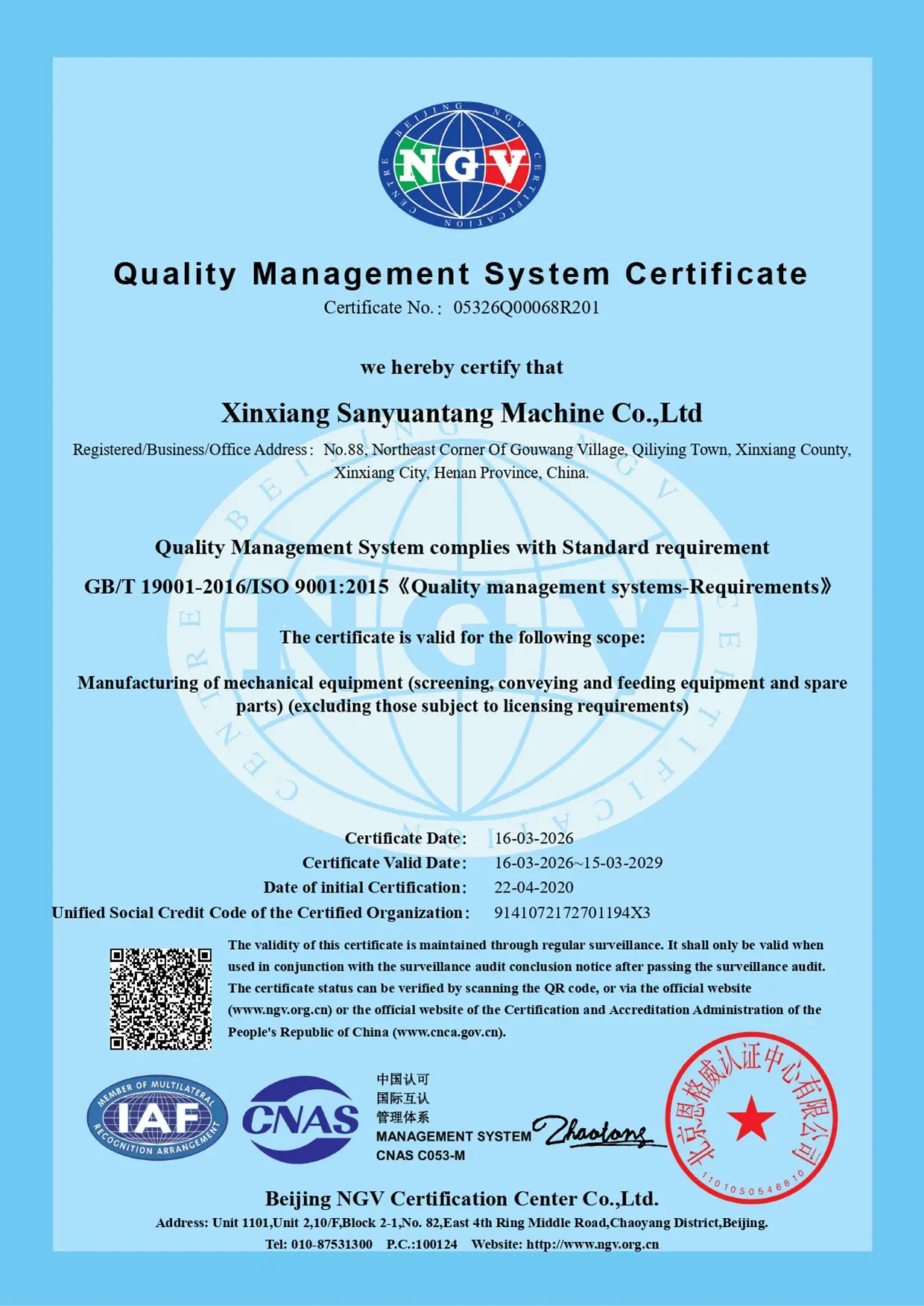
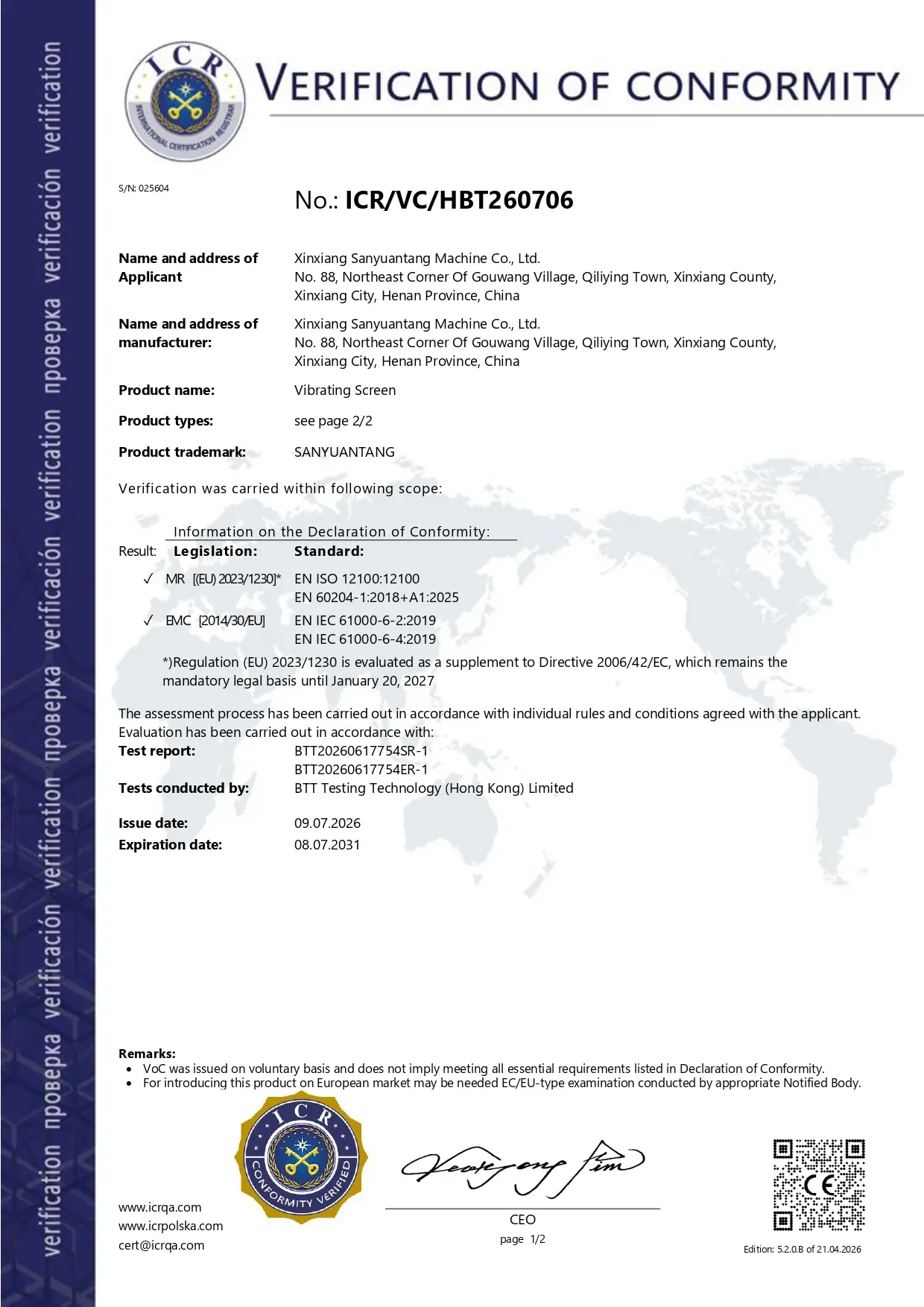
Our standard machine warranty is one year. Applicable coverage, exclusions and project-specific documentation are confirmed in the quotation and contract.
Customer Cases
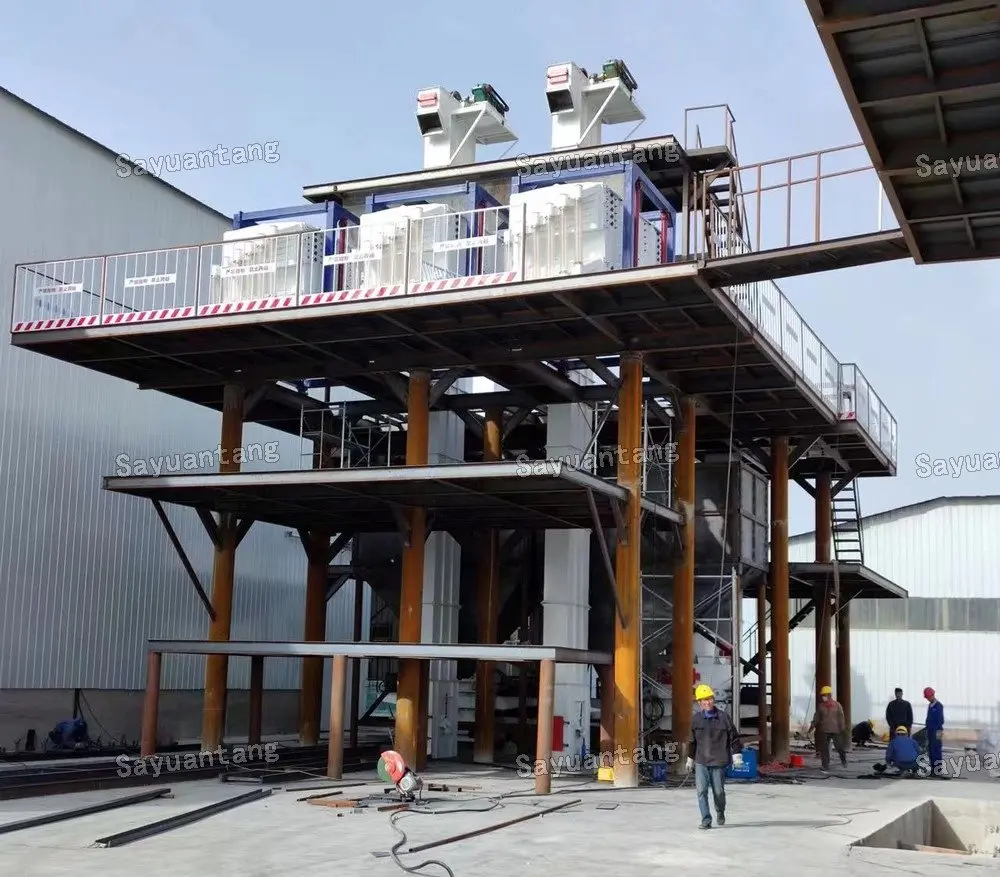
Quartz Sand Plant, Hunan, China
3 machines · 12 t/h feed rate
Three 2040 square gyratory screeners were supplied in May 2023. The 10-layer configuration used paired decks of the same mesh fed in parallel, with a feed rate of 12 t/h. The suggested setup used pairs of 30, 50, 80 and 120 mesh, plus two spare 10-mesh layers for batch changes. One machine replaced two four-layer linear screens, with less floor space and rear-access deck replacement.
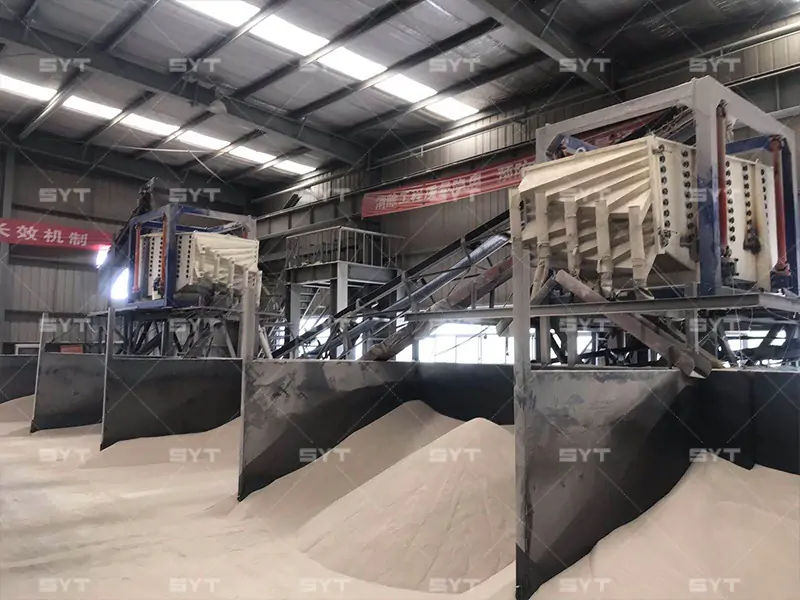
Manufactured Sand, United Kingdom
5 layers · 2,000 kg/h per machine
A building materials producer needed more uniform grading and better stone-powder control. A five-layer square gyratory swing screen used square mesh, adjustable frequency and screen angle for dry classification. The project achieved stable finished-sand grading and 2,000 kg/h per machine.
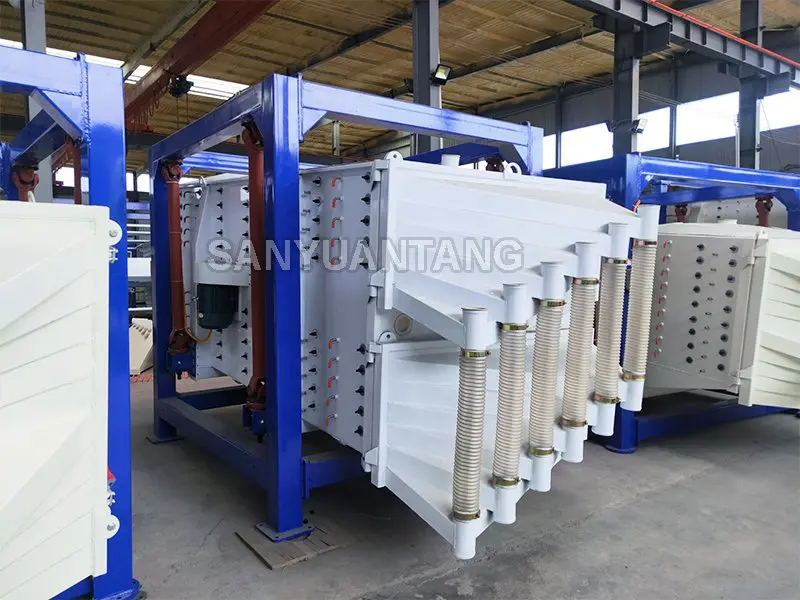
Silica Sand, India
5 FYBS2040 screens · 30–100 mesh
An Indian glass manufacturer selected five FYBS2040 gyratory screens for silica sand classification. The project used paired five-layer decks and 30–100 mesh. The order was placed in September 2021, with modular equipment and spare parts supplied for installation and maintenance.
Sand Screening Machine FAQs
What is the difference between a gyratory screen and a probability screen?
A gyratory screen moves material in a long, gentle circular path, which gives sharper size cuts and suits precise grading in dry sand. A probability screen has a steep deck that moves material quickly, which gives high throughput for coarser material that screens easily.
Which screen should I use for quartz or silica sand grading?
A multi-layer gyratory screen splits sand into several grades in one pass. Our quartz sand configurations offer 4–140 mesh with up to 10 layers; the Gyratory Sifter offers 2–200 mesh and up to 10 layers. The right aperture and configuration depend on the feed and target grades.
How many layers do I need to split sand into several grades?
In a conventional series of decks, N layers produce N+1 size fractions, including fines passing through the last mesh. Parallel paired decks add processing area rather than a new grade. Tell us the grades your customers buy so we can design the deck arrangement.
When do I need a dewatering screen?
A dewatering screen drains washed sand before stockpiling or a suitable subsequent process. It also separates solids from slurry. Whether dry grading follows depends on the remaining moisture and the required product.
Can the screen handle wet or sticky sand?
Dry classification works best on free-flowing sand. Wet or washed sand may need a dewatering stage before dry grading. Sticky material needs a sample test so we can confirm a suitable screen and process.
What decides the price of a sand screening machine?
Screen size, number of layers, frame and mesh material, motor power and voltage. Send your output, grades and moisture for a quote.
Related Equipment and Resources
Screening and Handling
Parts and Resources
Request a Quote
Send us your sand, target grades and hourly output. In your message, include the material, target grades or mesh, capacity (t/h), feed moisture and installation requirements so our team can recommend a suitable model.
Email: sales@sanyuantang.com
Phone / WhatsApp: +86 166 3840 8032
Factory: No. 88, Northeast Corner of Gouwang Village, Qiliying Town, Xinxiang County, Xinxiang City, Henan Province, China.
Updated November 3, 2026.