
Sanyuantang provides agriculture and biomass screening solutions for wood processing plants, feed producers and agricultural material processors. Our equipment separates fines, removes oversized material and produces specified particle grades from wood chips, sawdust, grains, feed pellets and suitable fertilizer granules.
Individual screening machines can be supplied with feeding and conveying equipment for a new processing line or an existing plant upgrade. The machine, screen openings and discharge arrangement are selected from the material, moisture, required throughput and finished product specification.
On this page: Screening requirements | Materials | Equipment | Applications | Process lines | Equipment design | Selection | Projects | FAQs
Screening Requirements in Agriculture & Biomass Processing
Agricultural and biomass materials require different screening methods depending on their particle size, shape, moisture content, and processing requirements. Wood chips often need multi-grade classification and oversized material removal, while feed pellets require fines separation. Grains and fertilizer granules are typically screened for size grading and impurity removal. Selecting the appropriate screen type, aperture, and feeding arrangement helps maintain consistent material flow and meet finished product specifications.
Agricultural & Biomass Materials We Screen
Agricultural and biomass materials vary in particle size, shape, moisture content, and flowability, requiring different screening equipment and configurations. Wood chips and biomass particles are typically screened for size classification, while grains, feed pellets, and fertilizer granules require grading, fines removal, or impurity separation. We provide screening equipment with suitable mesh apertures, screen decks, and feeding arrangements to meet different material handling and processing requirements.
| Material Category | Materials | Screening Applications |
|---|---|---|
| Grain & Agricultural Products | Wheat, corn, rice, soybeans and grain meals | Particle grading and coarse impurity removal |
| Animal Feed Materials | Feed pellets, premixes, meat meal and grain mixtures | Fines removal, pellet sizing and impurity separation |
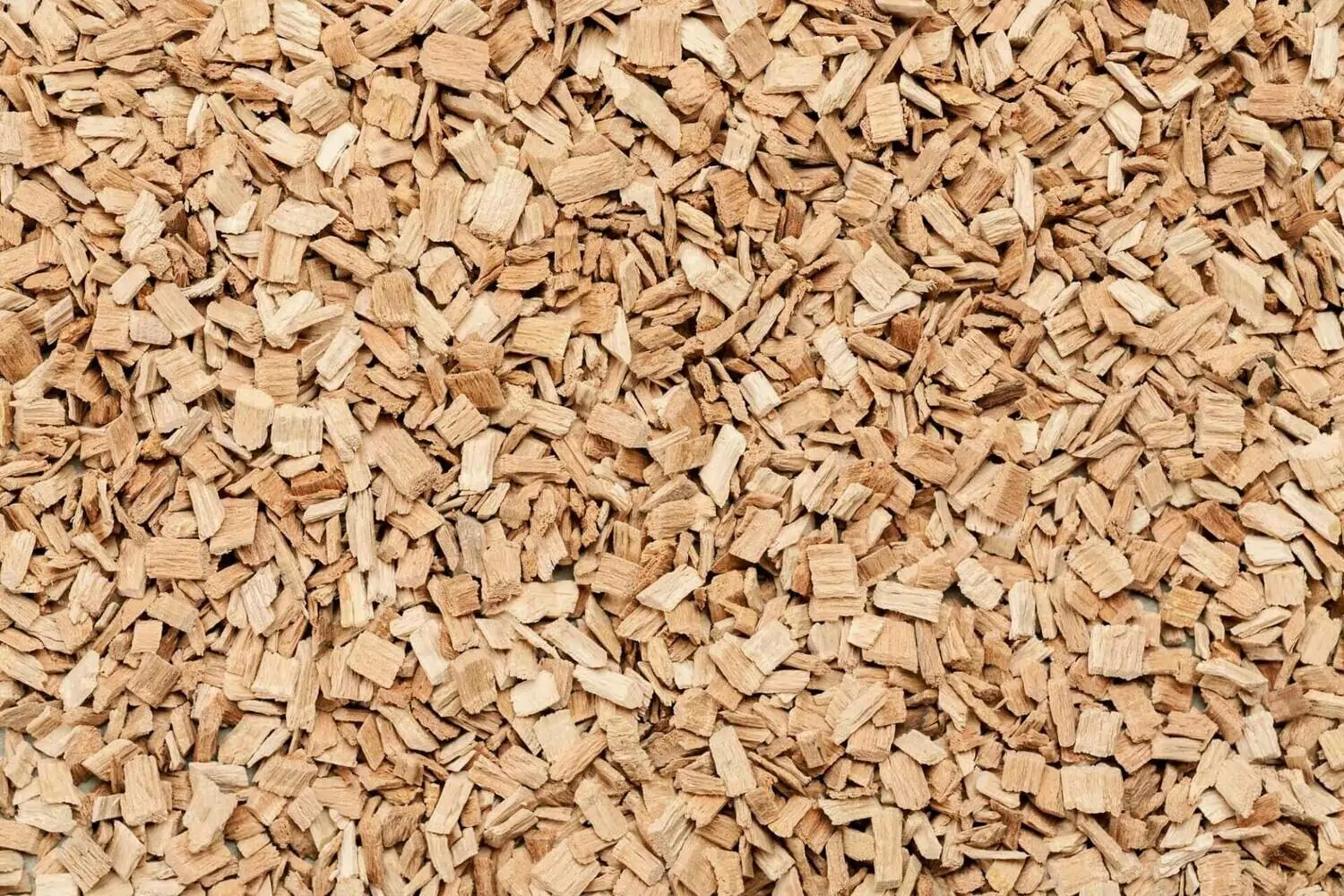
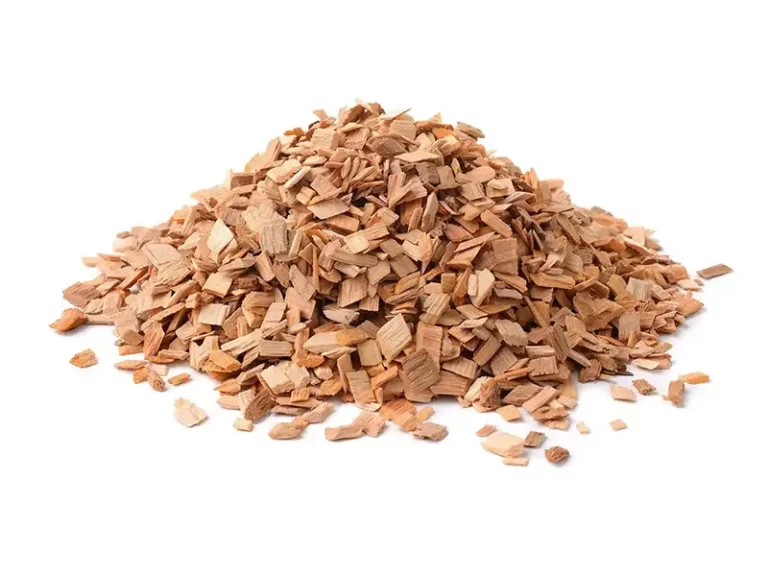
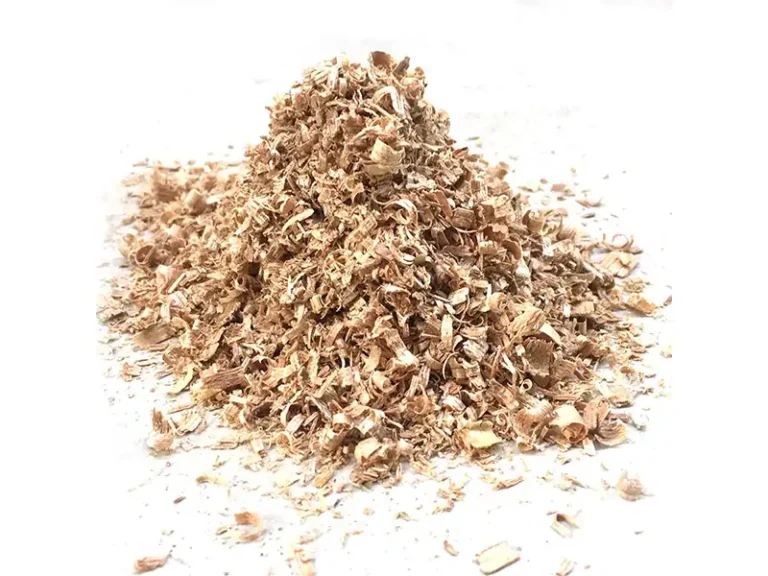
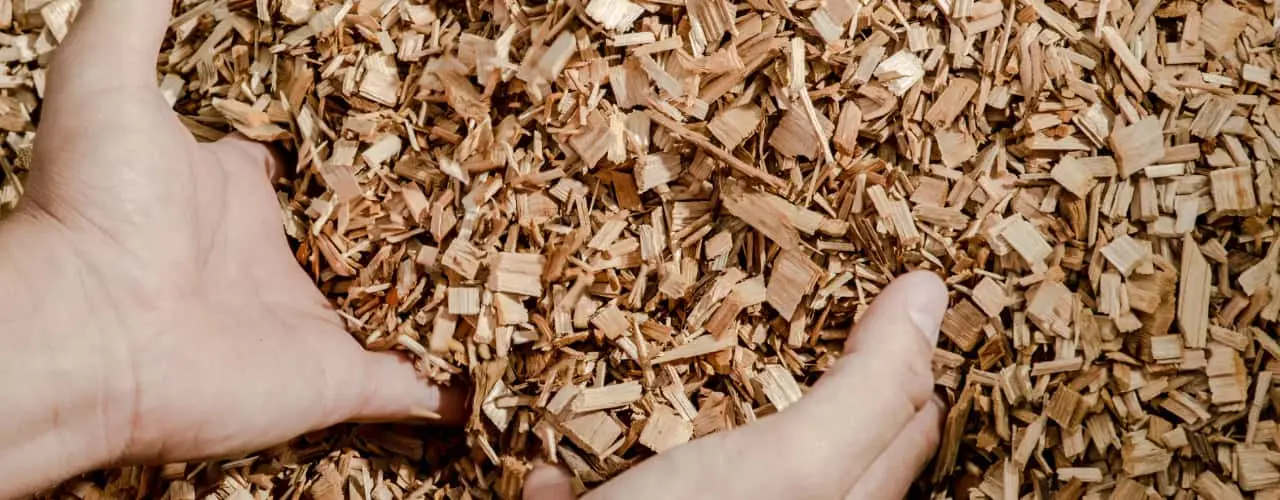
| Wood & Biomass | Wood chips, sawdust, wood pellets, bamboo chips and wood fiber | Size classification, oversize and fines removal |
| Organic Fertilizer & Compost | Fertilizer granules, suitable compost and dry biomass residues | Granule grading and oversized particle separation |
Damp compost, long fibers and materials that form lumps require a separate review of screen type and opening size. Sample evaluation is useful when material behavior cannot be described by nominal size alone.
Screening Equipment for Agriculture & Biomass
Sanyuantang supplies screening equipment for wood chips, biomass feedstock, animal feed, fertilizers, grains, and agricultural powders. Our wood chip screeners, linear vibrating screens, and rotary vibro sifters are designed for different particle sizes, production capacities, and separation requirements.
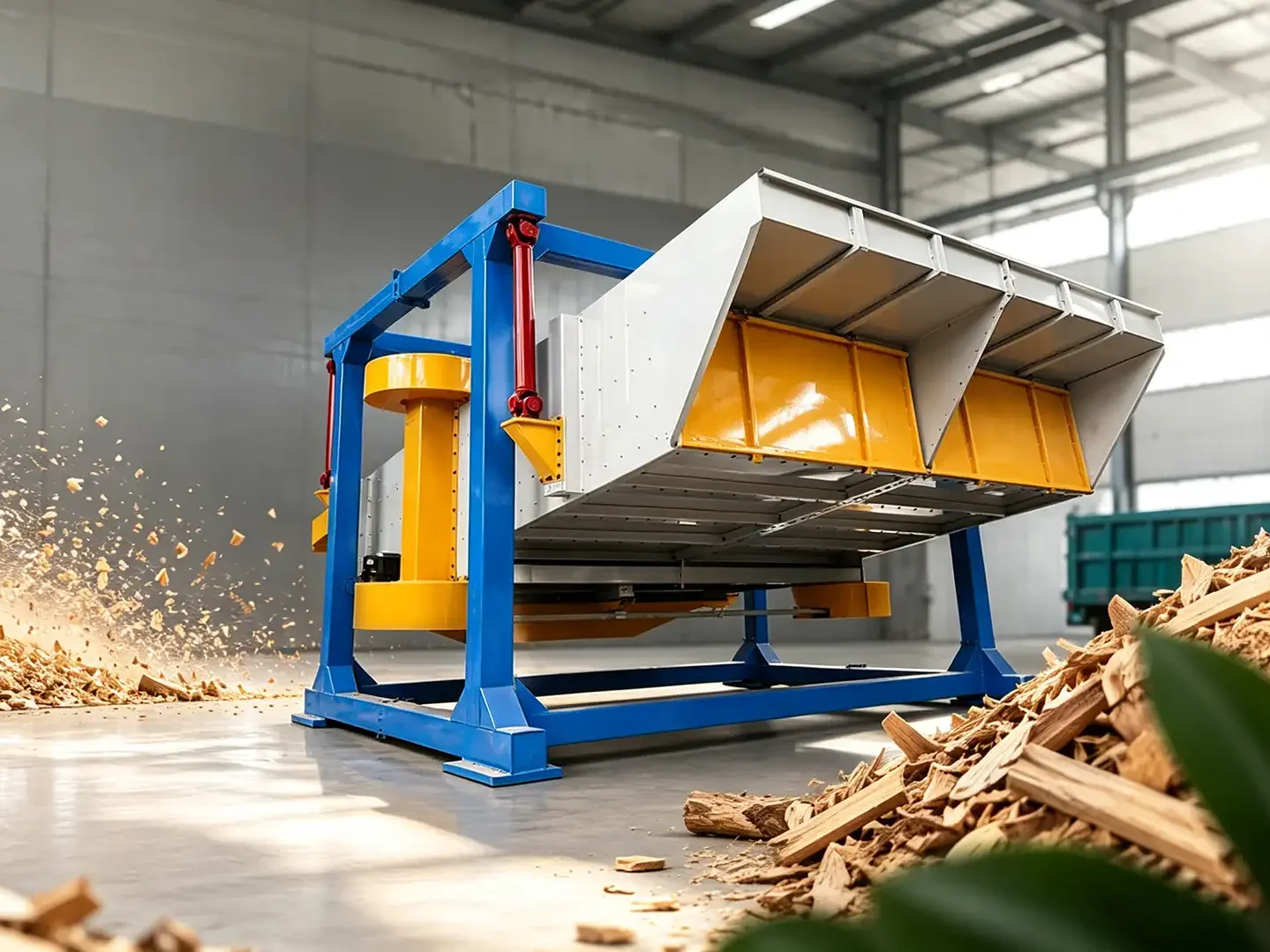
Wood Chip Screener
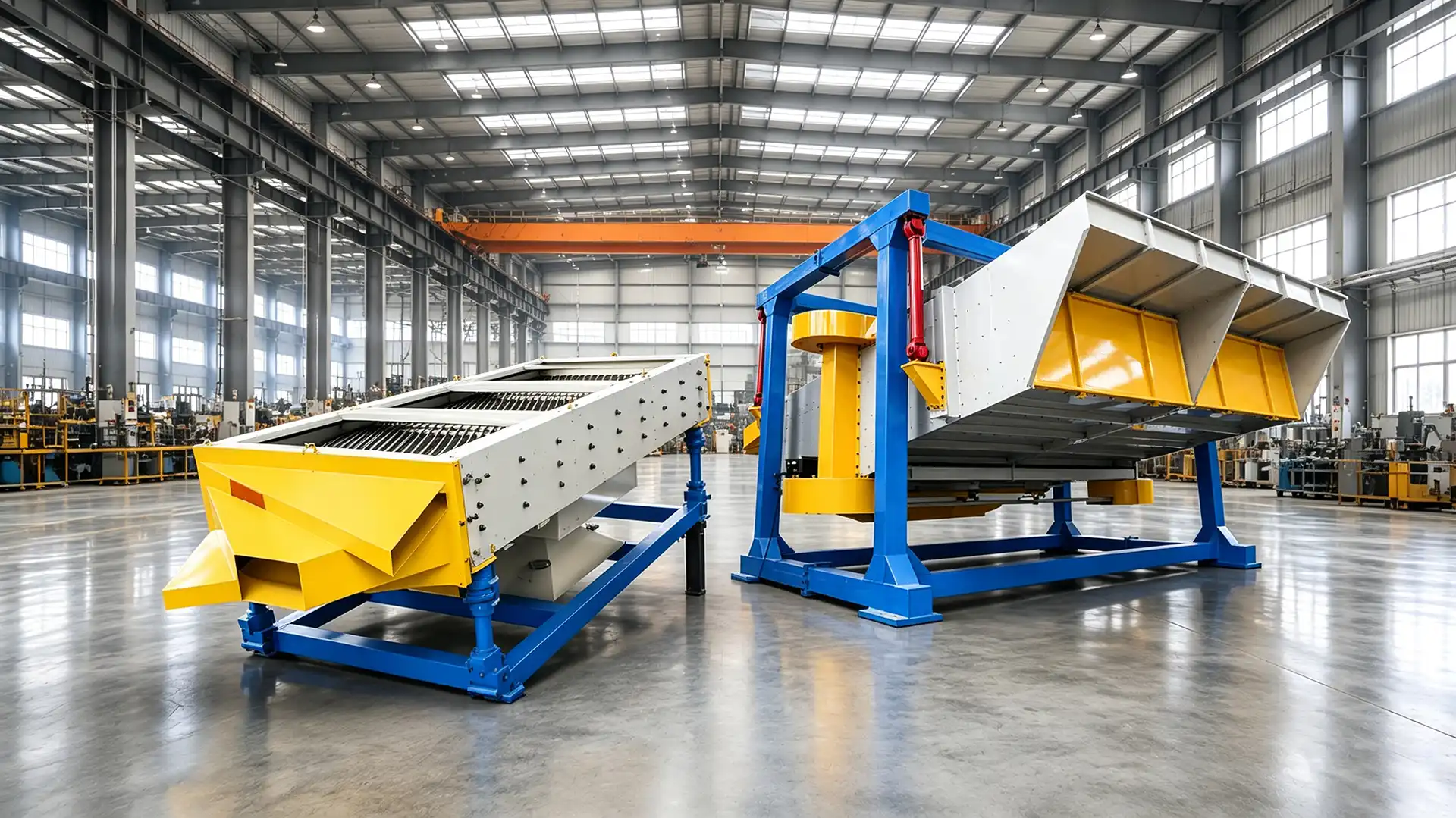
The FYBS wood chip screener uses oscillating motion to separate irregular wood chips and biomass materials into different size fractions. Its large screening area and 1–5 deck configuration make it suitable for high-volume screening after chipping or shredding.
The FYBS-4060 provides a 24 m² screening area and a rated capacity of 600–1,000 m³/h. Screen apertures can be configured for fines removal, chip grading, and oversized material separation.
- Screen aperture: Customized in millimeters; commonly 5–55 mm
- Capacity: 600–1,000 m³/h (FYBS-4060 reference)
- Suitable materials: Wood chips, sawdust, bark, mulch, bamboo chips, and biomass feedstock
- Main duty: High-capacity wood chip grading and multi-size separation
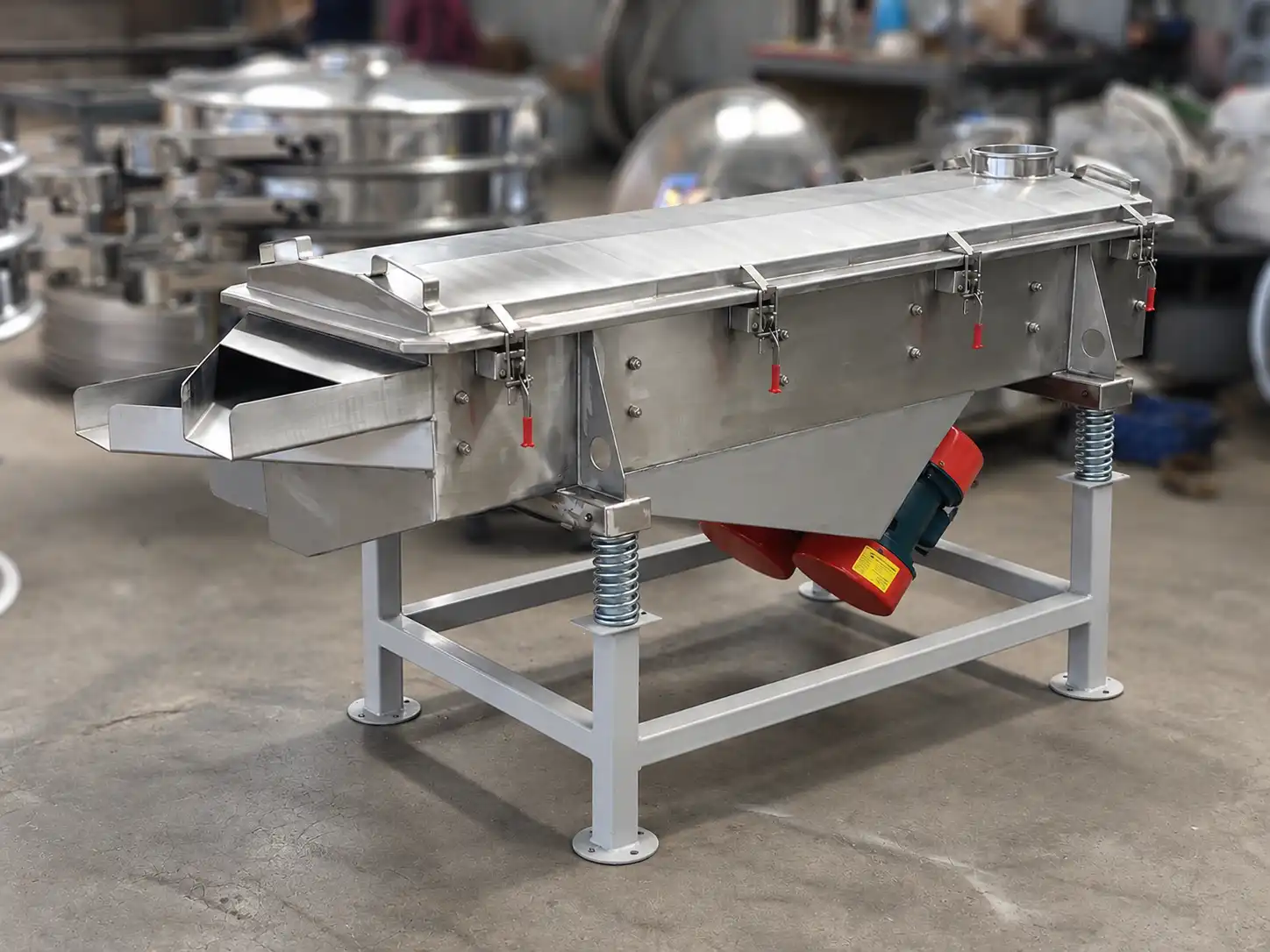
Linear Vibrating Screen
Our linear vibrating screen uses dual vibration motors to move materials forward across a rectangular screen. It is suitable for continuous grading and removing fines from granular agricultural materials.
The SYZ series supports 1–5 screening decks, with different screen sizes and discharge arrangements for production lines.
- Screening range: Approximately 0.074–20 mm (about 200 mesh to 20 mm), depending on model
- Capacity: 300–4,000 kg/h (series reference)
- Suitable materials: Animal feed pellets, grains, fertilizer granules, seeds, and dry agricultural particles
- Main duty: Continuous particle grading, impurity removal, and pellet fines separation
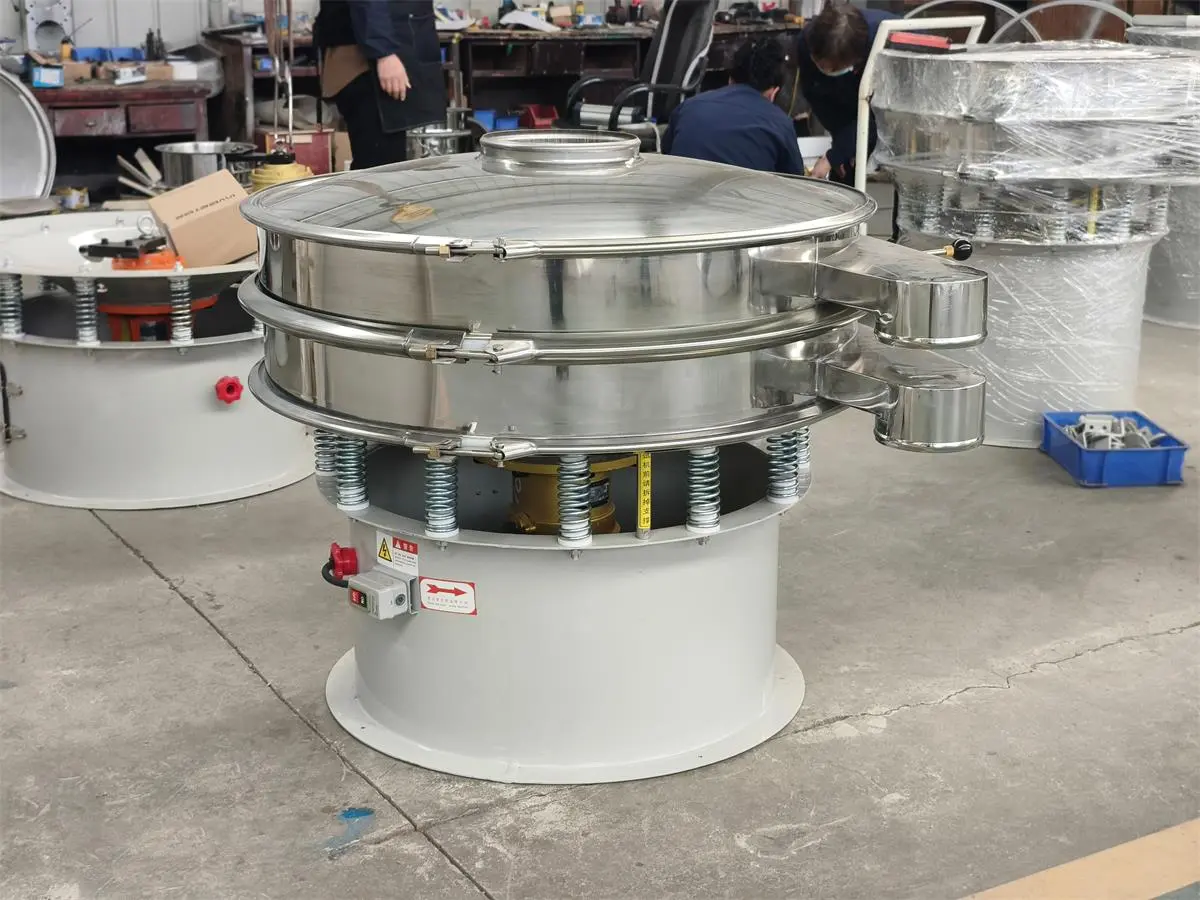
Rotary Vibrating Screen
Our vibro sifter uses three-dimensional vibration to separate fine powders and small particles. It is commonly used for check screening and removing oversized material before mixing, filling, or packaging.
The SY-XZS series offers 1–5 screening decks, with stainless steel contact parts available for food and feed ingredient processing.
- Screening range: 3–500 mesh, depending on model
- Capacity: 100–2,000 kg/h (series reference)
- Suitable materials: Grain flour, starch, feed premixes, powdered fertilizers, and agricultural ingredients
- Main duty: Fine powder sieving, impurity removal, and protective screening
Screening capacities are reference values. Actual throughput depends on material properties, screen aperture, moisture content, and machine configuration.
Screening Applications by Material Type
Agricultural and biomass materials have different screening requirements depending on their particle size, shape, moisture content, and processing stage. We provide screening solutions for removing impurities, separating fines, and grading materials into the required sizes for further processing.
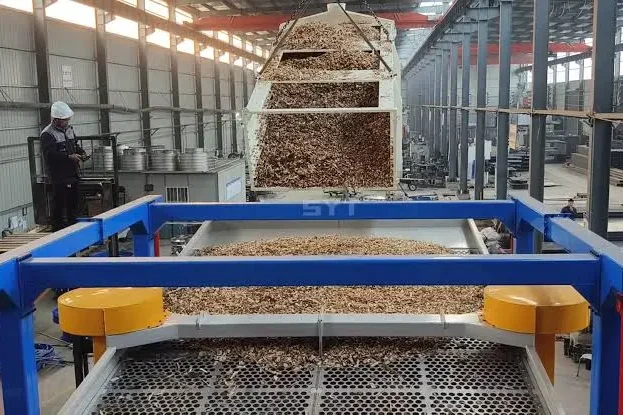
Wood Chip Screening & Sizing
Wood chips, bark, sawdust, and shredded biomass often contain a mixture of fine particles, usable material, and oversized pieces. Screening after chipping or shredding separates these fractions for biomass fuel production, pellet manufacturing, and other wood processing applications.
Larger wood chips are typically classified using screens with openings measured in millimeters, while finer sawdust may require smaller apertures.
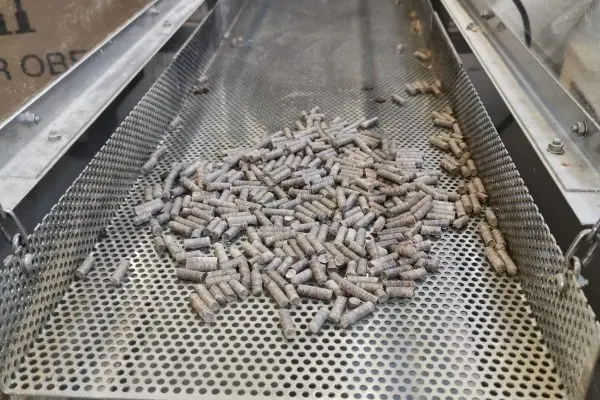
Animal Feed & Feed Pellets
Animal feed pellets can produce fines and broken particles during cooling, conveying, and handling. Screening removes these fines before bagging or bulk storage, helping maintain consistent pellet size and reduce unwanted powder in the finished product.
For powdered feed ingredients and premixes, fine screening can remove lumps and oversized particles before mixing.
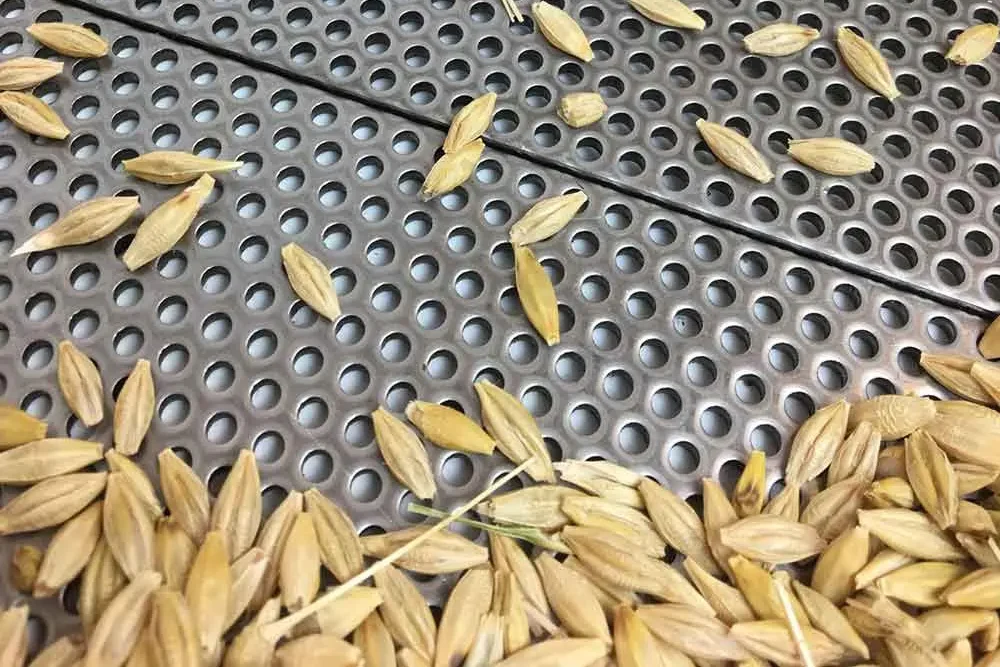
Grain, Seeds & Cereals
Wheat, corn, rice, soybeans, and other agricultural grains may contain dust, broken kernels, straw fragments, and oversized impurities after harvesting and handling.
Screening separates these materials according to particle size before storage, milling, mixing, or packaging. The screen opening is selected according to the grain or seed dimensions and the required separation.
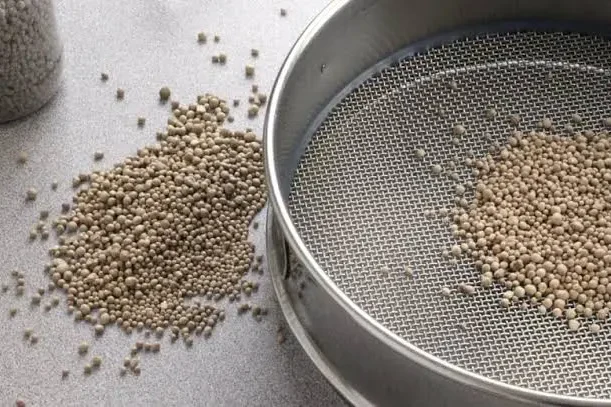
Fertilizer Granules & Powders
Granular fertilizers may contain oversized lumps, broken granules, and excessive fines after granulation, drying, or transportation. Vibrating screens separate these fractions to obtain the required granule size before coating, storage, or packaging.
Powdered fertilizers can also be screened to remove agglomerates before blending or filling.
Agricultural Powders & Starch
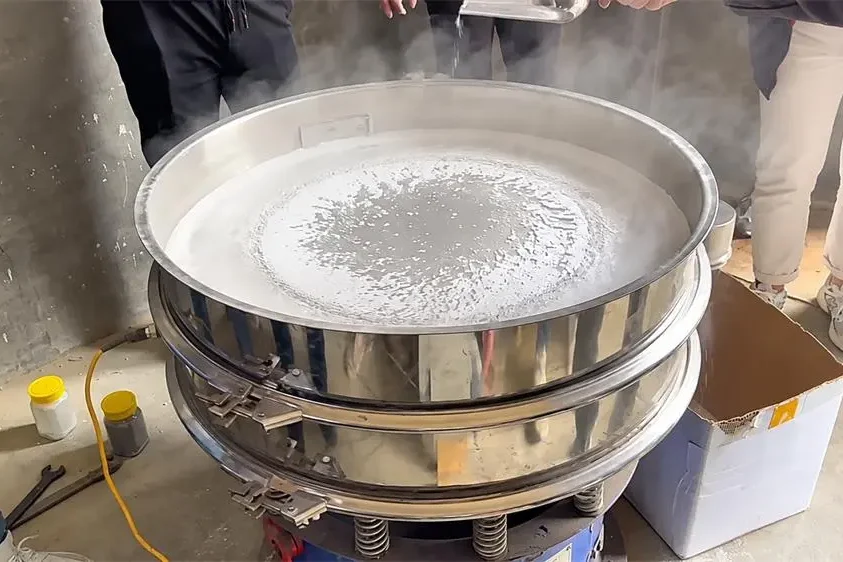
Grain flour, corn starch, rice flour, and other agricultural powders often require fine screening before mixing or packaging. Lumps, coarse particles, and foreign material can affect downstream processing.
Rotary vibrating screens are commonly used for routine powder screening. For finer powders that tend to clog the mesh, ultrasonic screening may be considered depending on the material’s characteristics.
Agriculture & Biomass Screening and Conveying Systems
Screening machines connect with feeders, conveyors, elevators and collection equipment to keep materials moving between production stages. Sanyuantang reviews feed capacity, equipment height, flow direction and discharge connections when planning a screening section.
Wood Chip Grading Line
Wood Chipper → Belt Conveyor → Wood Chip Screener → Graded Collection
An infeed belt transfers mixed chips to the screen. Separate discharge conveyors carry fines and accepted chips to their collection points, while an oversize return belt can send larger pieces for rechipping.
Conveyor width, length and discharge direction are matched to the required material flow.
| Process Line | Typical Arrangement | Main Screening Duty |
|---|---|---|
| Feed Pellet Screening | Pellet Cooler → Conveyor or Elevator → Linear Vibrating Screen → Storage or Packaging | Separate broken pellets and fines after cooling |
| Agricultural Powder Screening | Feed Hopper → Screw Feeder → Rotary Vibrating Screen → Collection Hopper | Remove oversized particles before mixing or packing |
| Mulch & Biomass Fuel | Chipping → Screening → Product Collection; oversize returned where required | Control product sizes and separate coarse pieces |
Integration with Existing Production Lines
Available floor space, feeding height and surrounding machinery determine the support frames and connections. Include the upstream machine, outlet positions, storage points, oversize return route and electrical requirements in the layout review.
Equipment Design for Biomass & Agricultural Materials
The machine structure, screen surface and material connections should reflect the actual feed behavior and operating environment.
Irregular & Lightweight Feed
Match motion, deck inclination and inlet distribution to chip shape and low bulk density. Plan outlet geometry to avoid material buildup.
Screen Media & Cleaning
Select perforated plates, woven wire mesh and suitable cleaning arrangements for the cut size, fibers and moisture. Allow access for screen replacement.
Dust Containment
Review enclosed housings, sealed connections and dust extraction interfaces for dry sawdust and powders. Assess combustible dust requirements with the project engineer.
Maintenance Access
Provide access to decks, drives, springs, bearings and discharge connections. Identify replacement screens and wear parts for the selected machine.
How to Select the Right Screening Equipment?
Begin with the material and finished product. A coarse wood chip screener and a fine powder sieve perform different duties even when their quoted throughputs look similar. Our engineers use the following information to recommend the machine and its connections.
Identify the Material
Provide the material name, composition, bulk density, fiber content and flowability. Include photographs or a sample for irregular feed.
Measure the Feed
State minimum, typical and maximum particle dimensions, the size distribution, fines percentage and expected moisture range.
Define Product Grades
Specify target apertures, accepted sizes, the number of fractions and allowable oversize or undersize in each product.
Confirm Throughput
Give the required kg/h, t/h or m³/h and operating hours. Include bulk density so mass and volume can be compared on the same basis.
Review Installation Space
Send available floor space, feed height, discharge positions, supporting structure and access for inspection and maintenance.
Connect the Process
Identify upstream and downstream machinery, conveyors, collection bins and any oversize return route. A line drawing helps confirm the arrangement.
| Screening Duty | Equipment to Consider |
|---|---|
| Coarse wood chips and irregular biomass | Oscillating wood chip screener |
| Dry feed pellets and fertilizer granules | Linear vibrating screen |
| Fine agricultural powders and premix ingredients | Rotary vibrating screen |
| Several grades from suitable dry, free-flowing granules | Multi-deck gyratory sifter |
Customer Screening Projects & Installations
The following published projects show how the same machine model can use different deck and aperture configurations. Each specification belongs to its stated material and screening duty.
Wood Chip Sorting — United Kingdom
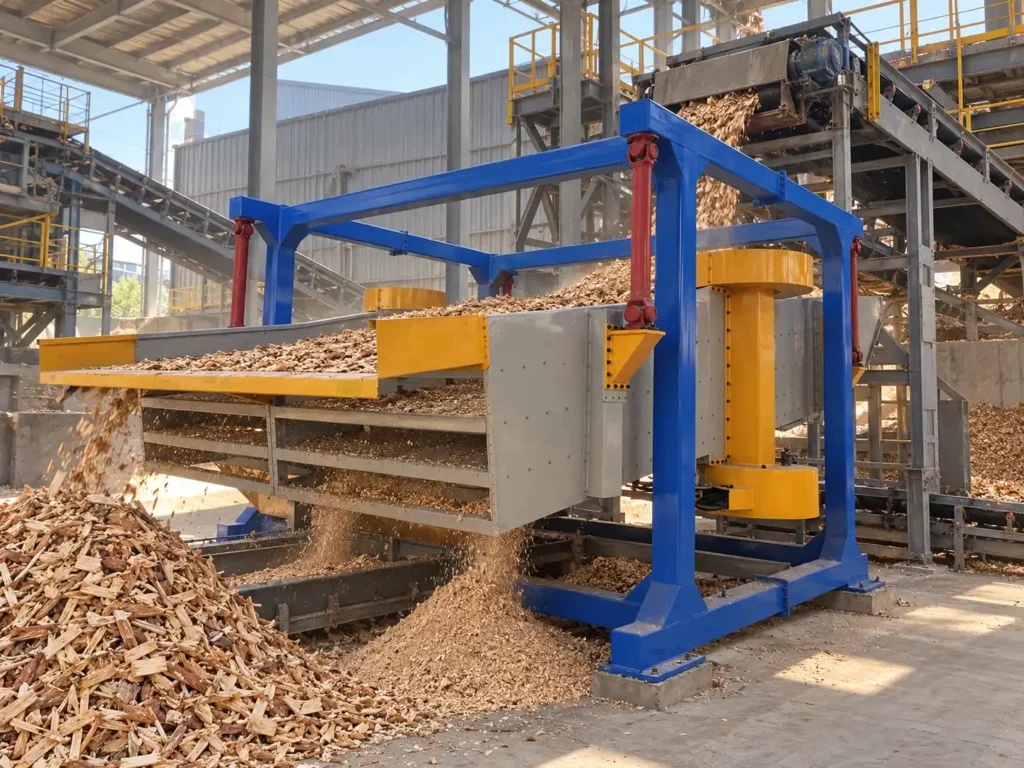
A UK customer required several size fractions from mixed wood chips containing roots and small debris. Sanyuantang configured an FYBS-4060 oscillating screen with four decks and 70 / 55 / 35 / 12 mm apertures.
Material bulk density: 200–250 kg/m³.
Installation: 2 days.
Commissioning: 1 day.
The product split depends on feed distribution, moisture and chip shape. This is a project-specific configuration.
View the UK wood chip sorting project
Wood Chip Screening — Thailand
A wood processor required separation of approximately 0–50 mm wood chips from oversized pieces. The FYBS-4060 was configured with one screen deck and a 2-inch (50.8 mm) opening.
Material bulk density: 380–450 kg/m³.
Customer target throughput: 40 t/h.
Installation: 3 days.
The 40 t/h value is the customer’s target, rather than a universal output rating. Actual throughput depends on feed conditions and the separation required.
View the Thailand wood chip screening project
Agriculture & Biomass Screening Equipment Manufacturer
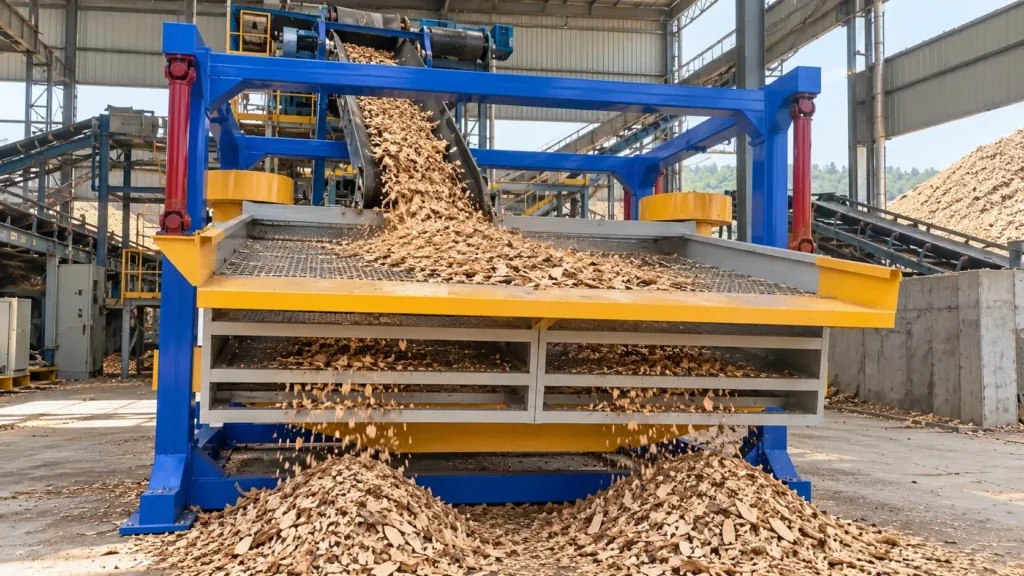
Xinxiang Sanyuantang Machine Co., Ltd. manufactures industrial screening and conveying equipment in China, with machinery manufacturing experience since 1994. Manufacturing operations include metal processing, welding, fabrication, assembly and inspection.
Our project support covers equipment selection, screen deck customization, feed and discharge design, production line integration and installation guidance. Technical troubleshooting, maintenance advice and replacement meshes, drive parts and other machine-specific components support ongoing operation.
Technical Services & After-Sales Support
Project Review
Request an Agriculture & Biomass Screening Solution
Send your material type, particle size distribution, moisture, required throughput and target product grades. Include photos, a sample description or a line drawing so our engineers can review the screen and conveying arrangement.
Single machines and integrated screening sections
Agriculture & Biomass Screening FAQs
What screening machine is suitable for wood chips?
An oscillating wood chip screener is commonly used to classify coarse, irregular chips. The FYBS-4060 supports single or multiple decks. Select the aperture and deck arrangement from chip length, width, thickness, moisture and required product fractions, rather than choosing the machine from nominal capacity alone.
How can fines be removed from feed pellets?
A linear vibrating screen can separate fine particles and broken material after pellet cooling and conveying. The aperture retains the accepted pellet fraction while smaller particles pass through. Feed rate, pellet size distribution and bed depth should be reviewed to maintain continuous separation and limit unnecessary product handling.
What screen sizes are used for biomass materials?
Wood chip openings are normally specified in millimeters; finer agricultural powders may use mesh numbers or micrometers. The FYBS-4060 has a standard published reference range of 5–55 mm. Custom project apertures may differ. Confirm the actual opening, chip geometry and finished product specification before selection.
Can one machine separate wood chips into several grades?
Yes. Multiple decks use different apertures to divide feed into several fractions in one continuous operation. The number of grades depends on deck arrangement and outlet design. Chip orientation, moisture and size distribution also influence passage through each screen and should be evaluated for the intended product specification.
How does moisture affect biomass screening?
Moisture can make sawdust, fibers and wood particles adhere together or block openings. This may reduce effective throughput and separation accuracy. Machine motion, apertures, feed rate and cleaning arrangements should be reviewed for the expected moisture range. Material testing is useful for damp, sticky or irregular feed.
What is the capacity of a wood chip screening machine?
The FYBS-4060 has a published reference capacity of 600–1,000 m³/h. Actual throughput depends on bulk density, moisture, chip geometry, screen openings, deck quantity and the required separation. Confirm capacity for the project material and operating conditions; a reference machine rating is not a guaranteed output for every feed.
Can screening equipment connect to a pellet production line?
Yes. Screens can connect with pellet coolers, conveyors, bucket elevators, collection bins and packaging equipment. Screening is commonly placed after cooling to remove broken material and fines. Feed capacity, installation height, outlet locations and controls must be coordinated with the surrounding equipment and the required product flow.
Can Sanyuantang customize the screening system?
Sanyuantang can review screen dimensions, apertures, deck quantities, feed arrangements, discharge outlets and support structures for the project. Provide material details, size distribution, moisture, required throughput and available space. Photos, samples and a production line drawing help engineers recommend a machine and suitable material handling connections.