
Sanyuantang provides screening, conveying, feeding, mixing, and liquid filtration equipment for food and beverage processing. Our systems handle flour, starch, sugar, spices, dairy powders, food additives, premix ingredients, and suitable liquid products.
We supply individual machines and integrated production line equipment for impurity removal, particle size classification, powder transfer, blending, and liquid-solid separation. Each configuration is selected according to material characteristics, processing capacity, hygiene requirements, and plant layout.
Food Processing Challenges We Handle
Food ingredients vary in particle size, moisture content, and flowability, creating different challenges during screening and conveying. Fine powders can block screen openings, moisture-sensitive ingredients may form lumps, and lightweight materials can generate dust. Fragile particles may also break during handling, affecting product quality.
To address these challenges, screening, feeding, and conveying equipment should be selected and configured together to maintain consistent material flow and separation throughout the production line.
Food Ingredients & Materials We Process
Food ingredients require different screening methods depending on particle size, bulk density, moisture, and product specifications. Dry powders are commonly screened to remove lumps or impurities, granular ingredients may require size grading, and liquid products need suitable solid-liquid separation equipment.
The following materials can be processed using appropriately configured screening and material handling systems.
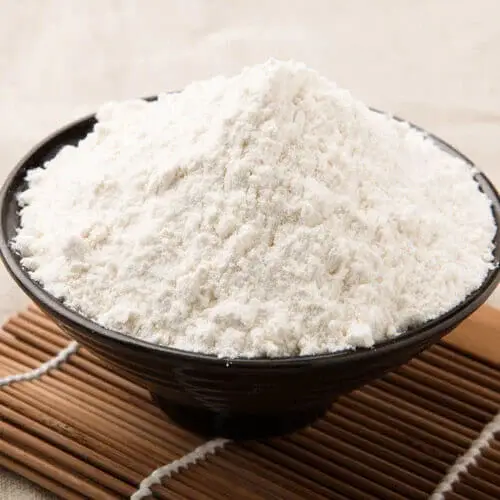



| Material Category | Typical Materials | Main Processing Requirements |
|---|---|---|
| Flour & Starch | Wheat flour, rice flour, corn starch, tapioca starch | Check screening, lump removal, fine powder separation |
| Sugar & Crystalline Ingredients | Granulated sugar, powdered sugar, salt, citric acid | Particle grading, oversized particle removal |
| Spices & Seasonings | Chili powder, pepper, garlic powder, spice blends | Screening, coarse particle removal, dust-controlled transfer |
| Dairy & Nutrition Powders | Milk powder, whey powder, protein powder | Fine screening, enclosed conveying, hygienic handling |
| Food Additives & Premixes | Baking powder, food coloring, seasoning premixes | Ingredient screening, feeding, mixing |
| Liquid Food Products | Fruit juice, syrup, soy milk, edible oil | Liquid filtration, suspended solid removal |
Materials that are oily, highly hygroscopic, sticky, or sensitive to mechanical handling may require specialized screen surfaces, feeding methods, or process adjustments.
Screening Equipment for Food Processing
Sanyuantang supplies different food screening machines for coarse impurity removal, fine powder sieving, particle grading, and liquid filtration. Equipment selection depends on material properties, required mesh size, production capacity, and cleaning requirements.
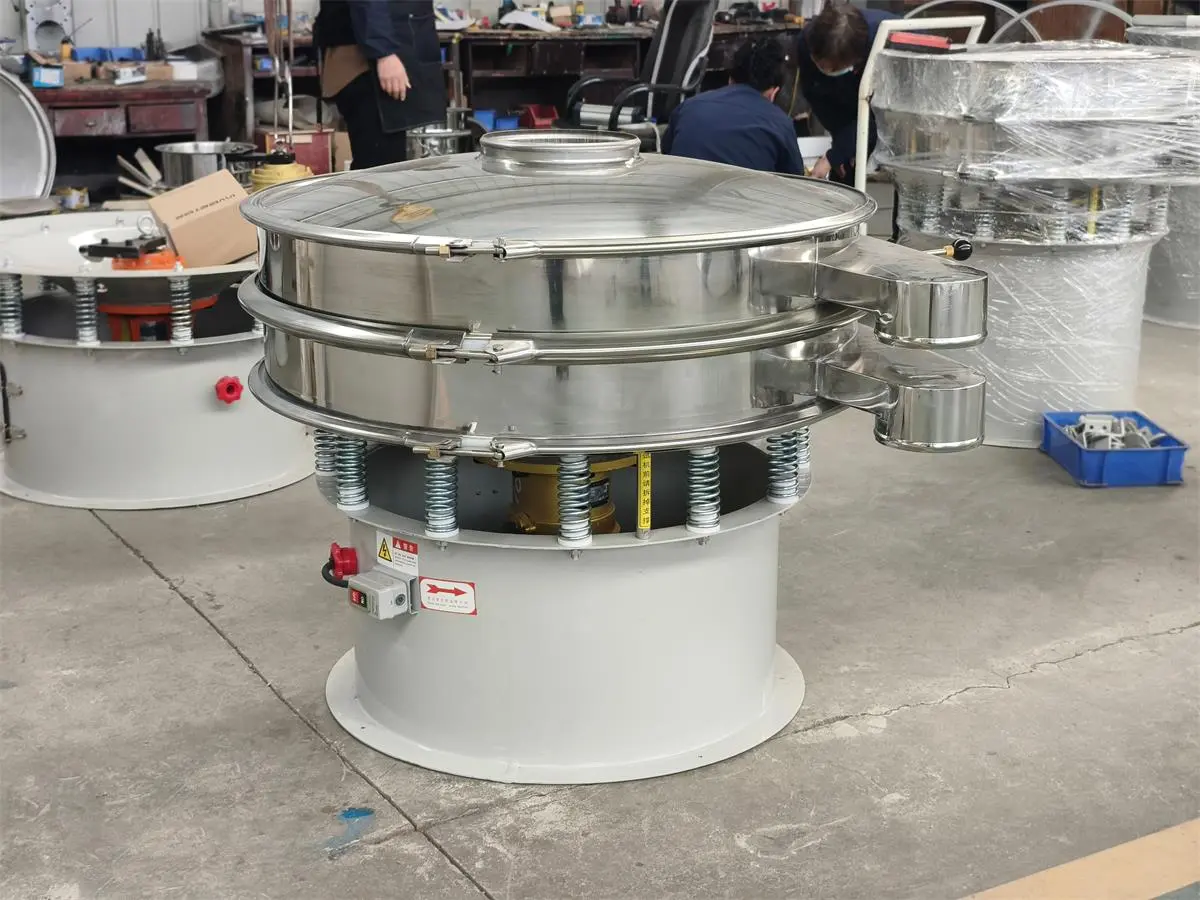
Industrial Vibro Sifter
An industrial vibro sifter uses three-dimensional vibration to separate powders and granules through circular screen decks. It is commonly used for impurity removal, particle classification, and protective screening before mixing or packaging.
Single- or multi-deck configurations can be selected according to the number of required particle size fractions. Stainless steel contact parts and enclosed covers are available for suitable food processing applications.
Materials: Flour, sugar powder, starch, spices, food additives.
Main Application: General powder sieving and impurity removal.
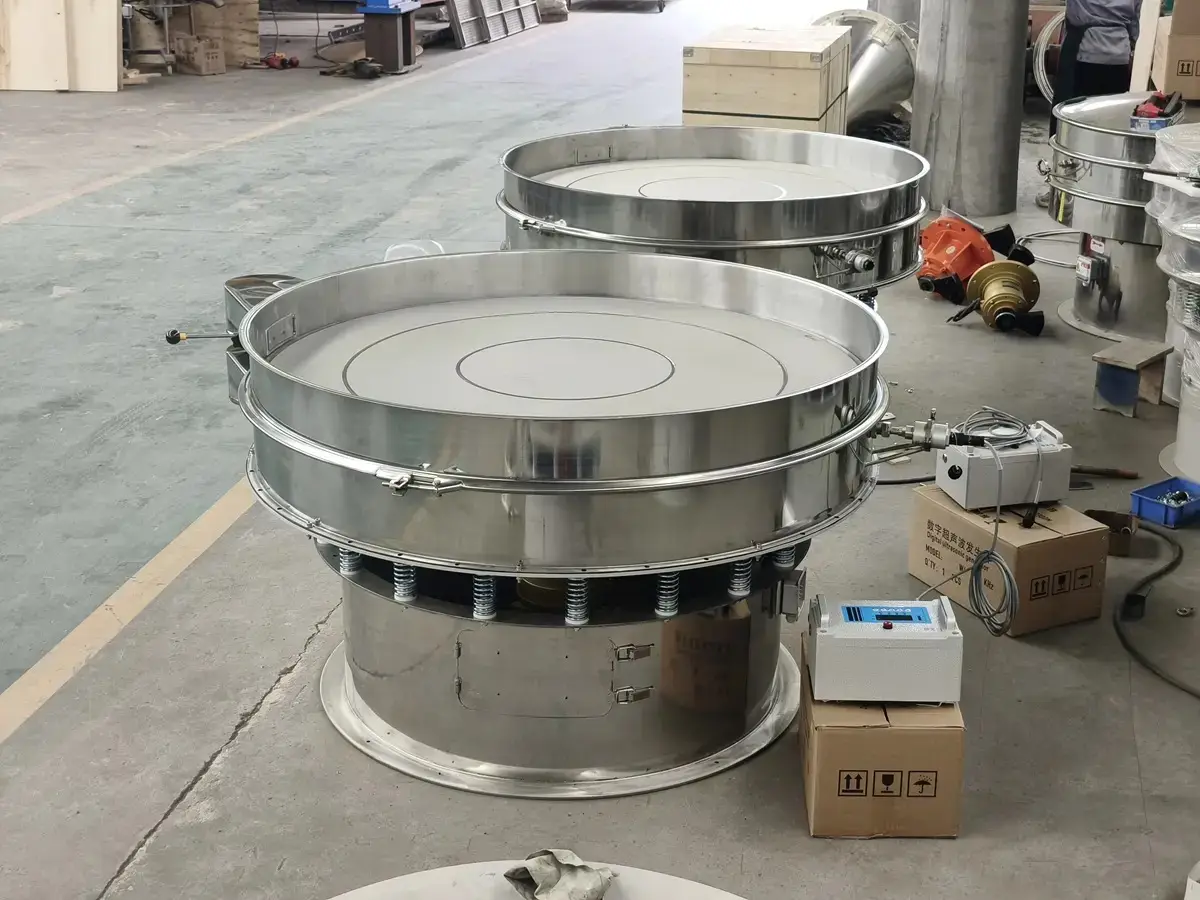
Ultrasonic Vibrating Screen
An ultrasonic vibrating screen combines conventional vibration with high-frequency ultrasonic excitation at the mesh surface. This helps reduce screen blinding and improves particle movement through fine apertures for suitable powders.
It can be considered for fine starch, nutritional powders, food additives, and other dry ingredients that are difficult to screen using conventional mesh vibration alone.
Materials: Fine starch, protein powder, nutritional ingredients, fine food additives.
Main Application: Fine powder screening and mesh deblinding.
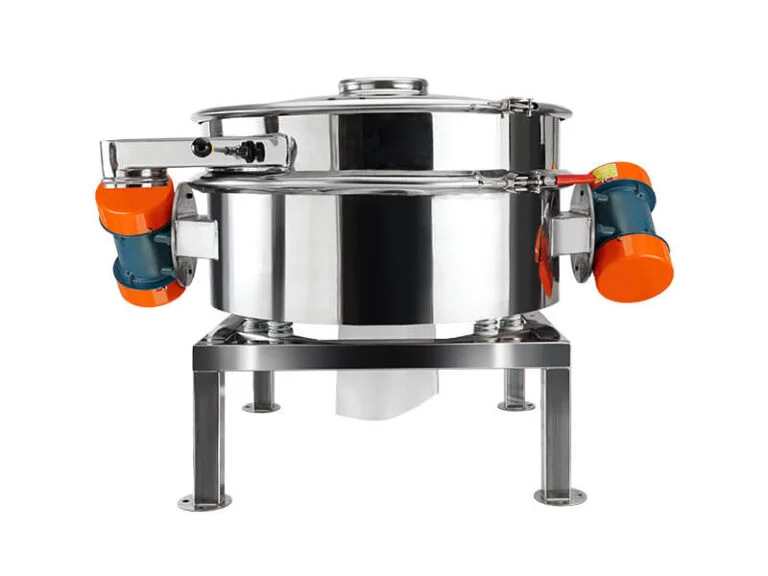
Inline Vibratory Screen
An inline vibratory screen, also called a direct discharge vibrating screen, provides compact screening for continuous powder handling lines. Its direct discharge arrangement allows screened material to pass through the machine to connected conveying or collection equipment.
This design is commonly used for check screening, lump removal, and coarse impurity separation where high material flow and limited installation height are important.
Materials: Flour, starch, powdered sugar, dry food ingredients.
Main Application: Continuous check screening and impurity removal.
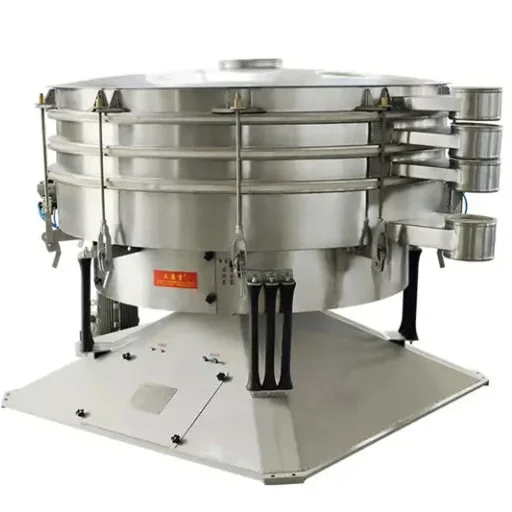
Tumbler Screening Machine
A tumbler screening machine uses a gentle screening motion to classify dry powders and granular materials. Multiple screen decks can be configured to produce several particle size fractions in one operation.
This machine can be considered for suitable sugar crystals, salt, and other granular ingredients where particle size consistency and reduced mechanical damage are important.
Suitable Materials: Granulated sugar, salt, crystalline food ingredients.
Main Application: Gentle multi-grade particle classification.
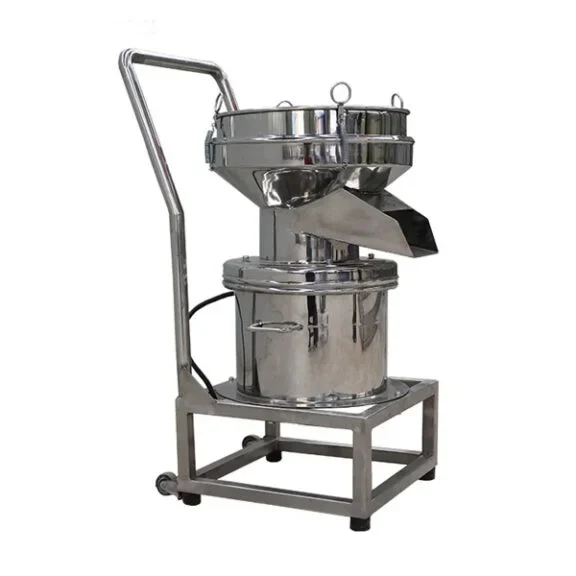
Vibrating Liquid Filter
A vibrating liquid filter separates suspended solids and coarse impurities from suitable liquid products. Liquid passes through the screen opening, while retained particles are collected or discharged separately.
Equipment selection depends on liquid viscosity, solids content, filtration aperture, required flow rate, and cleaning requirements.
Suitable Materials: Fruit juice, syrup, soy milk, edible oil.
Main Application: Liquid-solid separation and coarse filtration.
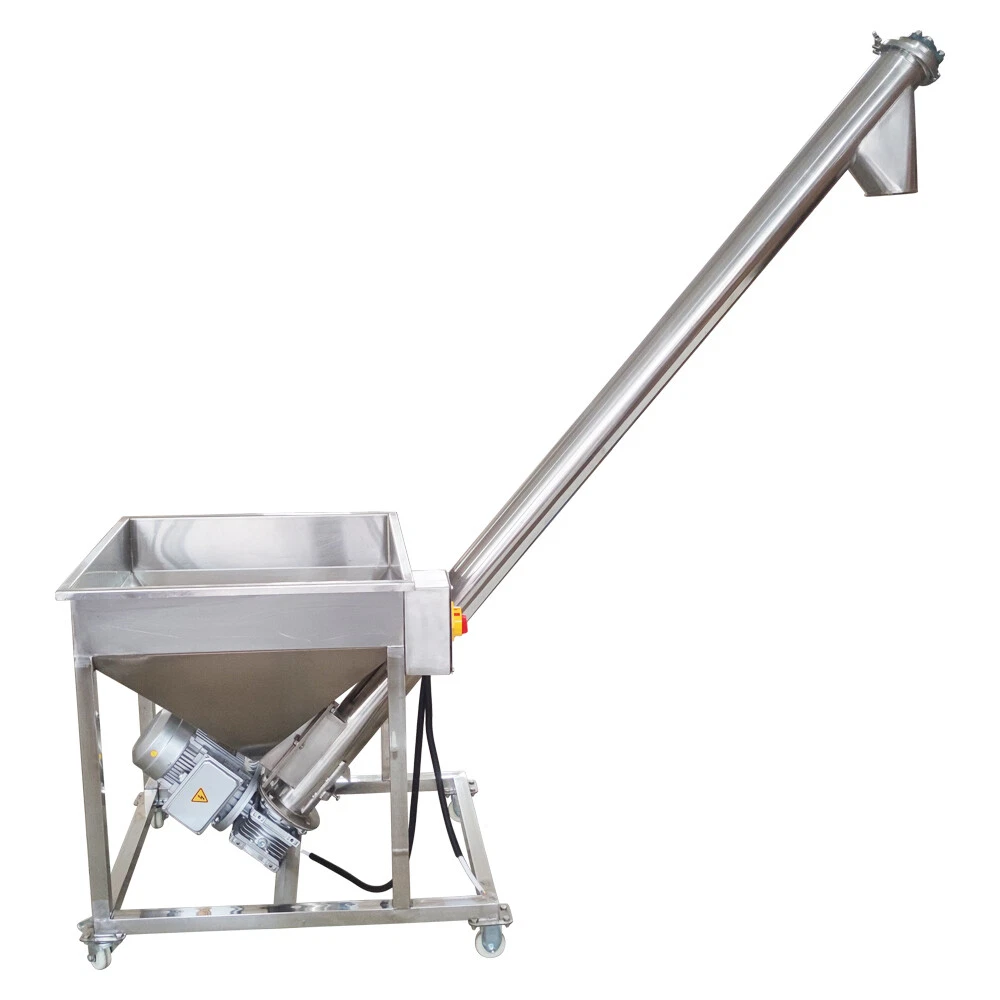
Screw Conveyor with Hopper
Our stainless steel screw conveyor uses a rotating auger to transfer food powders and granular ingredients from a feed hopper to screening, mixing, or packaging equipment. It provides continuous material feeding through an enclosed conveying tube, reducing manual handling and dust release.
The conveyor can be configured with different screw diameters, hopper sizes, conveying heights, and discharge connections to suit the production line.
Suitable Materials: Flour, starch, sugar, milk powder, coffee powder, seasoning powders, and suitable dry food granules.
Main Duty: Continuous powder feeding and enclosed material transfer between processing equipment.
Food Screening Applications by Material
Screening equipment is used at different stages of food ingredient processing. Some applications require only a single check-screening operation, while others need fine particle classification, enclosed feeding, or multiple processing steps.
Flour Screening & Impurity Removal
Flour screening is commonly installed before mixing, storage, or packaging to remove lumps, coarse particles, and unwanted material. An inline vibratory screen or industrial vibro sifter can provide continuous check screening without significantly changing the normal particle size distribution of the flour.
Screen aperture, feeding capacity, and discharge height should be matched to the existing flour handling system. Stainless steel contact parts and accessible screen assemblies help simplify routine cleaning.
Process: Flour Feeding → Check Screening → Mixing or Packaging
Starch & Fine Powder Sieving
Starch powders may have low bulk density, poor flowability, or a tendency to absorb moisture and form agglomerates. These properties can cause screen blinding, particularly when fine apertures are used.
For conventional starch check screening, a rotary vibro sifter may be suitable. Where mesh blockage becomes a limiting factor, ultrasonic screening can be evaluated to improve the passage of fine particles.
Screen performance should be assessed using the actual starch type, moisture condition, and target particle size.
Process: Starch Feeding → Fine Screening → Product Collection
Sugar & Crystalline Ingredient Grading
Granulated sugar, salt, and other crystalline ingredients may require classification into different size grades or removal of oversized particles before packaging.
A tumbler screening machine or multi-deck vibro sifter can be selected according to particle size, throughput, and the acceptable level of particle breakage. Screen opening dimensions and material loading must be considered to achieve the required grading.
For products with a narrow particle size specification, feed size distribution is particularly important.
Process: Granular Material Feeding → Multi-Grade Screening → Separate Collection
Spice & Seasoning Powder Screening
Ground spices and seasoning powders may contain coarse fibers, oversized particles, and agglomerates from grinding or storage. Screening removes these materials before blending or packaging.
A rotary vibrating screen can be used for powder classification, while suitable iron removal equipment can be added where ferrous contamination is a concern. Enclosed feeding and discharge connections help control dust during handling.
Material contact surfaces and screen accessibility should also be selected according to cleaning and product changeover requirements.
Process: Spice Feeding → Screening → Iron Removal → Mixing or Packaging
Milk Powder & Nutritional Ingredients
Milk powder, whey powder, protein powder, and nutritional premixes often require fine screening before blending, filling, or packaging. Their flow behavior can vary significantly with moisture, particle shape, and formulation.
The screening system should be selected according to the required aperture, powder flowability, hygiene requirements, and operating capacity. Enclosed transfer equipment can connect the screening stage to downstream processing while limiting open powder handling.
Process: Powder Feeding → Fine Screening → Blending or Filling
Beverage & Liquid Food Filtration
Liquid food products may contain pulp, suspended particles, undissolved solids, or other coarse material requiring removal before the next processing stage.
Vibrating liquid filters can be used for suitable juices, syrups, soy beverages, and edible oils. The screen aperture, available filtration area, flow rate, and liquid viscosity all affect filtration performance.
For higher-viscosity products or finer separation requirements, additional filtration equipment may be necessary.
Process: Liquid Feed → Vibrating Filtration → Collection Tank
Food Powder Screening, Conveying & Mixing Systems
Food powder processing frequently involves several connected operations, including ingredient loading, screening, conveying, mixing, and packaging. The equipment must be arranged to match material flow, processing capacity, available installation space, and hygiene requirements.
Sanyuantang supplies screening machines and supporting feeding, conveying, and mixing equipment for new processing lines and existing plant upgrades. We review the equipment connections, discharge positions, and process requirements before recommending a system layout.
Flour & Starch Screening Line
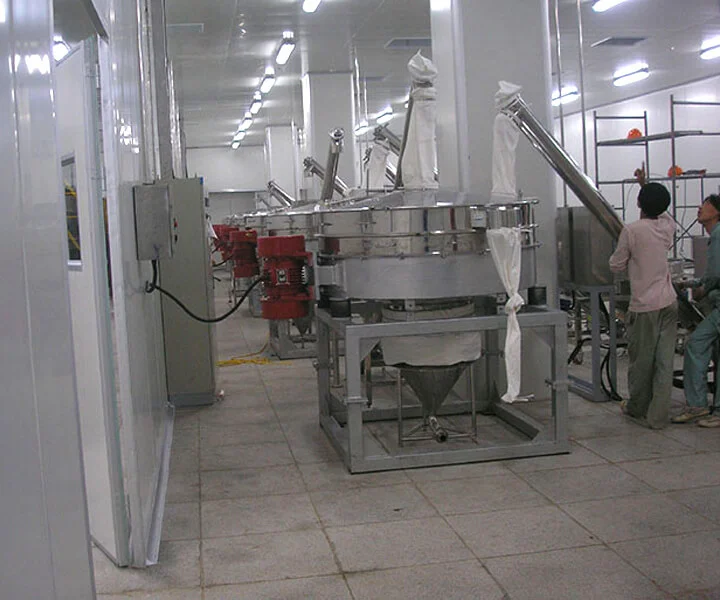
A flour and starch screening system can combine material loading, enclosed conveying, and check screening before mixing or packaging.
The material is introduced through a bag dumping station or storage hopper, transferred to the screening unit, and then discharged to the next processing stage.
Process: Bag Dumping Station → Vacuum Feeder → Inline Vibro Sifter → Storage Hopper or Mixer
Main Equipment Functions:
- Bag Dumping Station: Provides a loading point for bagged ingredients and can be connected to dust extraction equipment.
- Vacuum Feeder: Transfers powder through an enclosed conveying line.
- Inline Vibro Sifter: Removes lumps and oversized particles from the material stream.
- Receiving Hopper or Mixer: Collects screened material for further processing.
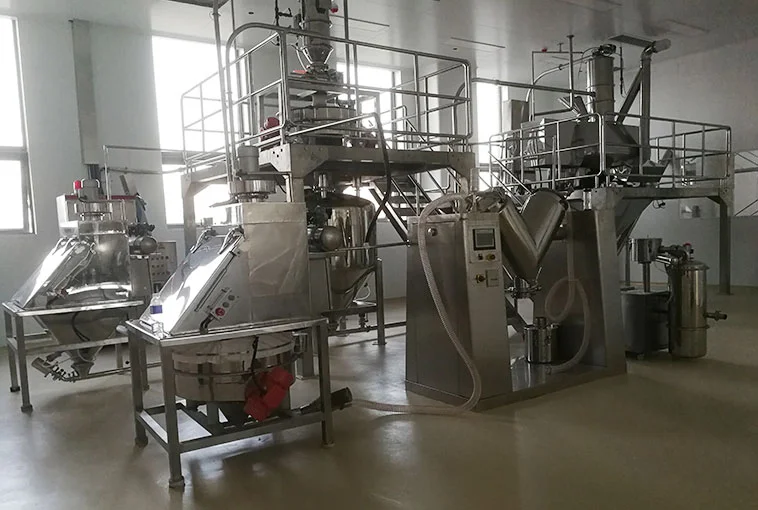
Premix & Seasoning Powder Line
Premix and seasoning production requires controlled ingredient feeding, screening, mixing, and packaging. Raw ingredients are introduced into the system, screened to remove unwanted coarse material, and transferred to the mixing stage.
The system arrangement depends on the formulation, batch size, required output, and ingredient handling properties.
Process: Ingredient Loading → Screening → Mixing → Packaging
Main Equipment Functions:
- Feeding System: Transfers ingredients from loading or storage points.
- Screening Machine: Removes coarse material before blending.
- Powder Mixer: Combines the screened ingredients according to the required formulation.
- Packaging Equipment: Receives mixed products for weighing, filling, and packing.
Our published premix and breading production line uses a bag dumping station, vacuum feeder, inline sifter, V-type mixer, and packaging equipment, with a listed system capacity of 1,000 kg/h.
Integration with Existing Food Production Lines
For existing facilities, screening and conveying machines can be configured to match the available installation space, equipment heights, connection dimensions, and material transfer requirements.
We can review feeding methods, discharge positions, support frames, cleaning access, and suitable control connections to accommodate the new equipment within the production layout.
Food-Grade Equipment Design & Hygiene
Food screening equipment must support safe material handling, routine cleaning, and consistent processing. Material contact surfaces, screen frames, seals, and enclosed connections should be selected according to the ingredient, cleaning method, and applicable food processing requirements.
Stainless Steel Contact Parts
SS304 and SS316L stainless steel are available for food-contact surfaces, depending on material compatibility and processing conditions. Stainless steel screen meshes, contact surfaces, and discharge components can be specified for suitable applications.
Surface finish, welding quality, and material accessibility should be considered when selecting equipment for food ingredient processing.
Screen Frames, Seals & Cleaning Access
Screen frames and mesh assemblies should provide secure installation and convenient access for inspection or replacement.
Removable screen components and suitable sealing materials help simplify cleaning between production batches. The selected screen design should also minimize areas where material can accumulate.
Enclosed Feeding & Dust Control
Dry food powders can generate dust during bag dumping, conveying, and screening. Enclosed equipment connections, covered screening units, and compatible dust extraction systems help limit powder release.
For facilities handling combustible food dust, electrical equipment and dust control arrangements must also meet the applicable safety requirements.
Equipment Integration & Maintenance
Screening and conveying systems should provide sufficient clearance for inspection, cleaning, and replacement of wear parts.
Screen mesh, seals, drive components, and discharge connections require regular inspection. The machine structure and maintenance access should suit the production environment and cleaning procedures.
Mesh Sizes, Screening Capacity & Material Testing
For food and beverage screening applications, mesh size and processing capacity depend on material characteristics, moisture content, particle size distribution, and screening objectives. We recommend selecting the screening equipment based on actual material testing rather than mesh size alone.
Mesh Sizes and Screening Capacity for Food Materials
| Food Material | Typical Mesh Size | Screening Purpose | Reference Capacity (kg/h) | Recommended Equipment |
| Wheat Flour | 40–100 mesh | Remove lumps and oversized impurities | 300–1,500 | Rotary Vibrating Screen |
| Sugar | 20–60 mesh | Particle classification and impurity removal | 500–2,000 | Linear Vibrating Screen |
| Milk Powder | 40–100 mesh | Remove agglomerates and foreign particles | 200–1,000 | Rotary Vibrating Screen |
| Cocoa Powder | 40–100 mesh | Fine powder screening and lump removal | 150–800 | Ultrasonic Vibrating Screen |
| Spices & Seasoning Powder | 30–100 mesh | Remove coarse particles and improve uniformity | 200–1,000 | Rotary Vibrating Screen |
| Rice & Grains | 2–10 mm aperture | Remove oversized and undersized impurities | 1,000–5,000 | Linear Vibrating Screen |
| Nuts & Seeds | 3–15 mm aperture | Size grading and removal of fines | 500–3,000 | Linear Vibrating Screen |
| Dried Fruits & Vegetables | 5–20 mm aperture | Size grading and debris separation | 300–1,500 | Linear Vibrating Screen |
Material Testing and Equipment Selection
Before recommending a screening solution, we evaluate sample particle sizes, moisture content, bulk density, required capacity, and screening accuracy. Material testing helps determine suitable mesh openings, screen configurations, and cleaning methods.
For fine powders prone to blinding, ultrasonic screening may be considered. For granular products requiring continuous size grading, linear vibrating screens are often suitable.
Material Screening Tests
The videos below demonstrate how our vibrating screens handle food powders, grains, nuts, and other ingredients, including impurity removal, particle classification, and fine powder screening.
Each test helps us assess screening efficiency, processing capacity, material flow, and potential mesh blockage. Based on the results, we recommend suitable screen mesh sizes, equipment configurations, and screening solutions for specific food processing requirements.
How to Select Food Screening Equipment?
Selecting the right food screening machine starts with the ingredient and required processing result. A machine used for coarse flour check screening may not be suitable for fine nutritional powders or liquid filtration.
The selection process should consider material properties, required mesh size, throughput, cleaning requirements, and connections to upstream and downstream equipment.
Define the Ingredient
Provide the ingredient name and whether it is powder, granules, slurry or liquid. Note moisture, oil content, bulk density and flowability.
Specify the Separation
Send the feed size distribution, lumps or coarse material to remove, target aperture and required number of product fractions.
Confirm Processing Capacity
State kg/h, t/h or liquid flow rate and the intended operating conditions. Include viscosity and suspended solids for liquid filtration.
Set Hygiene Requirements
Confirm stainless steel contact parts, seals, surface finish, cleaning procedures and product changeover requirements.
Review the Installation
Provide floor space, available height, inlet and outlet dimensions, support requirements and access for cleaning and maintenance.
Connect the Production Line
Identify feeders, conveyors, mixers, storage hoppers and packaging machines. A layout drawing helps define the material connections.
Choosing Equipment by Processing Duty
| Processing Duty | Equipment Selection |
|---|---|
| For General Powder Screening | An industrial vibro sifter can be selected for routine impurity removal and particle classification of suitable dry food ingredients. |
| For Continuous Flour Check Screening | An inline vibratory screen is often suitable where compact installation, direct discharge, and continuous powder flow are required. |
| For Fine Powders Prone to Mesh Blinding | An ultrasonic vibrating screen can be considered when conventional screening is limited by particle agglomeration or mesh blockage. |
| For Granular Food Classification | A tumbler screening machine may be suitable for selected crystalline or granular ingredients requiring several particle size grades. |
| For Beverage Filtration | A vibrating liquid filter can be selected for removing suitable coarse suspended solids, with capacity determined by the liquid properties and filtration aperture. |
Need Help Selecting a Food Screening Machine?
Provide your material details, target mesh size, required capacity, and production layout. Our engineers can review the application and recommend suitable screening equipment, feeding connections, and machine configurations.
Food Processing Projects & Customer Installations
Sanyuantang has supplied screening equipment and material handling systems for food ingredient processing projects involving flour, starch, spices, and premix powders. The following examples show how equipment configurations are selected for different material and production requirements.
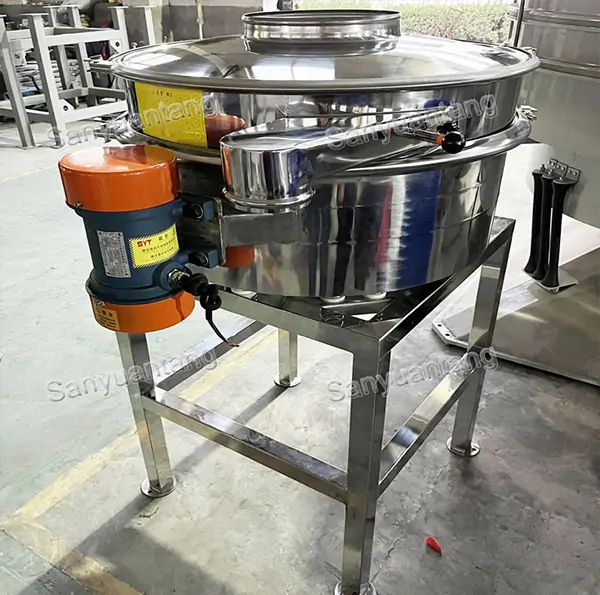
Flour & Starch Screening – Malaysia
A food processing company in Malaysia required an industrial screening machine for flour and starch. The project called for a compact stainless steel machine with a single screening deck and a 20-mesh screen.
We supplied an 800 mm industrial flour sifter with a dual-motor configuration and customized 600 mm support legs to suit the customer’s production layout.
| Project Parameter | Specification |
|---|---|
| Material | Flour & Starch |
| Equipment | Industrial Flour Sifter |
| Screen Diameter | 800 mm |
| Screen Mesh | 20 Mesh |
| Screen Decks | 1 |
| Contact Material / Construction | Stainless Steel |
| Support Leg Height | 600 mm |
| Customer Required Capacity | 2,000 kg/h |
The equipment was configured for direct powder discharge and integration with the customer’s existing processing equipment.
Premix & Breading Powder Production Line
For premix and breading powder production, Sanyuantang offers integrated equipment covering ingredient loading, screening, mixing, and packaging.
The published production line configuration includes a bag dumping station, vacuum feeder, inline sifter, V-type powder mixer, and packaging machine. It is designed for materials such as flour, starch, powdered sugar, seasoning powders, and premix ingredients.
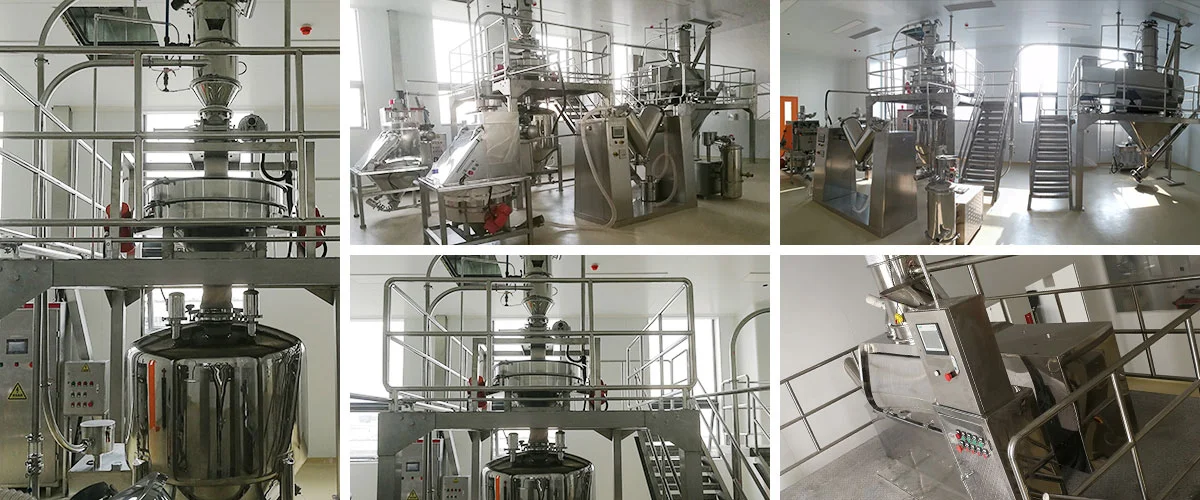
| Project Parameter | Specification |
|---|---|
| Application | Premix & Breading Powder |
| Published System Capacity | 1,000 kg/h |
| Feeding Equipment | Bag Dumping Station, Vacuum Feeder |
| Screening Equipment | Inline Sifter |
| Mixing Equipment | V-Type Powder Mixer |
| Downstream Equipment | Packaging Machine |
This arrangement combines ingredient transfer, protective screening, and mixing in a connected processing system.

Spice Screening & Iron Removal – Pakistan
A spice processing company in Pakistan required particle size classification and ferrous contaminant removal during food powder production.
Sanyuantang supplied an 800 mm rotary vibrating screen with an integrated iron removal arrangement. The screening system was configured for several particle size requirements, while the material contact parts were specified in SS316 stainless steel.
| Project Parameter | Specification |
|---|---|
| Material | Spice Powders |
| Equipment | Rotary Vibrating Screen |
| Screen Diameter | 800 mm |
| Screen Mesh | 20 / 30 / 40 / 50 / 60 Mesh |
| Reported Capacity | 200 kg/h |
| Contact Material | SS316 Stainless Steel |
| Additional Equipment | Iron Remover |
The system combines particle size classification and ferrous contaminant removal within the spice processing line.
Project Review
Request a Food Processing Solution
Send your ingredient, target aperture, throughput, hygiene specifications and production layout. Our engineers will review the material and process connections, recommend suitable screening or conveying equipment and provide a quotation.
Single machines and connected processing systems
Food & Beverage Screening FAQs
What Type of Vibrating Screen Is Suitable for Flour and Starch?
An inline vibratory screen or industrial vibro sifter is commonly used for flour and starch check screening. These machines remove lumps, oversized particles, and coarse impurities before mixing or packaging. For finer starch powders prone to mesh blockage, ultrasonic screening may be considered according to particle size, moisture content, and required throughput.
What Is the Difference Between a Vibro Sifter and an Inline Sifter?
An industrial vibro sifter uses circular screen decks for general powder classification, impurity removal, and multi-grade separation. An inline sifter has a compact direct-discharge arrangement designed primarily for continuous check screening. The appropriate machine depends on required particle separation, capacity, installation height, and material flow characteristics.
Can Ultrasonic Screening Reduce Mesh Blinding in Fine Food Powders?
Yes. Ultrasonic vibrating screens can reduce mesh blinding when screening suitable fine powders affected by agglomeration, static electricity, or poor particle flow. The ultrasonic system helps keep screen openings clear, but the improvement depends on material properties, aperture size, and operating conditions. Hard lumps may require separate size reduction.
What Mesh Sizes Are Used for Food Powder Screening?
Food powder screening uses different mesh sizes according to the ingredient and required particle separation. Coarse check screening may use relatively large apertures, while fine powder classification requires smaller openings. Screen aperture should be selected from the product specification and particle size distribution rather than using one standard mesh for every food ingredient.
Can One Machine Separate Food Ingredients into Several Grades?
Yes. A multi-deck vibrating screen or tumbler screening machine can separate suitable ingredients into several particle size fractions during one operation. Each screen deck uses a different aperture, with separated material discharged through the corresponding outlet. The number of product grades depends on the deck arrangement, material properties, and machine design.
What Materials Are Used for Food-Contact Screening Equipment?
SS304 and SS316L stainless steel are common options for food-contact screening components. Screen meshes, frames, and suitable sealing materials can be selected according to ingredient compatibility and cleaning requirements. The final hygienic design should be reviewed against the applicable food-contact regulations, surface finish requirements, and plant sanitation procedures.
Can Screening Equipment Be Integrated with Mixers and Packaging Machines?
Yes. Food screening equipment can be connected to bag dumping stations, vacuum feeders, screw conveyors, powder mixers, storage hoppers, and packaging systems. The feeding rate, discharge height, equipment dimensions, and control connections should be matched to the production line to support continuous material transfer.
Can Sanyuantang Customize Food Screening and Conveying Systems?
Yes. We offer customized screen dimensions, mesh apertures, stainless steel contact parts, feeding and discharge arrangements, support frames, and enclosed conveying connections. Our engineers review the ingredient type, required capacity, cleaning requirements, and production layout before recommending a machine or integrated system configuration.