Introduction
A vibro sifter is an industrial screening machine used to separate powders and granules by particle size, remove impurities, and improve product consistency. It uses a vibrating motor to move materials across one or more screen meshes, allowing fine particles to pass through while oversized particles are discharged separately. Vibro sifters are widely used in food, pharmaceutical, chemical, and other powder processing industries.
In this guide, we’ll explain what a vibro sifter is, how it works, its main components, and common applications. We’ll also cover the factors that affect screening performance and how to select the right vibro sifter for your material and production requirements.
What Is a Vibro Sifter?
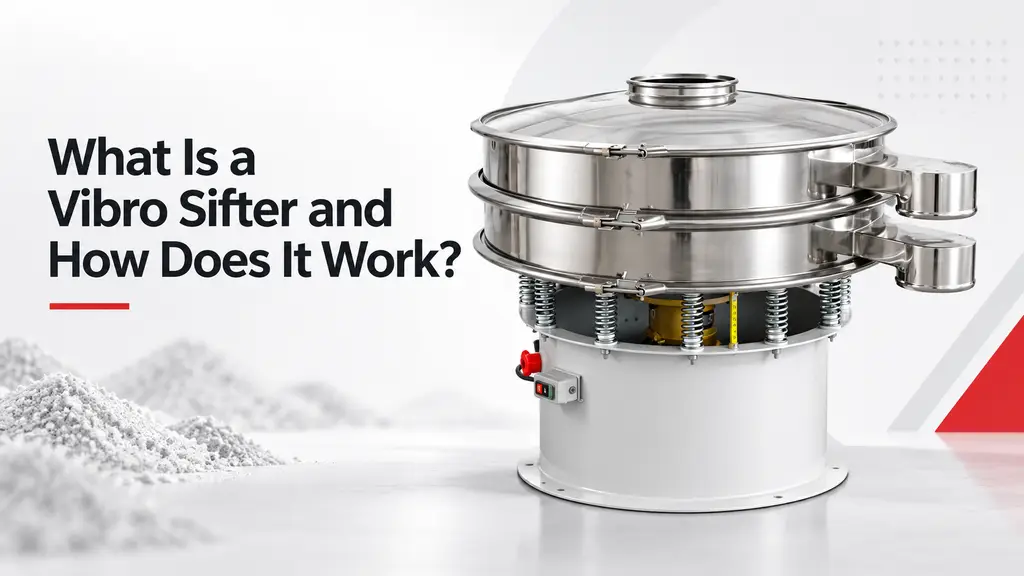
A vibro sifter is an industrial screening machine used to separate powders, granules, or liquids according to particle size. A vibration motor moves the material across one or more mesh screens. Particles smaller than the screen aperture pass through, while oversized particles, agglomerates, and foreign material discharge separately.
Also known as a vibratory sifter, vibrating sieve, or vibrating sieve machine, this equipment is used for safety screening, grading, de-dusting, de-lumping, and solid-liquid filtration. Its compact circular design fits into processing lines in the food, pharmaceutical, chemical, plastics, ceramics, and metallurgy industries.
How Does a Vibro Sifter Work?
A vibro sifter converts the rotary motion of an electric motor into controlled three-dimensional vibration. This movement distributes the feed across the screen and increases the probability that particles will contact an open aperture. Fine particles pass through the mesh, while coarse particles remain above it and travel toward the oversize outlet.
Vibro Sifter Working Principle
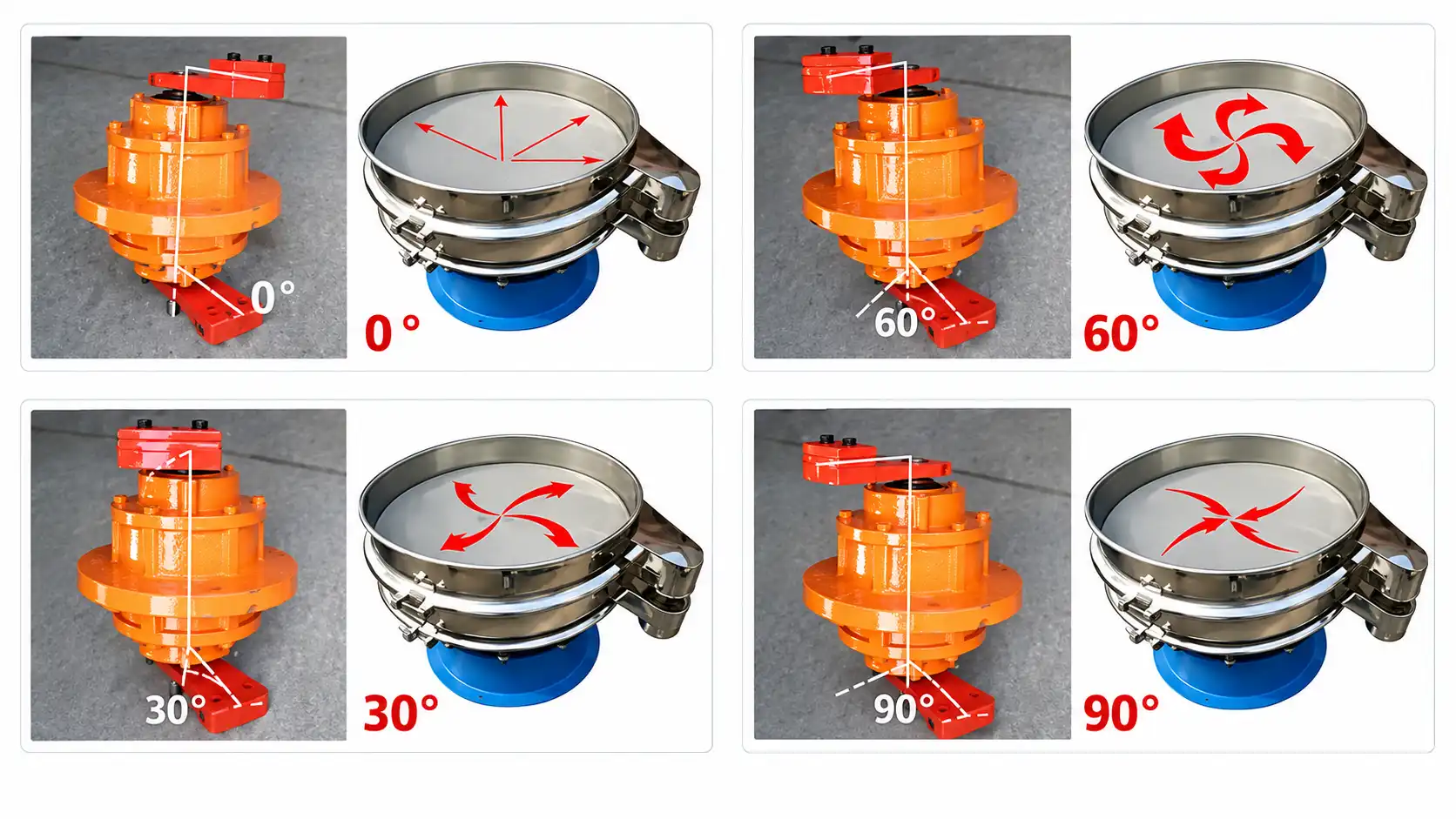
The vibration motor is fitted with eccentric weights at the upper and lower ends of its shaft. As the weights rotate, they generate centrifugal force in different directions.
The upper eccentric weight mainly produces horizontal movement and spreads material outward from the feed point. The lower weight creates vertical and tangential movement, lifting and turning the product as it travels. Together, these forces produce a spiral or outward-expanding material path across the screen.
Adjusting the phase angle of the eccentric weights changes the balance between horizontal travel and vertical lift. This affects residence time, discharge speed, product turnover, and screening performance. The setting should be matched to the material and separation duty rather than treated as a fixed machine parameter.
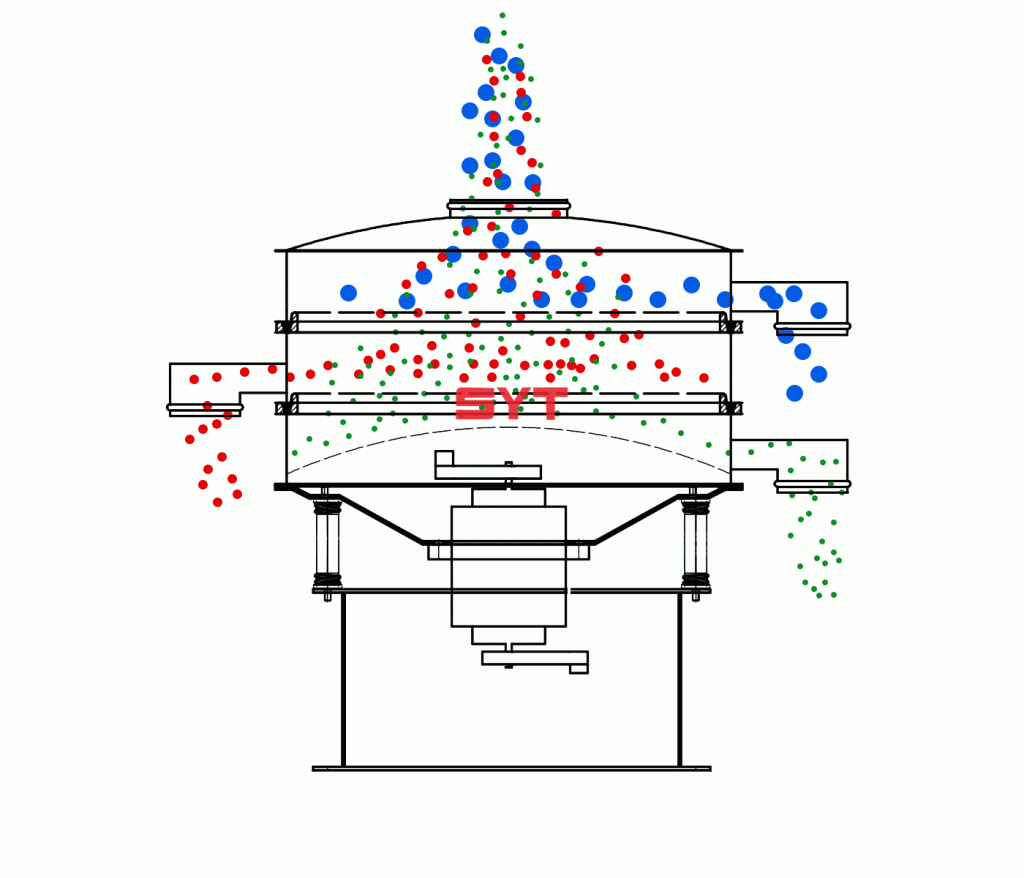
The Screening Process Step by Step
- Material enters through the central or offset feed inlet.
- The vibration motor transfers multi-directional movement to the screen assembly.
- The feed spreads across the mesh and begins to stratify.
- Particles smaller than the aperture pass to the lower deck or collection outlet.
- Oversized particles remain above the mesh and travel toward a separate outlet.
- On a multi-deck machine, each additional screen produces another size fraction.
The process can run continuously when the feed and discharge rates are correctly balanced.
How Eccentric Weights Control Material Movement?
A vibro sifter uses upper and lower eccentric weights mounted on the vibration motor to control material movement across the screen mesh.
The upper weight generates horizontal motion, spreading material across the screen surface, while the lower weight creates vertical and tangential motion to move particles forward. By adjusting the angle between the two weights, operators can control the material’s travel pattern, movement speed, and retention time on the screen. Proper adjustment helps improve screening efficiency and ensures consistent separation of fine and oversized particles.
| Motion Component | Main Function | Process Effect |
|---|---|---|
| Horizontal | Moves material across the screen | Controls radial travel and discharge speed |
| Vertical | Lifts and turns the material | Improves stratification and screen contact |
| Tangential | Produces a circular or spiral path | Increases use of the screening area |
There is no universal weight setting for every product. A free-flowing plastic granule behaves differently from flour, metal powder, or a viscous slurry. For critical separations, we recommend confirming the settings through a material test.
Main Parts of a Vibro Sifter
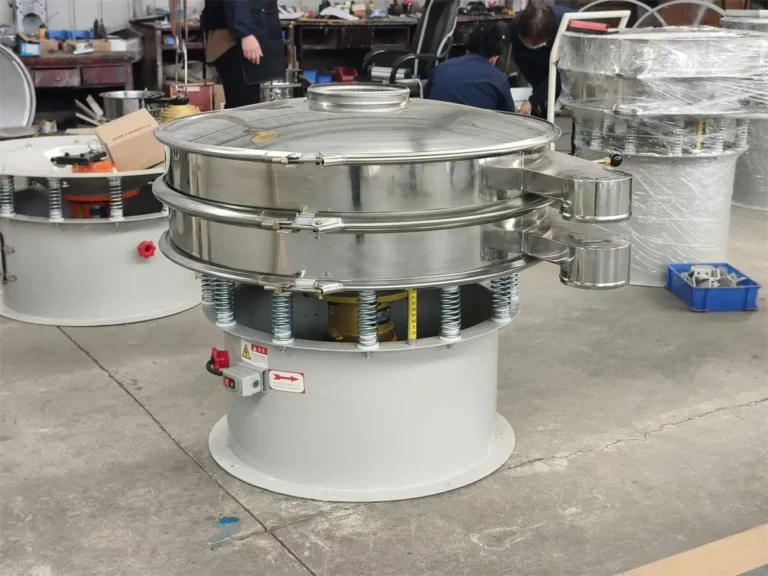
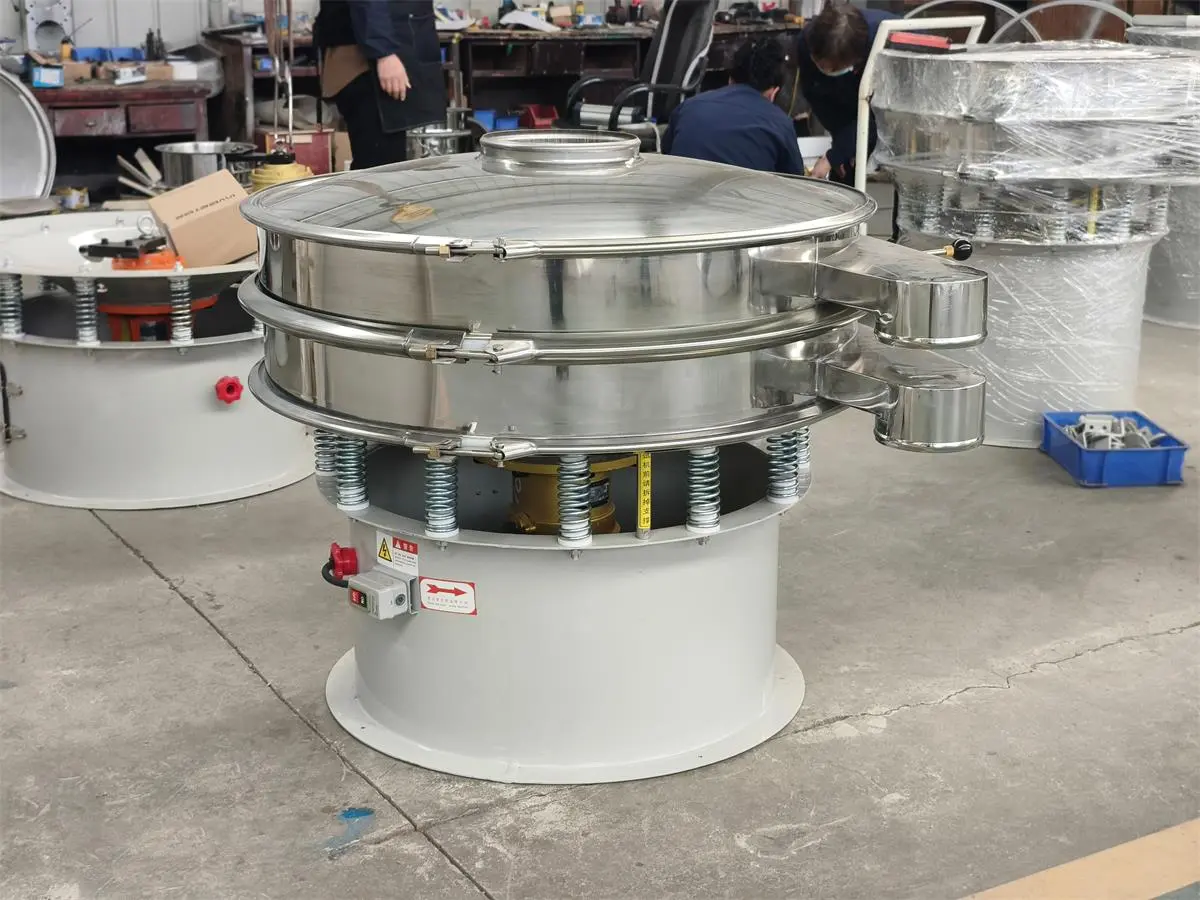
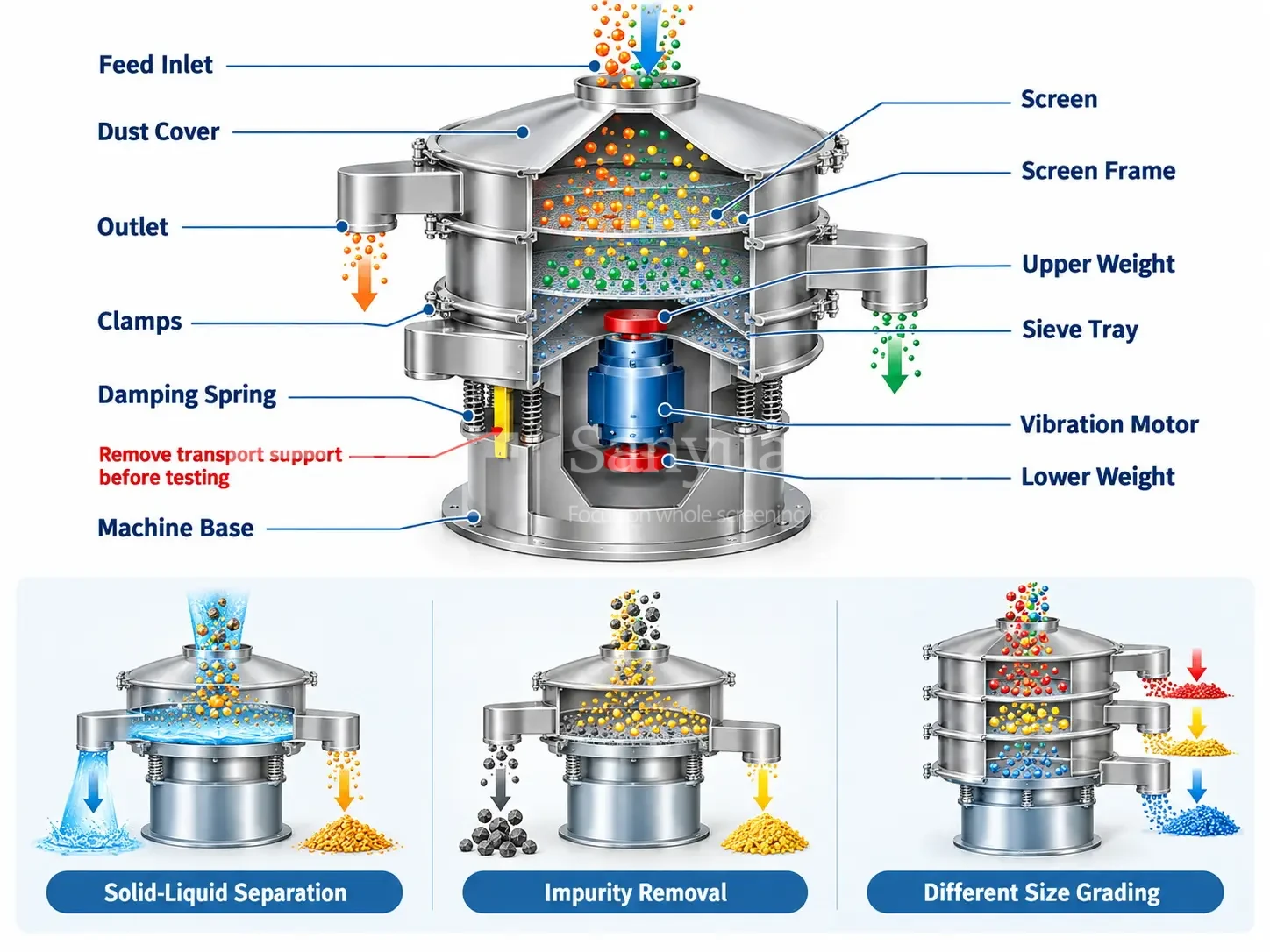
A vibro sifter consists of a vibration motor, screen mesh, screen frame, eccentric weights, damping springs, and discharge outlets. These components work together to generate three-dimensional vibration, separate particles by size, and maintain continuous material flow. The modular design allows convenient screen replacement, cleaning, and maintenance.
| Component | Features & Functions |
| Vibration Motor | Generates three-dimensional vibration to move and separate materials across the screen surface. |
| Upper & Lower Eccentric Weights | Control material movement, vibration direction, and retention time through adjustable weight angles. |
| Screen Mesh | Separates fine and oversized particles through selected mesh apertures according to screening requirements. |
| Screen Frame | Supports and tensions the screen mesh, with removable construction for cleaning and replacement. |
| Screening Deck | Supports single or multiple screen layers for particle classification and multi-grade separation. |
| Feed Inlet | Directs incoming powders or granules onto the screening surface for continuous processing. |
| Discharge Outlets | Separately discharge fine materials and oversized particles from the screening chamber. |
| Damping Springs | Support the vibrating assembly and reduce vibration transmission to the machine base. |
| Sealing Gaskets & Clamps | Secure the screen assembly and reduce dust leakage during operation. |
| Machine Base | Supports the vibration motor and screening assembly to maintain stable equipment installation. |
Vibratory Motor and Eccentric Weights
The motor supplies the energy required for screening. Adjustable eccentric weights transform motor rotation into horizontal, vertical, and tangential forces. Motor power and weight settings must match the screen diameter, number of decks, feed load, and required material movement.
Screen Mesh and Decks
The mesh determines which particles pass through the screen. A single-deck vibro sifter normally divides the feed into two streams. A multi-deck configuration can produce several fractions in one pass.
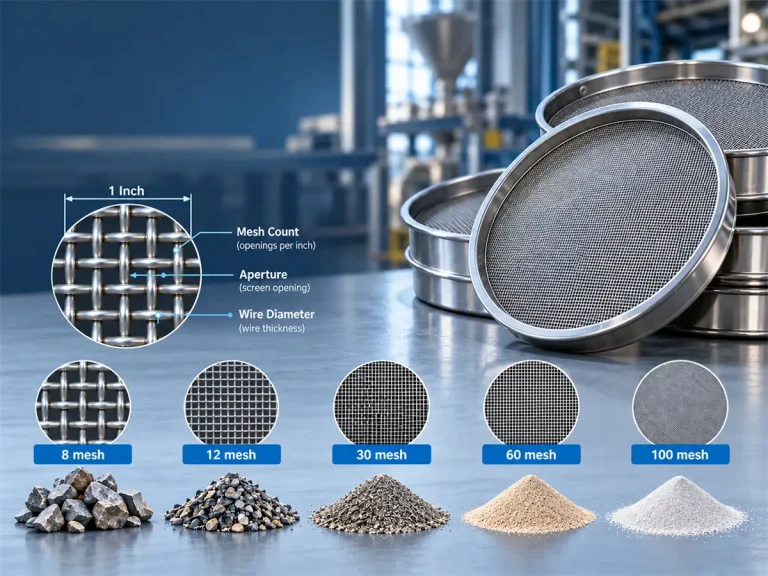
Mesh number alone is not a complete specification. Wire diameter, clear aperture, open area, weave type, and manufacturing tolerance also influence separation and capacity. See our vibrating screen mesh size guide for a practical selection method.
Springs, Frame, and Discharge Outlets
Springs support the screen assembly and isolate vibration from the floor and surrounding equipment. The base frame supports the motor and maintains machine stability. Separate outlets collect accepted product and oversized material.
Clamps, Gaskets, and Mesh-Cleaning Devices
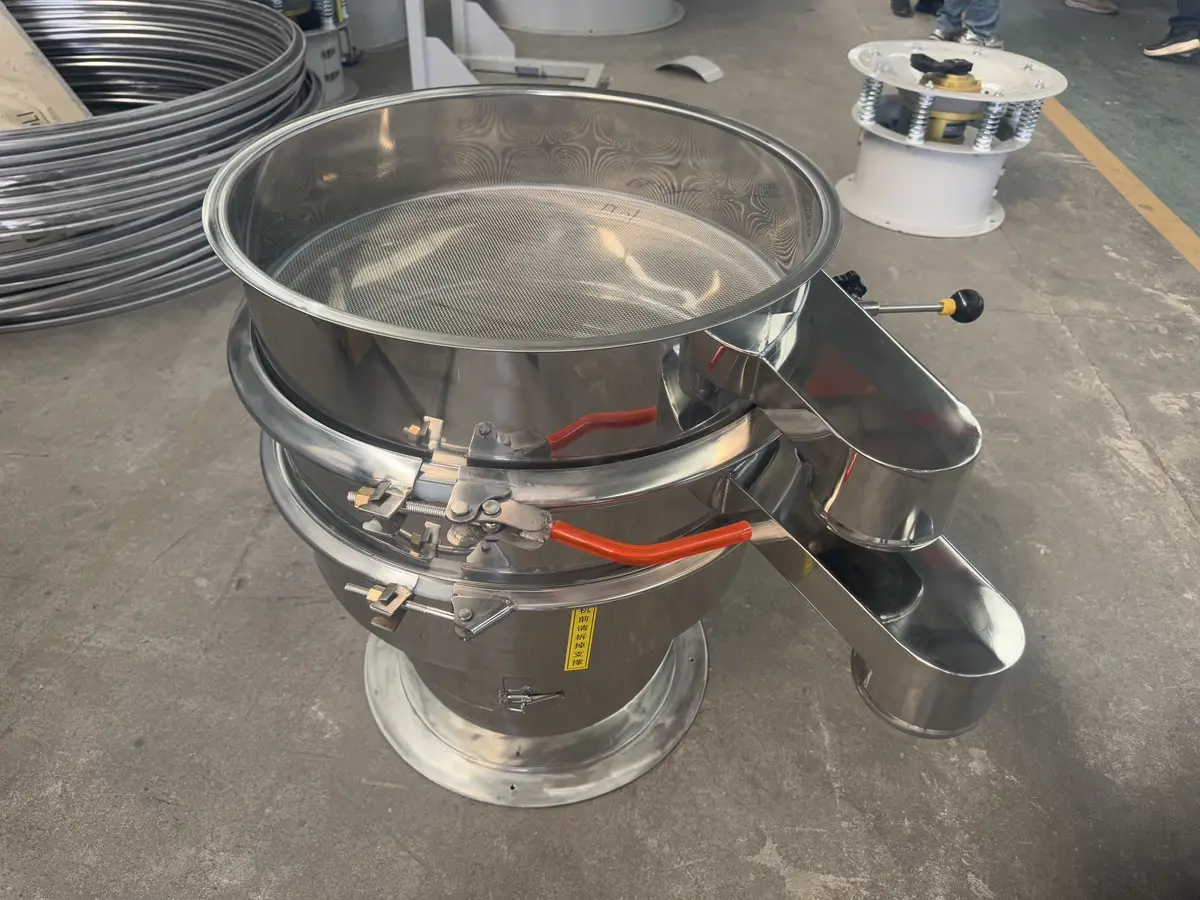
Clamps hold the deck sections together and provide access for cleaning or screen replacement. Gaskets seal the product-contact joints. Bouncing balls or ultrasonic systems can be installed below the mesh when the product tends to blind conventional screens.
What Is a Vibro Sifter Used For?
Common Screening Operations
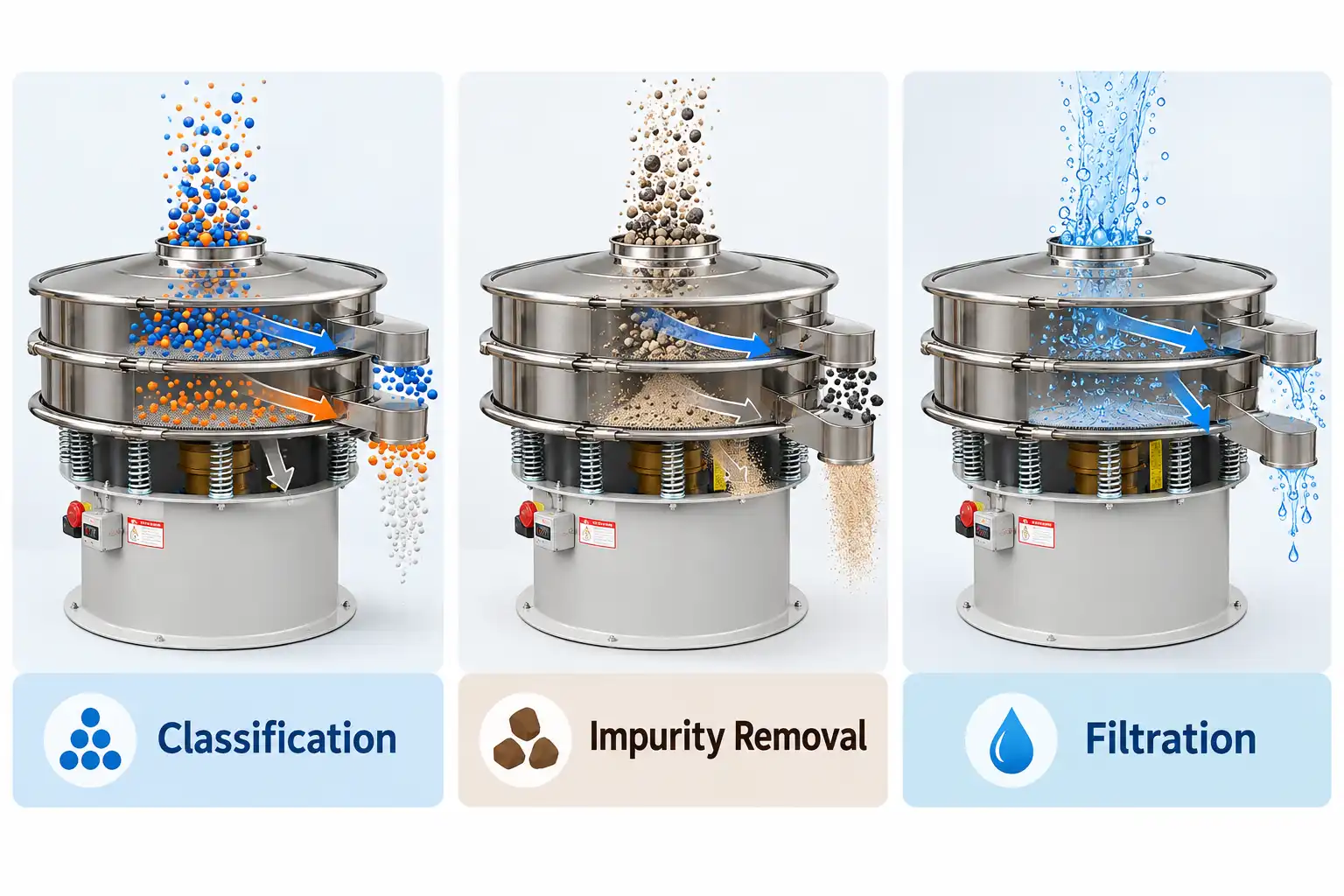
Safety screening removes lumps, packaging debris, and other oversized contamination before the product enters the next process stage.
Grading separates material into controlled particle-size fractions. A multi-deck machine can make several separations at the same time.
De-dusting removes unwanted fines from granules or pellets.
Liquid filtration removes solid particles from a slurry or process liquid. This duty requires suitable seals, outlets, and corrosion-resistant contact materials.
Industrial Applications
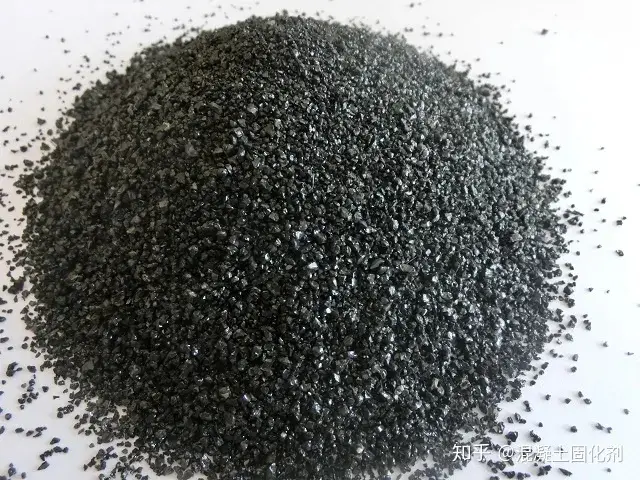
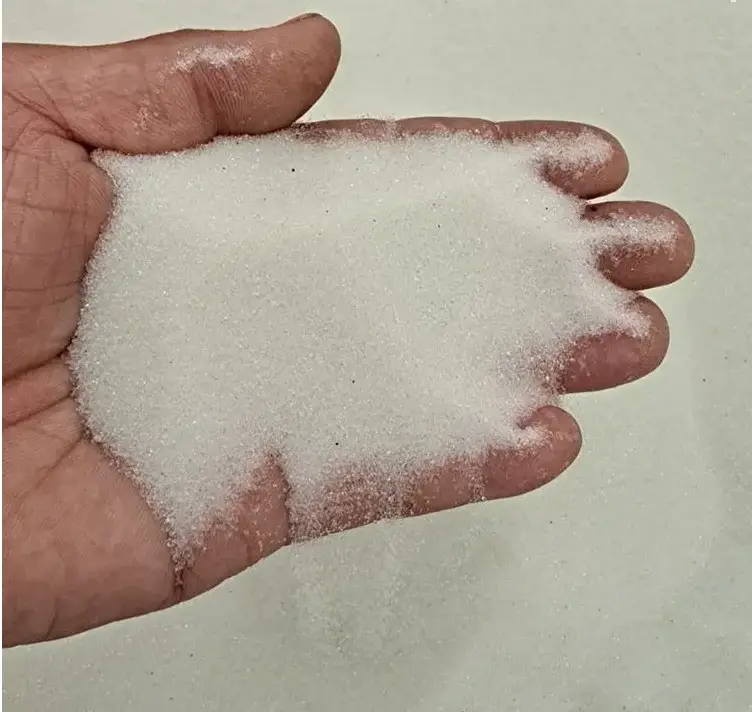
Vibro sifters are widely used for powder sieving, particle size classification, impurity removal, and safety screening in food, pharmaceutical, chemical, and other processing industries. Different screen mesh sizes, contact materials, and discharge configurations can be selected according to material properties and production requirements.







| Industry | Typical Materials | Screening Objective |
|---|---|---|
| Food | Flour, sugar, salt, spices, milk powder | De-lumping and contamination removal |
| Pharmaceutical | APIs, excipients, granules | Safety screening and particle control |
| Chemical | Pigments, resins, additives | Classification and impurity removal |
| Plastics | Resin powder, plastic granules | De-dusting and grading |
| Metallurgy | Metal powders, abrasive materials | Fine classification |
| Ceramics | Ceramic powder, glaze, slurry | Grading or liquid filtration |
The screen, gasket, and contact-part materials must be compatible with the product. Hygienic, abrasive, corrosive, and high-temperature applications require different machine configurations.
Common Vibro Sifter Configurations
Single-Deck and Multi-Deck Sifters
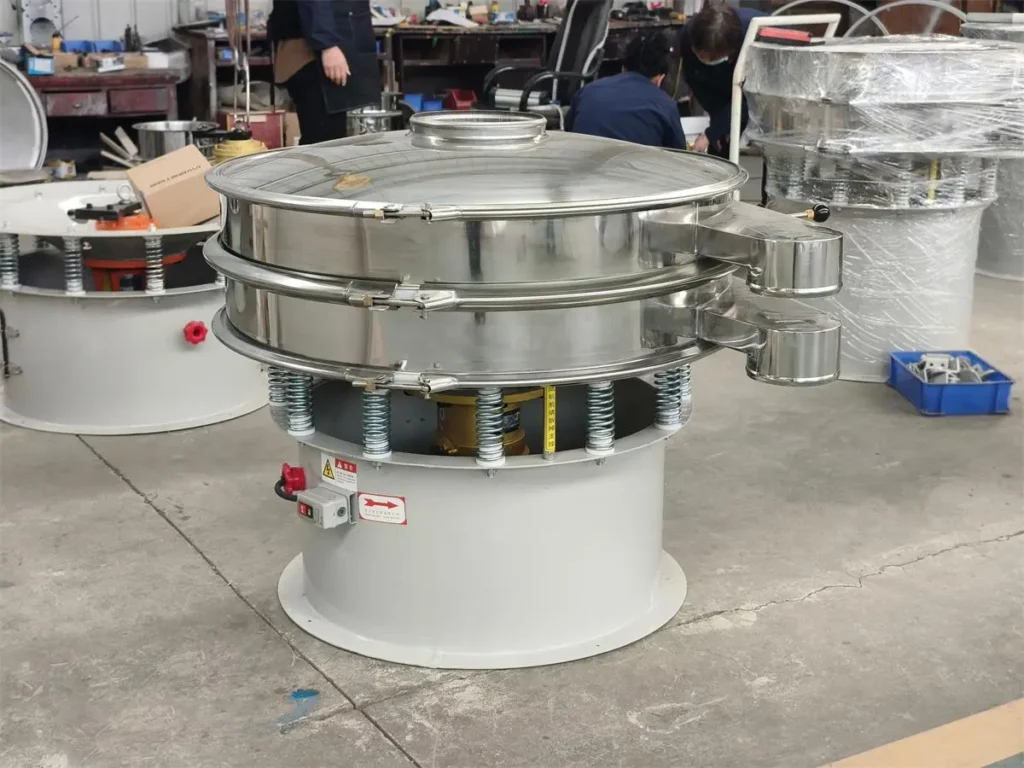
A single-deck machine separates the feed into an undersize and an oversize stream. It is suitable for safety screening, de-lumping, or simple classification.
A multi-deck vibro sifter contains two or more screens with different apertures. It can make several particle-size fractions within one machine, although additional decks also affect machine height, cleaning time, and available throughput.
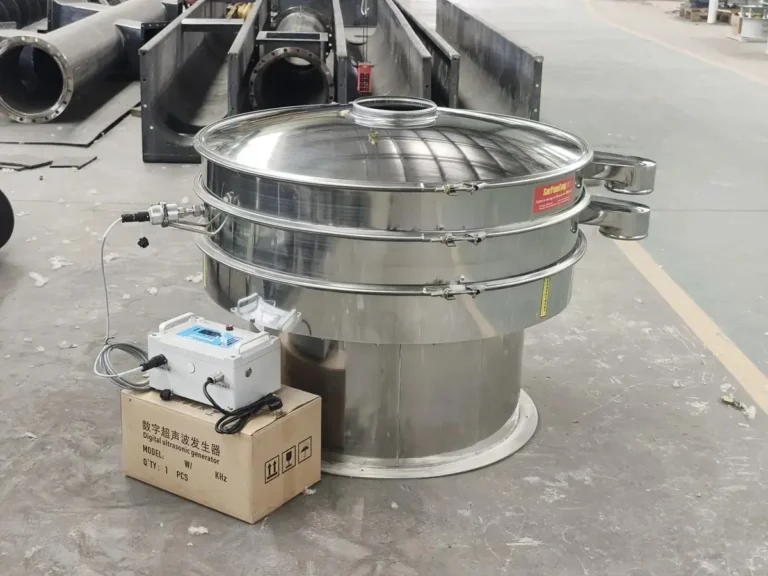
Ultrasonic Vibro Sifters
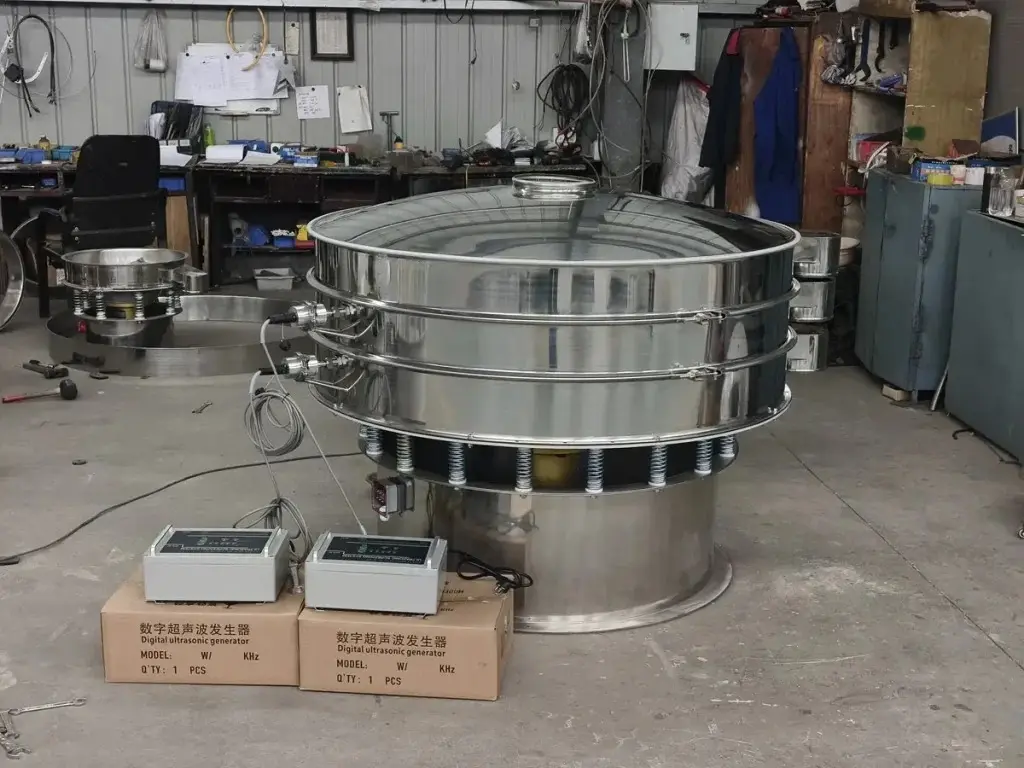
An ultrasonic system applies high-frequency energy to the mesh. It is considered when fine, lightweight, or static-sensitive powders repeatedly block a conventional screen. Ultrasonic assistance can improve mesh availability, but feed rate, powder condition, mesh tension, and screen area still need to be correct.
Sanitary and Corrosion-Resistant Designs
Food and pharmaceutical duties may require stainless-steel contact parts, sanitary seals, and an enclosed structure. Chemical applications may require stainless steel, coated surfaces, or non-metallic contact components.
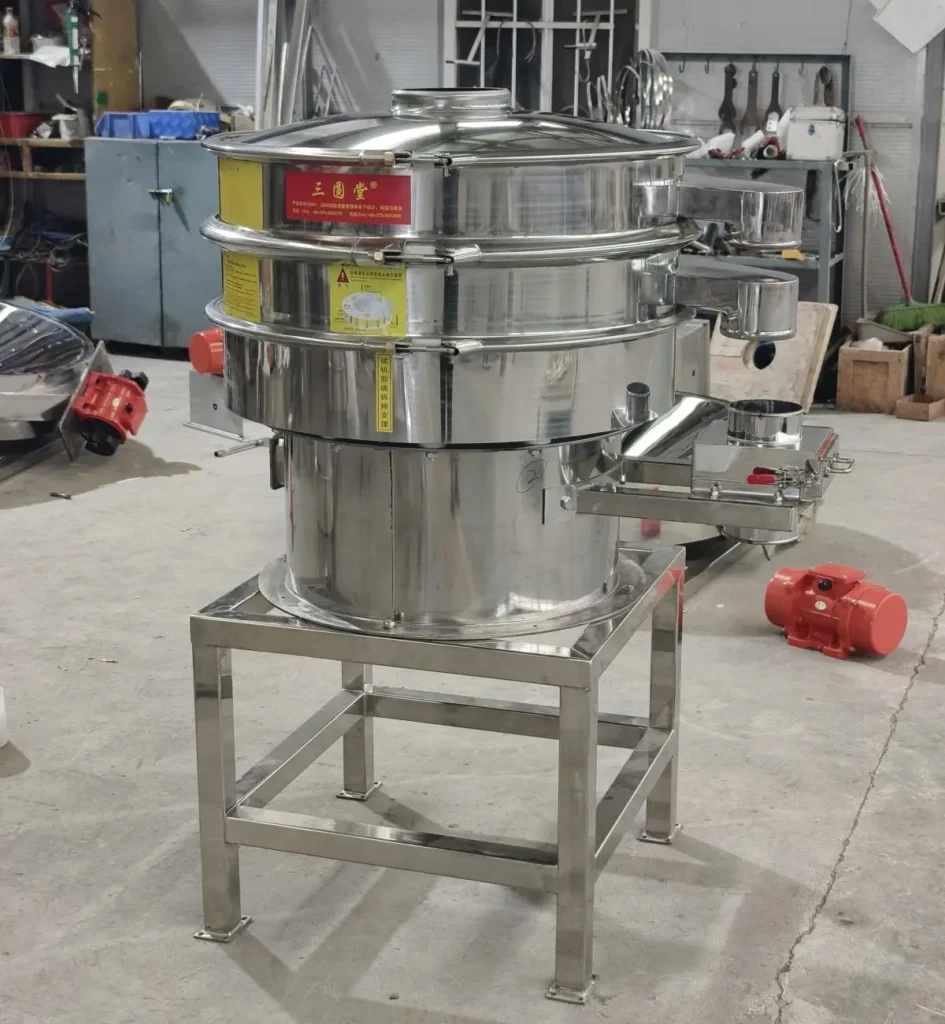
Sanyuantang configures vibrating sieve machines in SS304, SS316, carbon steel, and corrosion-resistant plastic. Single-layer, multi-layer, bouncing-ball, and ultrasonic arrangements are available according to the material and process conditions.
Advantages and Limitations of Vibro Sifters
| Advantages | Engineering Considerations |
|---|---|
| Compact circular construction | Installation height must include all decks and outlets |
| Continuous fine and coarse discharge | Feed distribution must remain stable |
| Dry screening and liquid filtration | Seals and contact materials must suit the process |
| Single- or multi-deck operation | More decks can reduce available throughput |
| Optional enclosed design | Cleaning access must be considered |
Fine, moist, or static-sensitive powders may blind the screen. Abrasive products can shorten mesh life, and excessive feed rates can create a deep material bed that reduces separation accuracy. Actual performance depends on the material as much as the machine.
Vibro Sifter vs Other Industrial Sifters
| Equipment | Operating Principle | Typical Strength | Common Duty |
|---|---|---|---|
| Vibro sifter | Multi-directional screen vibration | Flexible grading and compact installation | Powders, granules, and liquids |
| Centrifugal sifter | Rotating paddles move material against a cylindrical screen | Continuous de-lumping and safety screening | Fine powders |
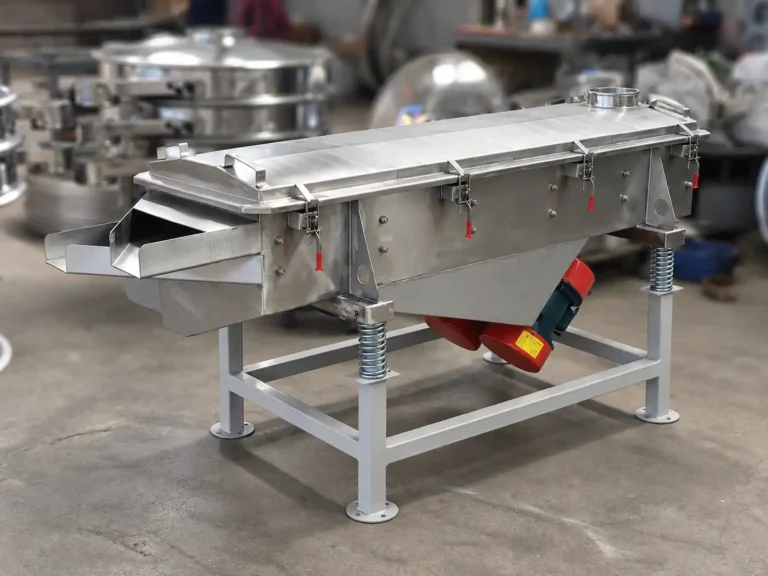
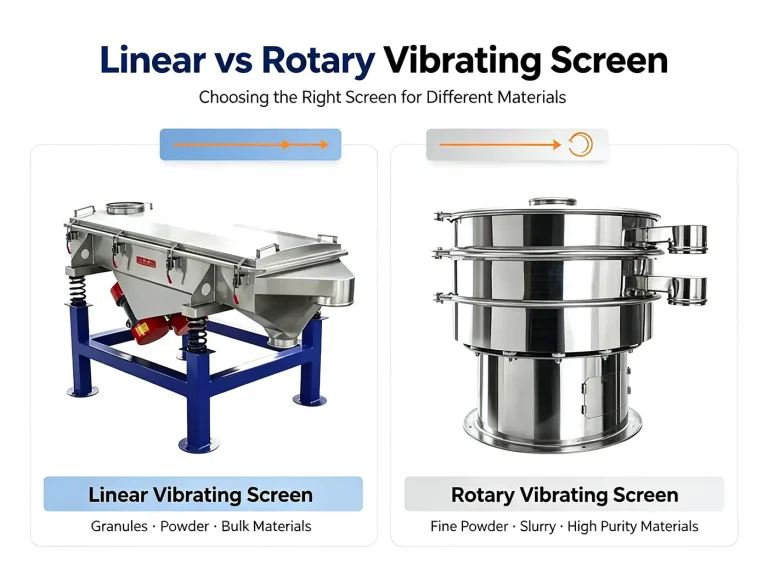
| Linear vibrating screen | Linear travel across a rectangular deck | Conveying and high-capacity screening | Granules and bulk solids |
| Tumbler screen | Gentle three-dimensional motion | Accurate fine or fragile-product separation | Fine powders and multi-fraction grading |
The correct choice depends on the process rather than the machine name. We compare separation target, feed behavior, installation space, cleaning requirements, and downstream equipment before recommending a configuration.
How to Select the Right Vibro Sifter?
Material Characteristics
Start with the product rather than the machine diameter. Useful data includes material name, bulk density, feed particle-size distribution, moisture, flowability, abrasiveness, static tendency, temperature, and corrosive or hygienic properties.
Mesh Size and Separation Target
Define what must pass through the screen and what must remain above it. The specification should include the target aperture, acceptable oversize in the fine product, acceptable fines in the coarse product, and required product recovery.
When separation accuracy is critical, a representative sample and particle-size distribution provide better sizing data than a nominal mesh number alone.
Capacity and Number of Fractions
Required capacity should be stated together with material bulk density and feed condition. Throughput depends on screen diameter, effective open area, aperture, number of decks, feed distribution, moisture, vibration settings, and the percentage of near-size particles.
Construction Material and Process Requirements
The equipment specification should identify contact material, dust-control requirements, cleaning procedures, hazardous-area conditions, inlet and outlet positions, electrical supply, and available installation height.
At Sanyuantang, we use these inputs to select the screen diameter, deck arrangement, vibration configuration, and anti-blinding method. For demanding fine-powder or high-capacity projects, we recommend material testing before the final machine configuration is released.
Operation and Maintenance Considerations
A stable feed rate is essential. Sudden overfeeding creates a deep material layer, reduces contact with the mesh, and can lower separation performance.
Before startup, inspect the screen, clamps, seals, springs, and electrical connections. During operation, monitor product flow, unusual noise, base movement, leakage, reduced throughput, and changes in separation quality.
Screen tension and condition should be checked regularly. A damaged mesh can allow oversized contamination into the accepted product, while incorrect tension can reduce capacity and shorten screen life. Cleaning tools and procedures must be suitable for the mesh and product-contact requirements.
Discuss Your Screening Application with Sanyuantang
Sanyuantang has focused on industrial screening equipment since 1994. We configure vibro sifter machines for powder classification, impurity removal, de-dusting, and liquid filtration.
To evaluate your application, send us the material name, bulk density, feed size, required aperture, hourly capacity, and process conditions. Our engineers can review the screening duty and recommend a suitable screen size, number of decks, contact material, and mesh-cleaning method.
Frequently Asked Questions
What is a vibrating sieve?
A vibrating sieve is a screening machine that uses mechanical vibration to separate material according to particle size. Fine particles pass through the screen apertures, while larger particles remain above the mesh and discharge separately. A vibro sifter is one common type of vibrating sieve.
What is the working principle of a vibro sifter?
A vibro sifter uses a motor with upper and lower eccentric weights to generate horizontal, vertical, and tangential vibration. This motion spreads and turns material across the screen. Fine particles pass through the mesh, while coarse particles move toward the oversize outlet.
What are the different types of sifters?
Common industrial types include vibro sifters, centrifugal sifters, linear vibrating screens, tumbler screens, rotary drum screens, and air classifiers. Selection depends on particle size, capacity, flow behavior, separation accuracy, and cleaning requirements.
Can a vibro sifter process wet materials?
Yes. A suitably configured vibro sifter can filter slurries and process liquids. The screen aperture, sealing system, contact material, outlet design, and feed rate must be selected for the liquid and its solids concentration.
How do you choose the correct screen mesh?
Choose the screen according to the required particle-size cut, not only the mesh number. Clear aperture, wire diameter, open area, particle shape, and acceptable product contamination should all be considered.
How can mesh blinding be reduced?
Mesh blinding can be reduced by controlling the feed rate, maintaining correct screen tension, and selecting an appropriate cleaning system. Bouncing balls suit many general powders, while ultrasonic systems are often used for fine or static-sensitive materials.
Need a Screening or Material Handling Solution?
Tell us your material, particle size, required capacity and process requirements. Sanyuantang can recommend suitable screening, conveying and feeding equipment, or configure a complete material handling line for your project.